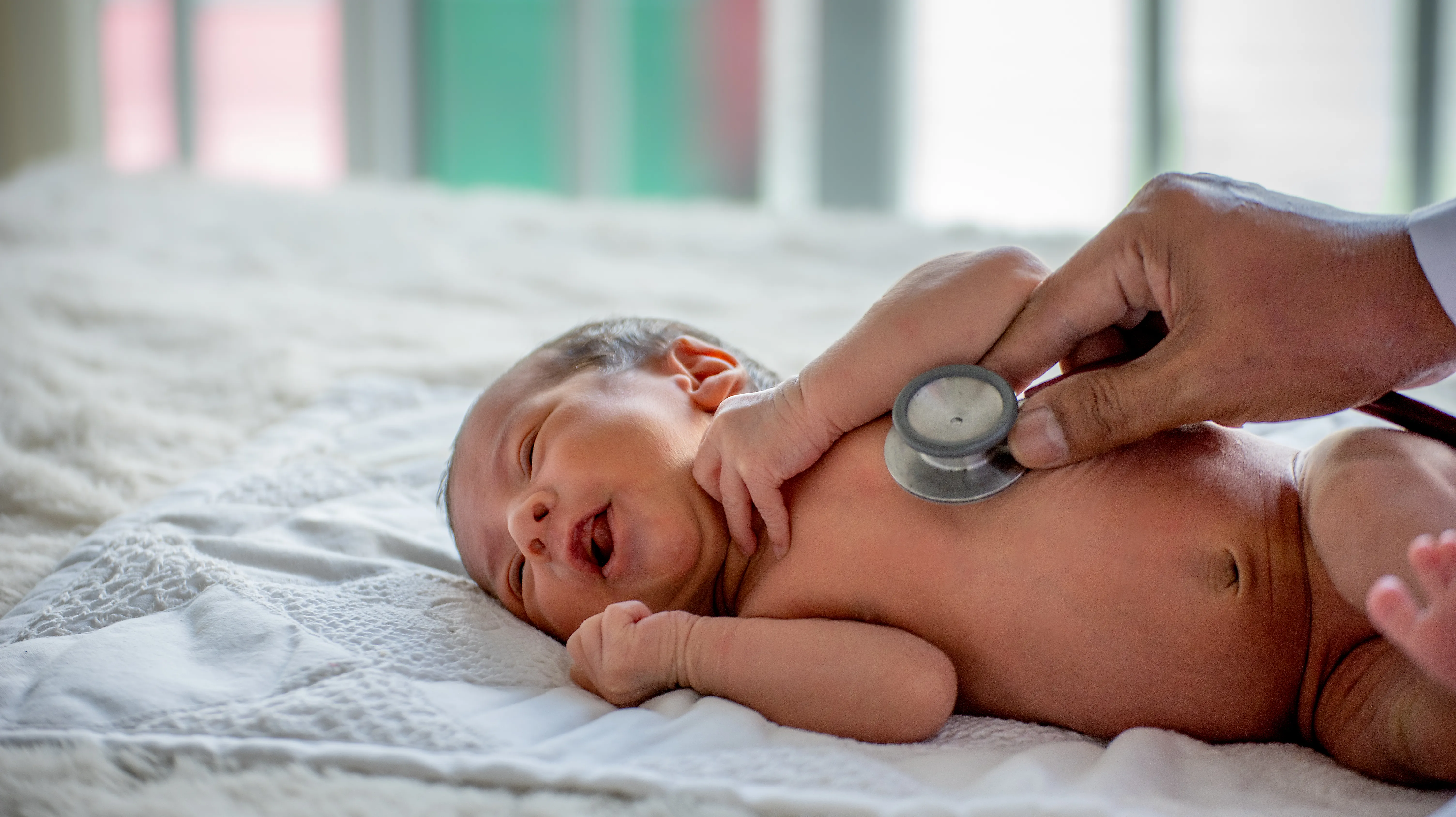
900+ women criminally charged for their conduct during pregnancies

In the first three years after the U.S. Supreme Court struck down the constitutional right to an abortion in June 2022, more than 900 women faced criminal charges for conduct related to their pregnancies, according to a new report.
Most state laws that prohibit or regulate abortion seek to penalize those who provide abortions, not the women who undergo them. Nevertheless, researchers from Pregnancy Justice, a nonprofit group that supports abortion rights, found 13 specific allegations related to obtaining, seeking to obtain, or researching how to get an abortion. The group would not provide additional details on those cases, saying it is still collecting data and hopes to publish a full analysis in 2028.

© Daniel Tamas Mehes - iStock-1992275198
The vast majority of the charges — 876 of 955 — were for child abuse, neglect or endangerment, most related to substance use during pregnancy. Researchers found 871 separate allegations of substance use and 77 allegations that a woman had failed to obtain prenatal care.
The most prominent anti-abortion groups have long argued against prosecuting women for having abortions, a punishment that remains broadly unpopular. But the new report comes as a growing number of state legislators are pushing to enact such penalties: In the past two years, lawmakers have introduced bills in about a dozen states, and supporters expect that number to grow next year.
Members of the so-called abortion abolition movement believe that embryos and fetuses should have the same legal protections as people, and that women who have abortions should be criminally prosecuted to the furthest extent of the law — up to and including the death penalty.
© iStock - SeanPavonePhoto
“It sure sucks that someone who’s had a miscarriage has to be investigated, but that’s not the fault of the abolitionist legislation,” said T. Russell Hunter, founder of Oklahoma-based Abolitionists Rising. “That’s the fault of the people who would willfully break the law to abort babies. They would be the ones causing that situation.”
Hunter credits groups like his with pushing anti-abortion bills to be “a little more radical.”
Some prominent anti-abortion leaders are concerned that groups like Abolitionists Rising are gaining ground.
“It’s impossible to prosecute those abortions without enacting a police state,” said Eric Scheidler, president of the Pro-Life Action League. Scheidler and two prominent anti-abortion attorneys penned articles arguing against such prosecutions in the summer issue of Human Life Review.
“Every miscarriage would have to be investigated in order to treat these embryonic and fetal dead bodies the same way that we would treat a dead body at a hospital or in an old folks home or out in the street where a crime took place,” he said.
Most cases in three states
The Pregnancy Justice report found that 902 women faced a total of 955 charges in 23 states, but the vast majority of cases were in South Carolina (381), Oklahoma (222) and Alabama (204).
Those three states are among the 13 that have enacted near-total abortion bans since the high court dismantled the federal right to an abortion in Dobbs v. Jackson Women’s Health Organization.
And in all three states, courts have supported the concept of fetal personhood, or the idea that a fetus, embryo or fertilized egg has the same legal rights as a person who has been born.
South Carolina, which bans abortion after six weeks, explicitly prohibits prosecuting women for seeking or getting abortions. But lawmakers in South Carolina and at least eight other states (Georgia, Idaho, Indiana, Kentucky, Missouri, North Dakota, Oklahoma and Texas) have introduced bills in recent years that would classify abortion as homicide, making violators in those states (except for North Dakota) eligible for the death penalty.

© tussik13 - iStock-908521486
In South Carolina this year, a Senate committee approved a bill that included a penalty of up to two years in prison for a woman convicted of inducing her own abortion, but the legislation did not advance further.
South Carolina lobbyist Hayden Laye of Pro-Life Greenville said his group opposes penalizing women for abortion. But his group ended up backing the bill when the punishment was reduced to a misdemeanor and it appeared likely that the state Senate would remove the provision.
Laye said he expects the legislation to be reintroduced next year. He noted that the abolitionist groups have lobbied against anti-abortion legislation that does not penalize the pregnant person.
“The abolitionist groups put up just as much opposition to these bills as groups like Planned Parenthood and the ACLU does,” Laye said. “We are really having to fight both sides of this — the side that wants no abortion laws, and the side that wants all or nothing, which isn’t happening. It’s not happening here in South Carolina. It’s not happening anywhere.”
Since 2022, several states including California, Colorado, Minnesota and New Jersey have enacted laws protecting women from criminal or civil penalties for their conduct during a pregnancy or while receiving reproductive healthcare.
The only state where a woman can be charged for inducing her own abortion is Nevada, which enacted its law in 1911. A Winnemucca woman who miscarried in 2018 and was charged under the law pleaded guilty to manslaughter in 2019, but her conviction was vacated in 2021 for ineffective assistance of counsel. Earlier this month, Humboldt County, Nevada, paid $1.6 million to settle her claim that it violated her state and federal constitutional rights.
Next month, voters in Nevada will consider codifying abortion rights in their state constitution after voters initially approved the amendment in 2024.
Dissuaded from seeking care
Madalyn Wasilczuk, a law professor at the University of South Carolina and one of the authors of the ongoing Pregnancy Justice study, said the Dobbs decision “really has affected how willing law enforcement and prosecutors are to treat miscarriages and stillbirths and other newborn deaths immediately after delivery as culpable acts and as crimes rather than as medical tragedies.”
Wasilczuk said that even the fear of criminal charges can dissuade pregnant women from seeking care, especially if they are substance users.
“Seeking care becomes a place where they expect to be criminalized, and so people avoid healthcare, which really underscores why it’s so dangerous to treat the criminal legal system as if it can solve a public health problem,” she said. “These instances are times when women need healthcare, not handcuffs.”
Jennifer Girdish, communications director for If/When/How, an abortion rights organization, said women who live in states with abortion bans often call the group’s helpline because they are scared to go to the emergency room after they have a miscarriage or experience complications after taking abortion pills.
“You shouldn’t need a lawyer to stop the police from investigating you after pregnancy loss,” Girdish said. “You shouldn’t need a lawyer to convince the doctor that you need emergency abortion care. But more and more you do.”
In addition to South Carolina, Oklahoma and Alabama, the Pregnancy Justice report found that prosecutors also initiated pregnancy-related cases in Arizona, Arkansas, California, Florida, Idaho, Kentucky, Michigan, Missouri, Mississippi, Nebraska, New Mexico, North Carolina, Ohio, Pennsylvania, South Dakota, Texas, Utah, Washington, Wisconsin, and Wyoming.