California attorney general: Trump can't interfere with voting

© iStock - sefa ouzel
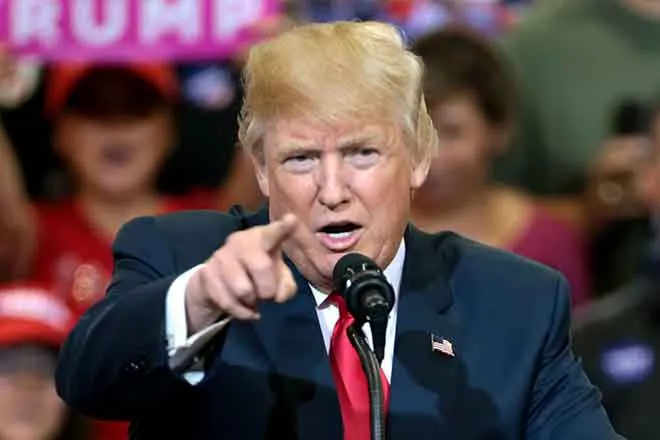
California Attorney General Rob Bonta stands by a lawsuit he’s co-leading to stop President Donald Trump's executive order on mail-in ballots.
Trump has made it his mission to keep noncitizens from voting in federal elections. The Republican president's order, issued on March 31, required the U.S. Postal Service to prohibit the mailing of ballots to voters whose names aren't on a new Postal Service list. Commentators with think tanks have told The Center Square they see nothing wrong with the Postal Service following a list of registered voters in each state.
But Bonta and other Democratic attorneys general have accused Trump of interference with elections, which are run by states under the U.S. Constitution. Bonta told The Center Square Thursday that he sees Trump as a threat to democracy and noted the president himself votes by mail. And Bonta denied that there's mass voter fraud.
The attorneys general's lawsuit was filed Wednesday in the U.S. District Court for Massachusetts. It says the matter of whether someone may vote is a question of state law. In addition to challenging the Postal Service rule implementing Trump's executive order, the states are filing a motion for a temporary restraining order and a preliminary injunction to block the rule from taking effect during litigation.
Speaking to reporters Wednesday in a virtual press conference, Bonta said Trump “does not have the authority” here.
Trump claims to have the authority.
The Center Square caught up with Bonta during another virtual press conference on Thursday to pose follow-up questions. First, what is being done to prevent fraud with mail-in ballots, to make sure noncitizens do not vote and that the election is secure?
“The lawsuit we brought is an effort to make sure there is not unconstitutional interference with and tampering with our vote-by-mail system here in California and for all the states that are bringing the suit,” Bonta told The Center Square. “Trump is the threat to the integrity of our elections with respect to this unlawful executive order. He's acting blatantly unconstitutionally, and we have gone to court to stop him.”
Bonta added the coalition of states is “confident” it will prevail in court.
“There is an elections clause in the U.S. Constitution. Trump should read it,” Bonta said. “It says that the states determine the time, place, and manner of elections, not the president, not the United States Postal Service.”
Bonta said Congress has a role as well, but states generally determine how elections are run.
“Trump, with this executive order that is now in the form of a final rule with the United States Postal Service, is seeking to interfere,” Bonta told The Center Square. “Remember the broader context here: This is his second unconstitutional, blatantly unconstitutional and unlawful order. He issued another order on additional identification requirements that don't exist, that he has no authority to be able to impose, and that was struck down. It also tried to not count timely cast vote-by-mail ballots.”
Bonta added that Trump himself votes by mail.
© JJ Gouin - iStock-2074087177
“As he votes by mail, he says that vote by mail, without evidence, without facts behind it, that vote by mail is somehow not reliable,” said Bonta. “There is no mass widespread voter fraud. It is a figment of his imagination.”
Calling the president “a conspiracy theorist on this issue,” Bonta said Trump continues to deny that he lost the 2020 presidential election to Joe Biden.
It is something that Bonta thinks Trump should accept, but Bonta said the president will not let it go. For example, Bonta said Trump “continues to interfere with our elections” in the United States.
“He interfered in 2020 when he asked the secretary of state for the state of Georgia to find 11,000-plus votes so that he could win an election he lost,” said Bonta. “He seized ballots in Fulton County a few months back with some irrational argument driven by conspiracy theorists about the 2020 election, an election which is over. He lost.”
Bonta – a Democrat running for reelection in November – said Trump “continues to threaten the integrity of our elections because his polling is in the tank,” and Trump knows he is going to lose.
Historically the party in power in the White House loses at least one chamber of Congress during a midterm election, raising speculation that Democrats could take the Republicans' razor-thin majority in the U.S. House.
“That's the only way he thinks he can win,” said Bonta. “It's wrong but putting the fact that it's wrong aside and that it's un-American undermines our democracy, the foundations of who we are as a nation It is illegal, and it is unconstitutional.”
Preventing fraud
After Bonta's comment, The Center Square repeated its question on preventing fraud and keeping elections secure.
Bonta replied that attorneys general are “stopping Trump from interfering and taking unconstitutional actions that undermine the integrity of our elections.”
The Center Square went on to ask Bonta, "Why is it a bad thing to provide voter registration lists to the U.S. Postal Service?"
Bonta replied it's a bad thing for the president to violate the Constitution.
© iStockbaramee2554
“It is a bad thing for the executive branch to try to exercise authority it doesn't have,” said Bonta. “It is a bad thing for the United States Postal Service to not follow its statutorily required duties that Congress has imposed on it to move through the U.S. Postal Service system all mailable items, including the mailable item of a ballot, maybe one of the most fundamental items in our democracy.”
This is the 87th lawsuit that Bonta has been a part of, and Bonta said that he’s won over 80% of the time.
Bonta, again, believes this latest lawsuit will go in his favor.
“There is a clause in the U.S. Constitution that is right on point about whether the president has authority to try to create this new citizenship list that acts as a filter through the United States Postal Service, and it answers very loud and clear: He does not have that authority,” said Bonta.
Couldn't the Postal Service help the state with making sure ballots get delivered to the correct address under the new system? The Center Square posed that question to Bonta.
“The United States Postal Service can help by doing its congressionally required duty, move the vote-by-mail ballots that California has prepared and provided to all vote-by-mail voters, all vote-by-mail eligible voters who wish to use vote-by-mail to raise their voice and participate in our democracy,” said Bonta. “Mail it to them without interference. That's their job. Congress requires it. They don't have the ability to block or stop mailable items from moving through the United States Postal Service, so with much appreciation for their desire to help, they should just do their job, which is how they can help, by mailing vote-by-mail ballots and not trying to stop them in contravention of their congressional duty.”
Risks for registered voters
If the Postal Service rule is upheld by the courts, is there a risk that Trump's rule will prevent ballots from getting into the hands of registered voters? What could be done to protect those people?
© iStock
“There are all sorts of potential problems with this proposed rule,” said Bonta. “Put aside the fact that it's blatantly unconstitutional and violates federal statutes and that we have a president who swore an oath to follow the law and comply with the Constitution who's violating it. Put that aside."
The Postal Service rule raises the possibility that some registered voters and political opponents of the White House, such as Democrats, might not get ballots, Bonta told The Center Square. He added the failure to deliver ballots could affect a close election for a congressional seat. The attorney general accused the Trump administration and the U.S. Postal Service of trying to seize power they don't have.
"That is not authority that they have, and there's all sorts of mischief and danger including disenfranchising voters and suppressing the vote of eligible voters that come with this," Bonta told The Center Square.
Legislative action
Earlier this week, California Governor Gavin Newsom called on the state Legislature to pass bills to prevent the federal government from interfering with the midterm election. Asked about that, Bonta said the legislation is important.
“I'm glad they're being aggressive in appropriate ways because you need to be aggressive in your protection and defense of democracy and the right to vote,” said Bonta. “The Legislature has a key role. The coalition of attorney generals that have brought a lawsuit challenging the final rule have a key role, as do the private plaintiffs in D.C., and in the district of Massachusetts.”
U.S. District Judge Indira Talwani, an Obama appointee, is presiding over the case in Massachusetts.
Bonta said he expects an order from Talwani in the next week and maybe earlier to “block this blatant and brazenly unconstitutional final rule.”
White House not fazed
On Tuesday, after being asked for comment by The Center Square, the White House said it was not fazed by Democrats' comments or challenges.
“Radical Democrats continue to oppose commonsense measures that protect the security of mail-in ballots and ensure only Americans are electing American leaders,” White House spokeswoman Lauren Bis told The Center Square in an email.
Bis added that the Trump administration will “continue to lawfully enact the agenda President Trump was elected on – which includes the safety and security of our elections.”
Think tank: Feds have authority
John C. Eastman, founding director of The Claremont Institute’s Center for Constitutional Jurisprudence, does not see a problem with what the USPS is doing.
“Last week, the U.S. Postal Service adopted a final rule designed to mitigate against fraud in mail-in balloting, a problem that was identified more than two decades ago by the Carter-Baker Commission as the greatest risk of fraud in our elections,” Eastman told The Center Square in an email Thursday. “The final rule requires that, before states can use the postal service for the transmission of mail-in ballots, they must provide a database listing the name, address, outgoing bar code, and return envelope bar code to the post office.”
Eastman added that there is nothing in that requirement that would suppress lawful votes.
“What AG Bonta and his cohorts in 24 other states seemed concerned about is the risk that criminal prosecutions may follow if election officials mail ballots to ineligible voters (including noncitizens), in violation of federal law,” said Eastman. “Their concern is driven by other parts of President Trump’s executive order which were initially enjoined by lower federal courts but that stayed – meaning the injunctions were no longer in effect – by the Supreme Court this past Monday. Namely, that the Department of Justice prioritize investigation and, where warranted, criminal prosecution of election officials who knowingly provide ballots to ineligible voters, and that the Department of Homeland Security provide to states a citizen-eligible voter list.”
Eastman added that the notion that the federal government has no authority to put in place systems that will help prevent voter fraud, as Bonta seems to claim, is simply not the way the Constitution works.
According to Eastman, the president of the United States (and hence, under his Article II Constitutional power, the entire Executive Branch) has a constitutional duty to execute laws.
“That includes 18 U.S.C. 3061(b), which authorizes the Post Office to investigate crimes involving the use of the mails, at 52 U.S.C. 20511, the provision of the National Voter Registration Act that makes it a crime to knowingly submit or procure false or fraudulent ballots,” he said.
Eastman ended his response by stating that “one can only surmise that AG Bonta doesn’t want anyone investigating our mail-in ballot system” in California.
“He undoubtedly knows that with voter rolls as corrupted with ineligible voters as California’s clearly is, and with our foreign adversaries such as China hacking our systems to acquire the voter records of some 220 million voters, the risk of fraud is far from speculative, but only certain,” said Eastman. “Why any elected official would try to thwart efforts to thwart such fraud is incomprehensible, unless they believe that their party is the beneficiary of such fraud.”