Colorado to take lead role in regulating underground carbon storage

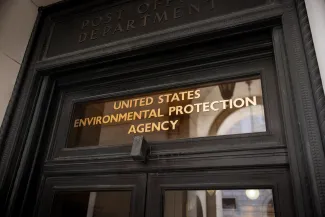
Governor Jared Polis announced Monday that the U.S. Environmental Protection Agency (EPA) has approved Colorado's request to be the main regulator of underground carbon storage in the state. The approval comes through the federal Underground Injection Control Class VI program. This primary authority is known as primacy.
© Greggory DiSalvo - iStock-2197607067
The Colorado Energy and Carbon Management Commission (ECMC) will now oversee wells that permanently store carbon dioxide deep underground in rock formations. The commission will handle permits, operation, monitoring and closure of these wells. State officials say the program will protect underground drinking water sources. They say it will also give carbon-management projects a clear and efficient state-led review process.
The final rule takes effect November 12, 2026. Starting that day, ECMC will be the main permitting and enforcement authority for Class VI wells within the scope of Colorado's approved program. ECMC and EPA will work together to transfer pending and future applications under the final rule and program agreements.
"Colorado leads the nation in developing innovative solutions that strengthen our economy and create good-paying jobs while ensuring our environment is protected," said Governor Jared Polis. "Having Class VI oversight in Colorado will allow fast decisions about permitting underground carbon storage to be made by Colorado experts who understand our geology, communities and environment. This milestone will create new investments that remove carbon emissions from our air while protecting public health and Colorado's waterways."

© iStock
Class VI wells are built and regulated for the permanent underground storage of carbon dioxide. This is also called geologic sequestration. The carbon dioxide is injected into suitable rock thousands of feet below the surface. Layers of rock that liquids and gases cannot pass through sit above it and hold it in place.
Class VI rules require a detailed study of each site. They also set strong standards for well construction and for keeping wells sound. Other requirements cover groundwater protection, ongoing monitoring, financial assurance and emergency planning. Operators must also care for the site after injection ends.
"Achieving Class VI primacy is an important addition to Colorado's comprehensive approach to reduce greenhouse gas emissions while managing and protecting its natural resources," said Colorado Department of Natural Resources Executive Director Dan Gibbs. "Colorado has the scientific expertise, regulatory experience and commitment to public engagement needed to oversee these technically complex projects. I appreciate the extensive work by ECMC staff and our federal partners to build a program that is protective, transparent and responsive to Colorado communities."
Colorado sent its full application to EPA on October 7, 2025. EPA reviewed the state's laws, regulations, technical standards and staffing. It also reviewed the state's enforcement powers and its process for public input. EPA published its proposed approval on March 19, 2026. The agency took public comments before issuing the final rule on October 13, 2026.
The Colorado General Assembly gave ECMC permission to seek Class VI primacy in 2023. Since then, the agency has written regulations and technical guidance. It has also set up procedures to review well applications and made plans for public engagement. ECMC will work with other state agencies, local governments, Tribal governments, communities and EPA as projects move through review.
"This milestone reflects years of focused work by ECMC staff to build a rigorous and durable regulatory structure," said ECMC Director Jennifer Walker Graf. "Our team is prepared to evaluate each proposal based on its geology, engineering, potential impacts and ability to protect people and the environment throughout the full life of the project. We will provide communities with clear information and meaningful opportunities to participate as Class VI applications are reviewed."
Under primacy, ECMC will review Class VI permit applications and supporting technical information. It will study proposed storage rock layers, the rock layers meant to hold the gas in place, and possible paths the carbon dioxide could take. The commission will set rules for operating, monitoring, testing and reporting. It will protect underground sources of drinking water.
ECMC will also require operators to show they can pay for corrective action, well plugging and site care after injection ends. The commission will inspect facilities and enforce program rules. It will give public notice and chances for communities to take part in permit decisions.
EPA will continue federal oversight of the state program under the Safe Drinking Water Act. EPA also keeps certain powers, including responsibilities for Class VI activities on Tribal lands.
The state's Geologic Storage Stewardship Enterprise was authorized by HB25-1165. It pays for the long-term care of geologic storage sites. The money comes from fees paid by the injection well operator tied to each site.
ECMC regulates Colorado's oil and gas, deep geothermal resources, geologic storage of carbon dioxide and natural gas storage. It is a division of the Colorado Department of Natural Resources.
More information about Colorado's Class VI program, the permitting process and chances for public participation is available at https://ecmc.colorado.gov/class-vi-primacy-announcement.