Dairy leader expects difficulty finding workers ‘if we don’t allow more laborers in’

© ahavelaar - iStock-1501815024
South Dakota’s dairy industry has grown rapidly over the past two decades, but an industry leader warned Monday that maintaining the momentum could depend partly on the number of workers allowed into the United States.
During a Downtown Sioux Falls Rotary panel discussion focused on the state’s dairy industry, Tim den Dulk, a dairy farmer and processor, was asked if uncertainty around labor is a concern. The federal government has implemented stricter immigration enforcement during the current Trump administration.
“We expect it to be extremely difficult to find employees, especially if we don’t allow more laborers in,” den Dulk said.
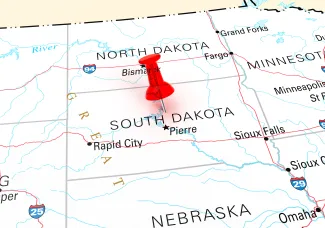
The dairy industry in the state has been affected by immigration enforcement actions. Drumgoon Dairy, near Lake Norden, lost 38 of its 50 employees this summer after a federal Department of Homeland Security audit flagged workers for inaccurate, outdated or incomplete proof of U.S. citizenship or permission to work in the country.
Former Governor Dennis Daugaard moderated the Monday discussion and opened it with a look back at the dairy industry’s growth. The number of dairy cows in the state increased 165 percent from 2006 to 2025, and is expected to grow another 18 percent this year to 253,475 cows. Most of the growth has taken place along the Interstate 29 corridor in the eastern part of the state. Panelists said the growth has helped generate jobs and broaden the state’s agricultural economy.
However, without a reliable pipeline of workers, den Dulk said the industry’s recent growth could be hard to sustain.
“We could pay some people $35, $40 an hour to milk a cow, and I still don’t think we would get them to be milkers for a 12-hour shift, five to six days a week,” he said.
South Dakota also has the nation’s lowest unemployment rate, at 2 percent.
Jake Anderson, plant director at Bel Brands USA in Brookings, discussed the company’s ongoing expansion aimed at doubling production of its Mini Babybel cheese wheels. Anderson said a key strategy for staying competitive in the job market is positioning the company as an employer of choice, including offering higher wages.
“Certainly, it is something that we do need to keep an eye on,” Anderson said of workforce challenges. “It is certainly on the top of a lot of organizations’ minds.”