
Drought conditions drive record bear reports across Colorado in 2025

Colorado Parks and Wildlife is urging residents to secure trash and other food sources as drought conditions reduce natural food availability for black bears and push bear reports to record levels statewide.
From January 1 through August 13, Colorado Parks and Wildlife received 6,129 reports of bear sightings and conflicts, compared with 3,115 during the same period in 2025. This year is on pace to have the highest number of bear reports since Colorado Parks and Wildlife implemented its statewide digital reporting system in 2019.

Colorado Parks and Wildlife
Low mountain snowpack, wildfires and drought have reduced the availability of natural foods such as berries, fruits, nuts, plants and grasses in parts of Colorado. As natural foods become harder to find, bears may travel farther and take greater risks to obtain the calories they need, bringing them into neighborhoods where trash, bird seed, pet food, barbecue grills and other human food sources provide an easy meal.
In late summer and fall, black bears enter hyperphagia, a natural phase when they can spend up to 20 hours a day searching for food as they build fat reserves needed to survive winter. Nearly half of all bear incidents reported in Colorado in 2025 occurred during August, September and October.
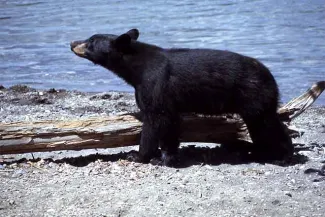
Black bear. Courtesy National Park Service
Bears that repeatedly access food around homes can lose their natural wariness of people and return to human areas. Once that behavior is established, bears can cause property damage, threaten human safety and ultimately face relocation or euthanasia.
Colorado Parks and Wildlife reminds the public that a difficult natural food year is not a reason to feed bears. Providing food — intentionally or by negligently leaving attractants unsecured — can make a dangerous situation worse.
Residents can take the following steps to reduce bear conflicts:
- Never feed or approach bears. Intentionally feeding bears or allowing them to find food teaches bears to approach homes and people for more.
- Secure food, garbage and recycling. Food and food odors attract bears; do not leave them easily accessible.
- Remove bird feeders while bears are active. Birdseed and grains are high in calories and attractive to bears.
- Never leave pet food outdoors. Feed pets indoors when possible; remove food and bowls immediately after outdoor feedings.
- Clean and store grills. Remove all grease, fat and food particles after each use and store grills in a secure area.
- Alert neighbors to bear activity. Share information on preventing conflicts when bears are spotted nearby.
When outdoors, hikers and campers should stay alert, make noise, keep dogs leashed, pack out all food and trash, and store food in approved bear-resistant containers or suspended at least 10 feet above the ground and 10 feet from any part of a tree. Local regulations vary.
If a black bear approaches, hold your ground, wave your arms and yell until it leaves. If it continues to approach, use bear spray. If a black bear makes contact, do not play dead — fight back aggressively. Bear spray is proven to be the easiest and most effective way to deter a threatening bear; do not spray it on tents, campsites or belongings.
More information is available at cpw.state.co.us.