
Lawmakers return to Colorado Capitol for regular legislative session

© fotoguy22 - iStock - 1468912821
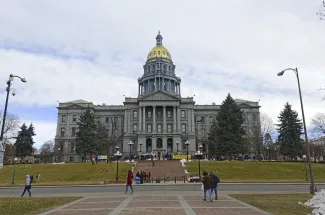
Colorado lawmakers return to work Wednesday for their annual 120-day regular legislative session, and the buzzword of the next four months will once again be affordability.
“The Colorado we’re working towards is one where everyone has a chance to work hard and get ahead,” Senate President James Coleman, a Denver Democrat, told reporters Tuesday. “Where high-quality health care is accessible to all without breaking the bank, our K-12 students and educators have what they need to succeed, and every hard working family can afford housing, health care, child care and higher education. This is what we’re working towards.”
Cost-of-living concerns have been a major theme for both Democrats and Republicans the last few years at the Legislature, as lawmakers passed bills focused on spurring new housing development, bolstering consumer protections and advancing tenants’ rights. It has become more salient as the federal government freezes or outright cuts funding for some safety-net programs in the state.

© zimmytws - iStock-511889079
“We’re facing an uphill battle amid recent attacks from the Trump administration and the federal GOP, including hundreds of millions of dollars in funding for child care, food assistance, job training and other crucial services that keep Colorado families afloat,” House Majority Leader Monica Duran, a Wheat Ridge Democrat, said. “Colorado Democrats are laser focused on this session to pass legislation that will drive down costs.”
Democrats hold wide majorities in both the House and Senate and can pass their agenda without bipartisan support, but high costs are top of mind for both parties.
“We need to focus on the issues we’ve been hearing most about, which are affordability and crime,” House Minority Leader Jarvis Caldwell, a Colorado Springs Republican, told Newsline. “My colleagues across the aisle are hearing the same concerns, and so we are trying to get things done in a bipartisan fashion on those issues.”
Republicans have new leadership in both chambers. Senator Cleave Simpson, an Alamosa Republican, replaced former Minority Leader Paul Lundeen over the summer when Lundeen took a job leading a conservative nonprofit. Caldwell took over as the leader of the House Republicans when former Minority Leader Rose Pugliese resigned following a special session last year. Pugliese and Duran had a public falling out on the House floor.
Colorado Democrats are laser focused on this session to pass legislation that will drive down costs.
Caldwell said he views his caucus’s role as being the “adults” in the chamber. Since Republicans cannot pass any legislation on their own, however, their job requires working with Democrats to see their ideas make it through the legislative process.
“If there’s a bill that we do not agree with, that we can’t stop with our numbers, our role is to work across the aisle to get amendments and get wins, especially if the bill is going to pass regardless,” he said.
Another budget shortfall
Lawmakers will be constrained by a tight fiscal environment — this is similar to last year — and to pass a balanced budget they will need to find about $800 million in funding cuts. That is the gap between how much it would cost to fund the government at the current level and how much the state actually has to spend.
“It’s not going to be easy, but we are required to pass a balanced budget, and Democrats and Republicans will have to come together to protect the services our constituents need,” Coleman said.
The primary force behind that budget shortfall is ballooning costs for Medicaid, which provides health insurance for low-income Coloradans. Coverage and use of the program have expanded while the cost of care keeps rising.

© JJ Gouin - iStock-1642293566
The state’s coffers haven’t kept up, partially due to the Taxpayer’s Bill of Rights. That constitutional amendment limits how much the government can keep in tax revenue and spend for programs and services without voter approval. The cap is based on inflation and population growth, and program costs are outpacing inflation. The restriction has long drawn ire from Democrats, who argue it prevents the state from investing in areas like education, infrastructure and health care.
Medicaid costs have grown much faster than the TABOR cap and now make up the biggest share of the budget. It’s an imbalance that is projected to worsen, which is why Governor Jared Polis, a Democrat, wants to find a strategy to curb Medicaid cost growth. His proposed budget suggests a $300 million increase to the program next fiscal year, less than half of the projected cost increase.
“What we face is an explosion in Medicaid expenses due to an older and grayer Colorado,” House Speaker Julie McCluskie, a Dillon Democrat, said during a legislative preview breakfast hosted by the Denver Metro Chamber of Commerce on Tuesday. “There isn’t a way for us to get out of this budget situation except to tackle health care.”
McCluskie also wants Colorado to consider adjusting the spending cap.
“Thirty years after TABOR (was passed), it’s time that we have that conversation,” she said. “It doesn’t mean getting rid of it. It doesn’t mean that we don’t still think about the way we control or channel government spending. It just means that we’ve got to do it in a better, more effective way so that we’re meeting the priorities we hear about from our constituents.”
Last year, lawmakers made the budget work — it was a $1.2 billion shortfall then — with one-time spending cuts and other accounting maneuvers that prevented severe damage to essential services. This time, many of those levers aren’t available, which could mean more painful cuts.
“With the budget shortfall Colorado is facing, we’re going to have some tough decisions to make this session,” Caldwell said. “Do we look at areas we can cut or do we look at how to raise revenue? Obviously, my position is looking at where we can cut spending.”
The six-member, bipartisan Joint Budget Committee has already begun its work of crafting the state budget. That legislation typically gets passed in the latter half of the session.
Revisiting bills from 2025
Democrats will once again vote on a bill to repeal the state’s Labor Peace Act, a 1940s law that requires a unique second union election in Colorado for workers to negotiate some aspects of their contract. Last year, it was one of the first bills to be introduced but one of the last to pass, as business groups and labor interests tried to negotiate a compromise that would appease Polis. It passed unchanged and Polis vetoed it.
© iStock
Democrats will consider it again this year, and that tension with the governor’s office will likely remain.
Additionally, lawmakers will need to decide how to proceed with the state’s artificial intelligence anti-discrimination law, set to go into effect in June. First passed in 2024, the law was immediately controversial among tech companies and some businesses, which worry it is too rigid and will stifle innovation. Proponents of the basics of the law want to curb bias in AI programs and set up a framework so consumers and affected people know when AI is used in major decisions related to areas like their employment and finances.
A task force met in 2024 to work out a policy solution, but a bill to tweak it during last year’s legislative session failed. Polis then charged the Legislature to include the issue during the special session last summer, but talks broke down, and lawmakers passed a bill to push back the implementation date. That gives them this regular session to find a path forward.
“There is still so much I want to accomplish, including solving the AI puzzle once and for all,” Senate Majority Leader Robert Rodriguez, a Denver Democrat, said.
New leadership and an election year
There will also be interpersonal tension and the dynamic of an election year at play this legislative session. It is the final session for McCluskie and Duran in the House and the final year for Rodriguez in the Senate.
It is also Polis’ final session as governor.

While many legislators will be running to retain their seat in the Capitol — or move from the House to the Senate — a number are also campaigning for higher office, some against one another. That means they will need to be present in the Legislature and also active on the campaign trail.
Senator Barbara Kirkmeyer, a Brighton Republican, and Representative Scott Bottoms, a Colorado Springs Republican, are both vying for governor.
Senator Julie Gonzales, a Denver Democrat, and Senator Mark Baisley, a Woodland Park Republican, are eyeing the U.S. Senate, and Representative Manny Rutinel, a Commerce City Democrat, is running for the 8th Congressional District.
Representative Brianna Titone, an Arvada Democrat, and Senator Jeff Bridges, a Greenwood Village Democrat, are running for state treasurer. Senator Jessie Danielson, a Wheat Ridge Democrat, is campaigning to be secretary of state.
Also in the background will be an ethics investigation into a weekend retreat attended by members of the Colorado Opportunity Caucus, which comprises moderate Democrats. An ethics complaint alleges that those 16 lawmakers violated the state’s gift ban by allowing pro-business dark money group One Main Street to help pay for the gathering. The inquiry could deepen a rift between moderate and progressive Democrats in the Legislature.
People can view live and archived video streams of Capitol proceedings through the Legislature’s website and YouTube page. The Legislature’s website also posts the daily schedule, including committee hearings and expected floor work.