
Limits to health insurance program for immigrants approved by Colorado lawmakers

Amid the hundreds of spending reductions in Colorado’s state budget for the next fiscal year are cuts to health care coverage that’s provided for low-income children and pregnant people regardless of immigration status.
Advocates worry about the impact to a program that has allowed over 20,000 children to see doctors, get dental cleanings and keep up-to-date on vaccinations.
“We — as a society, as a community, as Coloradans — believe that all children in our state and all pregnant persons in our state deserve access to health care, and it should be affordable,” said Nicole Cervea Loy, a senior policy manager at the Colorado Organization for Latina Opportunity and Reproductive Rights. “As a community, it feels like we’re being attacked, on the federal level especially. We’re also not being defended. There’s no one standing up for us in this state.”

© iStock - AndreyPopov
Cover All Coloradans officially launched in 2025 as a Medicaid lookalike program for children and pregnant people who would be eligible for government-subsidized health coverage if not for their immigration status. Membership cards look the same as those for the state’s Medicaid program, and providers don’t know about their patient’s immigration status. But a bill approved by the Legislature would rein the program in amid unexpectedly high costs. The Legislature had to close a $1.5 billion budget deficit this year, a gap largely driven by ballooning Medicaid costs.
When the program was originally enacted in 2022, fiscal analysts predicted it would cost the state roughly $14.7 million in its first full fiscal year. Those costs actually ended up at $104.5 million, making it a target for spending reduction during a difficult budget year. Those predictions were so far off, in part, because of the unpredictable influx of immigrants who came to Colorado in 2023 and 2024. There was also extensive outreach to people in the state who would benefit from the program.
“We really focused on community trust and community engagement,” Cervea Loy said. COLOR was part of a community ambassador program created in the 2022 legislation. “When we began these outreach efforts, a lot of it had to do with getting folks to trust in the state and to trust in this program.”
The impending program limits could greatly erode any trust built, she said.
Colorado is one of 14 states that have state-funded coverage for this population, according to the Kaiser Family Foundation. House Bill 26-1411 won’t change that, but it will put a ceiling on it and limit future growth.
“What feels so hard and so harmful to us is that the community members who are having to bear the brunt of these fiscal realities are, in this case, immigrant kids and pregnant people — the community members who have the least options for coverage and are under the most attack,” Vanessa Martinez, the vice president of policy for COLOR, said.
Heavily debated
HB-1411 was one of over 60 bills that ran alongside the main budget bill this year. It proposed making a series of limits on the Cover All Coloradans program, including limiting its dental benefit to $750 annually, capping child enrollment at 25,000 and eliminating long-term support services for new enrollees. The bill’s most recent nonpartisan fiscal analysis predicts a savings of about $16 million for the upcoming fiscal year that begins July 1 and about $30 million in annual savings beyond that.
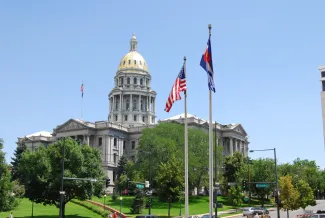
“The primary users of this program are children … who came to our state because of their parents moving here. They probably had very little to do with the decision to come to Colorado, yet they have the needs for medical and mental health,” Joint Budget Committee member Representative Rick Taggart, a Grand Junction Republican, said on the House floor April 9. “At the same time, I’m also cognizant that it’s a dollar figure that impacts our overall budget.”
The bill was one of the most heavily debated within the budget package. Throughout the legislative process, the House adopted an amendment that removed the child enrollment cap, but the Senate did not. JBC members said the cap is necessary to prevent over-expenditures that the Legislature would be obligated to pay, and makes the program more predictable to budget for.
“Enrollment could increase even more before the end of the year,” Senator Barbara Kirkmeyer, a Brighton Republican, said. “If we go over what we appropriated, and the cap is not there, we have to true it up next year.”
A conference committee made of JBC members needs to reconcile the differences between the passed bills before it heads to the governor’s desk. That will happen this week.
Enrollees throughout the state
“There’s been some rhetoric about expenditures and the program exploding, when really what it is, is that more people are getting access to care, providers are having less uncompensated care and less complex cases because they’re able to treat people in a more preventive manner,” said Isabel Cruz, the policy director at the Colorado Consumer Health Initiative.
Advocates say the upstream, preventive care that Cover All Coloradans enables saves costs in the long run by catching disease early and treating illnesses before they become expensive emergencies. Pregnant people are more susceptible to gum diseases, for example, so treating gingivitis and early-stage periodontitis can mitigate the adverse health outcomes associated with poor oral health during pregnancy like a low birth weight and preeclampsia.

“If a pregnancy becomes difficult because of something as simple as periodontal disease, then we’re paying a lot more for services to maintain the viability of the pregnancy,” said David Navas, the policy and campaign manager for the Colorado Immigrant Rights Coalition.
As of February, about 20,000 children and 8,000 pregnant people were enrolled in the program, according to the Department of Health Care Policy and Financing. Pregnant people relied on it for postpartum care, lactation services and vaccines. Children mostly used coverage for dental services, routine health exams, immunization visits and care for upper respiratory infections.
“These are things that kids get into — the flu, broken bones, other boo boos,” Navas said. “It is cheap, preventative stuff that we want people to have access to. Colorado has been saying, from the get-go, the more people that are covered … the better public health in general, the better long-term health, less costly services and less emergency room visits.”
Denver, Arapahoe and Adams counties have the highest number of enrollees, and 57 out of the state’s 64 counties have people enrolled in the program.