Moderate US House Dem group questions USDA’s Rollins over screwworm response

Members of the New Democrat Coalition asked the U.S. Department of Agriculture on Thursday to provide fresh details about the nation’s screwworm outbreak and demanded that the Trump administration allocate more resources to containing the spread.
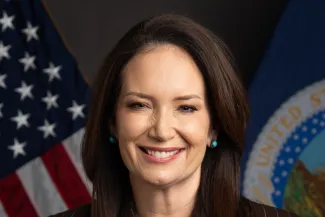
Brooke Rollins - public domain
Representatives Sharice Davids of Kansas, Gabe Vasquez of New Mexico and Jim Costa of California led 18 other members of the moderate coalition in a June 24 letter to Agriculture Secretary Brooke Rollins in which they highlighted ranchers’ and farmers’ growing concerns over the New World screwworm’s impact on livestock health and food prices.
They pushed for greater transparency and more departmental resources to address these worries, noting that producers in the industry are prepared to work with USDA to help “eradicate” screwworms.
“Right now, in the face of this serious and quickly developing situation, ranchers and farmers want real solutions, not excuses or finger pointing,” the lawmakers wrote. “It is time to take responsibility for events that occur under your leadership and move forward to work to improve the situation.”
Screwworms in the South
The New World screwworm is a type of parasitic fly that lays its eggs in livestock and other animals, according to the Centers for Disease Control and Prevention. Eventually, the pest’s eggs hatch into larvae that will eat the flesh of their host, often leading to sickness or death.
They are most commonly found in South and Central America. Screwworms had not been found in the U.S. since 1966 until two cases emerged in Texas and New Mexico at the beginning of June. The USDA confirmed there were 25 total — and 22 active — screwworm cases in animals as of June 25.
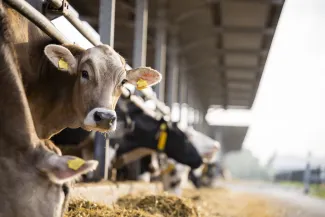
© Smederevac - iStock-1470677566
Though the recorded cases have so far stayed confined to Texas and New Mexico — most of them in the Lone Star State — ranchers and lawmakers from agricultural states across the U.S. are demanding additional support from the federal government in their efforts to fight the outbreak, the lawmakers said.
“The administration must now recommit to transparency and proactive communication with stakeholders and the public about the situation, while also taking appropriate steps to ensure that producers in border states are prepared and have the necessary tools to prevent further spread,” they wrote in their letter to Rollins.
In a statement to States Newsroom, a USDA spokesperson took exception to the lawmakers’ suggestion the department could be more communicative about the situation.
“The Trump Administration is the most transparent administration in history, as we are sure these lawmakers know, the Secretary and Department have gone to unprecedented lengths to communicate updates on the New World screwworm to our local, state, and industry partners, the press, and everyday Americans,” the spokesperson wrote in a late Friday email.
Workforce questions
The representatives requested that USDA release information by July 1 pertaining to department resources and staffing, screwworm surveillance zones, wildlife monitoring, the supply of sterile flies and various economic impacts, among other things.
They asked for a detailed breakdown of how much equipment and personnel USDA’s Animal and Plant Health Inspection Service, which typically handles the nation’s pest-related epidemics, is dedicating to the screwworm outbreak, as well as what leadership’s response will be if the outbreak continues to spread.
They also want Rollins to “identify any positions within APHIS that have been eliminated or relocated” and those that have been “eliminated and since restored” since President Donald Trump took office and began making staffing cuts in January 2025.
Throughout June, some Democrats in Congress have questioned USDA’s ability to manage the threat due to recent department layoffs.
According to the Office of Personnel Management, USDA has lost more than 21,000 employees since Trump began his second term, clocking in at one of the largest reductions of any federal agency or department.
Rollins at a hearing this month said her department has recently devoted more full-time staff to working on screwworm prevention and set aside $1.3 billion to help tackle the issue.
Sterilized flies
The Democrats’ letter also asked about USDA’s plan for breeding more sterilized flies, which help reduce the New World screwworm population by limiting reproduction.
Specifically, they asked for details about when a new sterile fly-production facility in South Texas will produce its first bug and how USDA plans to meet its goal of breeding 500 million flies per week in the meantime.
Near the end of the letter, representatives pointed to a recent USDA analysis that estimated a larger screwworm outbreak in Texas could cost producers up to $1.8 billion. They implored Rollins to share more details about the possible economic impacts of different levels of screwworm surges and what that could mean for Texas, New Mexico and the “broader cattle sector.”
USDA, lawmakers wrote, can combat screwworms with “adequate staffing, reliable sterile-fly capacity, clear timelines, science-based movement protocols, and close coordination with state animal health officials and affected stakeholders.”
“That response is essential to protect the health of the nation’s livestock, safeguard producers’ livelihoods, and drive this pest out again,” they added.
The New Democrat Coalition comprises relatively moderate members, including most of the few House Democrats who represent rural districts.
Along with Davids, Vasquez and Costa, Representatives Angie Craig of Minnesota, who is the ranking Democrat on the House Agriculture Committee, Eugene Vindman and James Walkinshaw of Virginia, Debbie Wasserman Schultz and Darren Soto of Florida, Greg Landsman of Ohio, Seth Moulton and Lori Trahan of Massachusetts, Greg Stanton of Arizona, Salud Carbajal of California, Raja Krishnamoorthi of Illinois, Terri Sewell of Alabama, Chrissy Houlahan of Pennsylvania and George Latimer of New York signed the letter to Rollins.
A handful of Texas representatives also signed the message, including Marc Veasey, Joaquin Castro, Henry Cuellar and Vincente Gonzalez.