‘Nuclear in New Mexico’ conference convenes amid uptick in uranium interest statewide

A panel of tribal, state and federal officials kicked off a pro-nuclear conference Monday near Albuquerque with detailed warnings about the harm uranium extraction can cause, and they stressed that any burgeoning mining projects in the state will face stiff opposition from communities still reeling from legacy pollution.
The Clean Energy Association of New Mexico organized the “Nuclear in New Mexico” conference at a hotel on Santa Ana Pueblo, convening hundreds of industry executives, as well as government officials and community members, to discuss what organizers called the nuclear “renaissance” occurring in New Mexico and across the country.
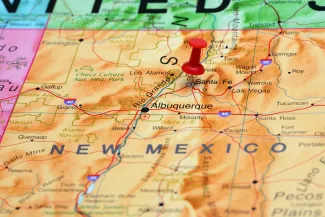
Since President Donald Trump’s second term began in January 2025, the state has seen renewed activity from companies with long-stalled uranium mine permit applications, as well as new notices of intent from companies seeking federal and state permissions to operate the first new mine in the state in decades.
The conference, which runs through Wednesday, includes panels on the nation’s increasing need for uranium, both for electricity and nuclear weapons, as well as new and emerging extraction processes that industry leaders tout as safe for the environment.
But the first panel Monday addressed the hundreds of abandoned uranium mines that dot the New Mexico landscape and eastern portion of the Navajo Nation. Speakers, including the Navajo Nation’s Environmental Protection Agency director and a state official reviewing mine permit applications, described the myriad challenges and mounting costs dealing with the last uranium boom in New Mexico.
DJ Ennis, program manager for the state’s Mining Act Reclamation Program, said the state’s history with environmental contamination has made New Mexico communities skeptical of any new push for uranium.
“Based on these legacy issues, I think communities have a hard time accepting the idea that it can be done differently,” Ennis said. “And frankly, I hope the industry sees the money that’s being spent to clean up these legacy sites informs them going forward: A dollar of prevention is worth millions of dollars in cleanup at the backend.”
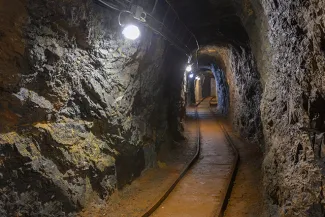
Mining tunnel. © iStock - svedoliver
Ashley Arrossa, a senior environmental engineer for INTERA, an environmental firm that has a contract from the state to assess abandoned uranium mines, said cleaning up abandoned sites is an “essential” first step before New Mexico communities will embrace new mining.
“There’s no getting around that there’s a demand [for uranium] and that it’s growing,” said Arrossa, who grew up in Grants. “But I think the bottom line is that we have to address the past before we can move forward.”
Early Monday morning, a small group of protesters gathered at a median in front of the turnoff to the convention center with signs including “Keep uranium in the ground,” and “Water is sacred; no nuclear in NM”
Alheli Caton-Garcia, an environmental justice organization with the Southwest Organizing Project, told Source NM that she feels compelled to fight to prevent new environmental and public health impacts on New Mexico communities, as well as to try to stop New Mexico’s uranium from escalating global nuclear armed conflict.
“I don’t think that it’s a smart idea to do any extraction, especially while we are plagued with contamination and abandoned sites,” she said. “And a lot of these companies have never done anything about them.”
Janet Lee-Sheriff, president of the Clean Energy Association of New Mexico, told Source NM that the conference, which runs through Wednesday, is aimed at productive conversation in a state with the “potential to be a leader in the entire nuclear fuel cycle.”
Moreover, the conference, she said, “is open to everybody that wants to have a conversation and get the necessary information for good decision making. The uranium extraction won’t happen in New Mexico without adequate consultation and involvement of the communities… Anything that would go forward would have to be what the people want to see, and it would have to be done right.”