Toxicologist offers home chefs safety tips for holiday feasts

Click play to listen to this article.
As Coloradans gather with family and friends for winter holiday feasts, health experts are offering home chefs tips to make sure they will not get anyone sick.
Brad Reisfeld, toxicologist and professor emeritus of public health at Colorado State University, studies how foreign chemicals, such as those released during food spoilage, affect the body. He said cooking meat to a specific internal temperature is important but it is not a fail-safe approach. Many toxins produced by bacteria are heat stable, which means they will survive cooking at high temperatures.
He recommended taking a close look at your turkey or favorite cut of meat before putting it into the oven.
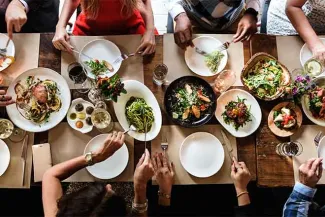
© iStock - Rawpixel
"Is it starting to look off? Does it smell different than when you bought it? Is the texture weird? Is it starting to get slimy or something like that?" Reisfeld outlined. "Those are all clues that something’s going on in terms of the biology and that things might be growing on your food."
Health risks for dinner guests can go beyond a bad case of food poisoning. Reisfeld noted some molds produce potent aflatoxins that have been associated with liver cancer and other kinds of liver damage. Such molds often appear green or fuzzy.
For many guests, leftovers are the main attraction. Reisfeld pointed out it is important to put food into the refrigerator as soon as possible to prevent bacteria growth. Meat and anything cooked inside a turkey can go bad quickly. Reisfeld recommended removing all meat from the bone and refrigerating it separately. Do not put any gravy on top. He added some kinds of foods are a little bit more resistant to harmful bacteria.
"Things like your cranberry sauce, which has a little bit of acid in it," Reisfeld explained. "If you roast vegetables, stuff like that. Fruit pies are probably another one where they’re relatively resistant. Rolls and bread will go longer."
As you’re pulling those leftovers out of the fridge, Reisfeld stressed trusting your senses if things start to look odd or smell funky.
"Evolution has provided us with these great tools for evaluating food safety on our own," Reisfeld underscored. "Use your judgment. And when in doubt, throw it out. It’s not worth the health risk."
Audio for this story was provided by Colorado State University’s podcast, "The Audit" produced by Stacy Nick.