
Washington court upholds Millionaire Tax-repeal ballot language

© Jerome Maurice - iStock-1426962165
Ballot language for a measure challenging Washington state’s Millionaire Tax can remain unchanged, according to a ruling the Thurston County Superior Court issued Friday.
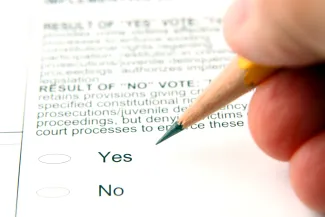
November’s ballot description of Initiative 645 will state if passed, the measure will cut funding for education and human services. The required 10- to 15-word Public Investment Impact Disclosure is placed just below the ballot title and written by the state Attorney General.
Andrew Villeneuve, executive director of the Northwest Progressive Institute, said the disclosure helps voters understand how a measure will affect state spending.
© Svanblar iStock-146069215
"Once they're told how the services are affected, it changes how they think about the measure because now they have a balanced look at it," Villeneuve explained. "And with that balanced look, they can make a decision that's far more informed than they would have made otherwise."
Hedge fund manager Brian Heywood is bankrolling the measure to repeal the Millionaires Tax, which would levy a nearly 10% tax on individual income over $1 million. Heywood’s group, Let’s Go Washington, argued in court since the tax will not start generating revenue until 2029, language stating it would affect the current budget is misleading.
Villeneuve countered biennial state budgets are also required by law to include a four-year fiscal outlook. Villeneuve added the Office of Financial Management has found the state will lose more than $11 billion in projected revenue over five years if Initiative 645 is implemented.
"This is a revenue source that we adopted to support our future needs and the current state budget will be affected if we get rid of that revenue," Villeneuve pointed out.
Villeneuve added before disclosures, which were first used in 2024, Washington state initiative descriptions often promised lower taxes or fees without explaining the resulting cuts to public services like healthcare and education. Villeneuve noted disclosures also alert voters to the existence of a fiscal impact statement in the voter’s pamphlet.