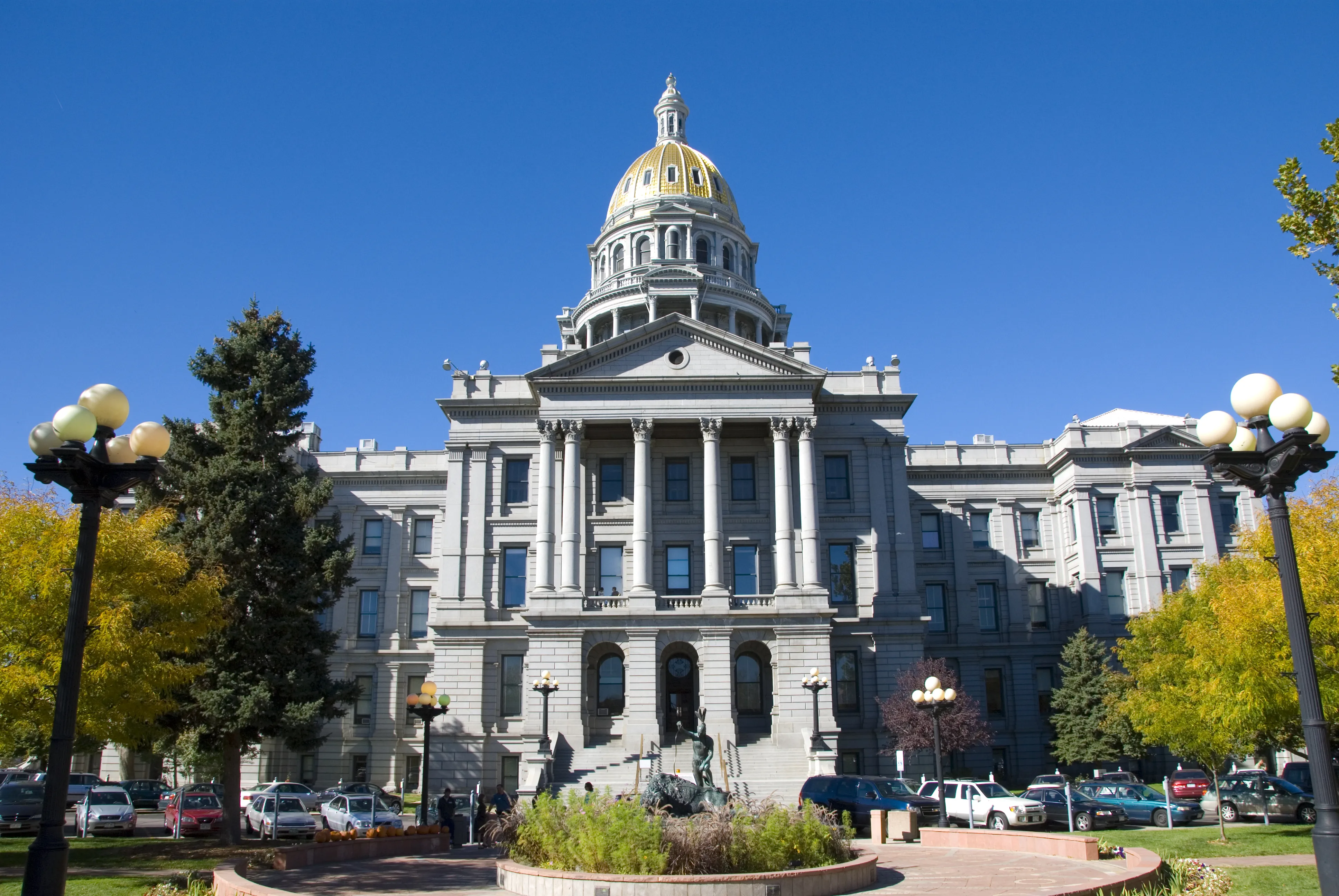
14 measures will appear on Colorado’s statewide ballot in 2026

The Colorado secretary of state’s office on Friday certified the list of ballot measures going before voters in November 2026 — and once again, the list is a long one.
A total of 14 measures will be decided by Colorado voters this year. The figure ties a record for the most questions put to voters in at least the last 52 years, according to a state database. An equal number of measures appeared on Coloradans’ ballots in 2024, 2008 and 2006.

© Baris-Ozer - iStock-1420488382
What sets this year apart, however, is the number of citizen-initiated measures, which are placed on the ballot through petition signatures. Thirteen of the questions on Colorado’s 2026 ballot are initiatives, while only one was referred to voters by the state Legislature. That’s compared to a 7-7 split two years ago. Coloradans haven’t voted on more than 10 citizen initiatives in any single election since 1974.
Nearly half of this year’s 13 initiatives are sponsored by Advance Colorado, a right-wing “dark money” group that does not disclose its donors. In recent years, as Republicans have fallen far short of competing for legislative majorities at the state Capitol, Advance Colorado has been highly active in attempting to pass conservative policies through the ballot box instead.
Ballot questions can either be statutory measures — which, if approved, become state laws that can be changed by the Legislature — or amendments to the state Constitution, which can only be changed by voter approval of a subsequent amendment.
Constitutional amendments face a higher bar for approval, requiring 55% of the vote to pass, rather than the simple majority required for statutory measures. An exception is that if a constitutional measure only repeals, rather than amends, language in the constitution, it only needs a simple majority.
Front Range cities will vote on tax measure to fund Colorado Connector rail service
© Svanblar iStock-146069215
To date, proposed initiatives have been numbered sequentially according to when they were filed with the state’s Initiative Title Setting Review Board, commonly known as the Title Board. More than 400 proposed initiatives were filed in the 2026 election cycle, the vast majority of which were denied a title by the board or withdrawn by proponents.
In addition to statewide ballot measures, voters in 31 Front Range municipalities will vote on whether to approve a 0.333% sales tax hike to fund the Colorado Connector passenger rail service. Many counties and other local jurisdictions will have ballot questions of their own.
Detailed information about the statewide measures prepared by nonpartisan staff at the Legislature will be mailed to registered voters in the 2026 Blue Book, which will also be available online. Ballots are scheduled to be mailed to voters beginning October 2.
Constitutional amendments
Amendment 81 is a proposed constitutional amendment that would require Colorado law enforcement agencies to cooperate more closely with Immigration and Customs Enforcement and other federal immigration authorities. Current state law places strict limits on such cooperation. If the amendment were approved, police would be required to notify the feds when they file certain criminal charges against a person known to be “not lawfully present” in the U.S., or if “the status of the person’s lawful presence is unknown.” It’s sponsored by Advance Colorado.
Amendment 82, also sponsored by Advance Colorado, proposes a two-sentence change that would enshrine the right to buy and sell natural gas in the state constitution. “Consumers have the right to purchase natural gas for cooking or heating in homes or businesses throughout the state,” the measure reads. “Distributors and utilities have the right to sell natural gas for homes or businesses.”

Amendment 83 would establish a constitutional right to hunt and fish “by the use of traditional methods,” and declare that hunting and fishing is the state’s “preferred method” of managing wildlife populations. It would apply to species managed by the state, and wouldn’t include the right to hunt endangered species or species that are illegal to hunt under federal law. It’s backed by the Wisconsin-based International Order of T. Roosevelt, a right-leaning conservation group.
Amendment 84 would end Colorado’s signature-based mail ballot verification system, and instead require voters to provide the last four digits of their Social Security number or driver’s license number to ensure their mail ballot is counted. It’s backed by the Coalition for American Prosperity and Growth, a dark-money group.
Amendment 85 would require all future ballot initiatives and referred measures appearing on Colorado ballots to be written at an eighth-grade reading level. It’s backed by Advance Colorado.
Amendment 86 would require any mid-decade or “off-cycle” redistricting effort to be approved by both the state’s independent redistricting commission and the Colorado Supreme Court, and prohibit the approval of a map that “has been drawn purposefully to favor one political party.” It’s backed by Advance Colorado.
Amendment 87 proposes to enact a graduated income tax system with Coloradans earning over $500,000 a year — the top 3% of earners — paying higher rates, and those in lower brackets receiving a slight tax cut. It’s backed by Protecting Colorado’s Future, a coalition of progressive and liberal advocacy groups. Because it would only repeal, rather than amend, language in the constitution, it only needs a simple majority to pass.
Statutory measures
Proposition NN is the only legislatively referred measure to be considered by voters this year. Democratic majorities in the General Assembly voted to place it on the ballot in May. It would raise the limit on the tax revenue that the state is allowed to retain under the Taxpayer’s Bill of Rights, increasing funding for K-12 education by about $500 million a year. Depending on state revenue growth in future years, it could reduce the amount returned to taxpayers as TABOR refunds.
Proposition 132 would substantially increase criminal penalties for the possession and distribution of synthetic opioids like fentanyl. The possession of any amount of fentanyl would be classified as a felony, and the distribution of any amount would require a mandatory prison sentence between 8 and 32 years. Options under current sentencing laws to reduce penalties and divert some offenders to treatment programs would be eliminated. The statutory measure is backed by Advance Colorado.

Proposition 133 would mandate that anyone convicted of child sex trafficking be sentenced to life in prison without parole, an increase from the current sentencing range of between 8 and 48 years. It’s sponsored by Protect Kids Colorado, a conservative anti-LGBTQ advocacy group also behind two other measures on the 2026 ballot.
Proposition 134 aims to prevent transgender children from participating in school sports. It would add language in state statute to define boys and girls based on physical anatomy, excluding transgender people. Sports teams sponsored by schools or athletic associations would be required to expressly designate those teams for men, women or co-ed. It’s backed by Protect Kids Colorado.
Proposition 135, the third measure backed by Protect Kids Colorado, would prohibit health care professionals from knowingly performing any surgery on a minor “for the purpose of altering biological sex characteristics.” The measure would also prohibit state and federal funding including Medicaid from being used to pay for gender-affirming procedures.
Proposition 136 is an Advance Colorado measure that aims to block the graduated income tax amendment. It would cap income tax rates at their current level of 4.4%, preventing Amendment 87’s higher rates on higher incomes from going into effect. If both measures are approved, their conflicting provisions would be resolved according to which measure received the higher number of yes votes.
Proposition 137 would boost state funding for conservation and wildfire mitigation projects by exempting tax revenue from sporting goods sales from constitutional limits set by the Taxpayer’s Bill of Rights. It’s backed by The Nature Conservancy and a handful of other environmental groups.