
50 years later, housing trends leave their mark on affordability crisis

Click play to listen to this article.
A decline in married-couple households and a rise in the number of older adult households are part of the dynamics reshaping living arrangements in the U.S. and a North Dakota office said the Census Bureau update resonates in affordable housing circles.
The Bureau this month issued a summary comparing the data points to what was seen around America 50 years ago. For example, the portion of householders age 65 and older rose from one in five in 1975 to over one in four in 2025.
Damian Schlinger, executive director of the Burleigh County Housing Authority, which helps local residents access affordable units, sees a connection between the trends and the clients his team works with.
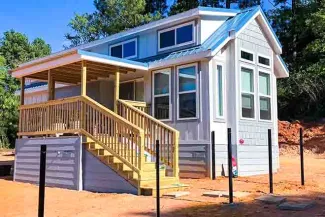
© iStock - Mechelle Brooks
"These demographic shifts mean we're seeing greater demand for accessible one-bedroom units for seniors on fixed incomes, while working families face longer waits for larger units they need," Schlinger observed.
Schlinger pointed out higher interest rates and other factors are forcing seniors to hold onto their affordable rental units as long as possible.
Analysts said shrinking family sizes also are causing pressure with the cost of living prompting younger adults to avoid seeking larger dwellings. The Census estimate showed in 2025, one-person households accounted for 29 percent of all households, up from 20 percent in 1975.
The December summary also revealed in 2025, more than half of adults ages 18-24 lived in their parental home.
Paul Hemez, survey statistician for the U.S. Census Bureau, said it tracks with other recent information they have gathered.
"We have data from an earlier report that indicates that living in a parental home has become more common for young adults," Hemez outlined. "This is true for both 18- to 24-year-olds and 25- to 34-year-olds."
Schlinger stressed the changes seen among young adults is not about delayed independence but rather a clear indicator of the affordable housing crisis. He argued the nation cannot afford to hold back on making big investments in this area.
"Stable, affordable housing is foundational to everything we do: education, health, workforce participation, and community stability," Schlinger contended.
He emphasized it will take a lot of partners at all levels to keep carving out solutions. The state of North Dakota has set aside money to close gaps but housing assistance offices are dealing with federal uncertainty with the Trump administration pursuing cuts for permanent housing programs. The administration argued certain initiatives need more accountability.