Daily Audio Newscast - March 18, 2026

© AlexLMX - iStock-823000260
Six minutes of news from around the nation.
Ohio guitar pedal company hurting from Trump tariffs, Colorado lawmakers consider banning wage garnishment for medical debt, and the Washington Peace and Justice Action Conference in Spokane, Wash., focuses on activist training.
TRANSCRIPT
The Public News Service Daily Newscast for Wednesday, March 18, 2026.
I'm Edwin J. Viera.
The Senate is debating the Save America Act, a strict voter ID law President Donald Trump is pushing.
He and other Republicans argue it'll curb non-citizen voting, but some call it a solution without a problem, since data show non-citizen voting is rare.
Democrats say the bill will heavily restrict who can cast ballots, though polls show most Americans support voter ID requirements.
The period for public comment on Iowa's impaired waterways report closes this week.
The Federal Clean Water Act requires the state to list potentially threatened rivers, lakes, and streams every two years.
Mark Moran has more.
Waterways in Iowa are routinely polluted with excess nitrate and phosphorus, the result of manure runoff from factory farms.
The Iowa Department of Natural Resources uses the report to identify which bodies of water are meeting their designated goals for recreation, fishing and drinking water.
Increased nitrate levels have prompted beach closures and lawn watering restrictions around the state because the state's largest nitrate removal system can't keep up with the contamination.
Progress Iowa volunteer Kim Hageman says in her 40 years as a resident, the water quality has definitely declined.
And those increased nitrate levels, they used to say, oh, they're just in the spring and they would call it a spring flush.
But we're finding that those nitrate levels are high, even in January this year.
The DNR assessed 61 variables in 213,000 Iowa waterways to arrive at the results in the report.
Sections of the Raccoon and Des Moines Rivers, both of which run through downtown Des Moines, are listed as impaired for nitrates, but the state maintains those levels meet federal safe drinking water standards.
Some small businesses in Ohio say tariffs are pushing them to the edge of bankruptcy.
Akron-based Earthquaker Devices is a small business that makes guitar effect pedals.
Nadia Ramlagan reports.
Co-owner Julie Robbins says to make pedals, her business relies on more than 1,000 individual components or raw materials, which come from more than a dozen different countries, and require more than 30 different tariff codes.
There are no domestic sources for 94 percent of the company's building materials, Robbins explains.
The 6 percent that we can get in the U.S. is packaging, but the electronic components and the mechanical components that go into making a pedal just aren't made in the U.S.
A 50 percent tariff on aluminum, steel, and copper implemented last year has vaulted the price of those components.
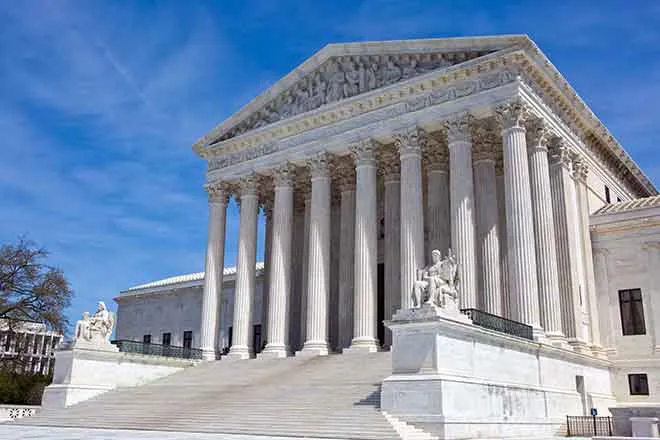
President Donald Trump also imposed a temporary 15 percent global tariff in response to last month's Supreme Court decision, striking down tariffs established under the International Emergency Economic Powers Act.
A February survey released by Main Street Alliance found small businesses raised prices to offset tariff costs.
And around 30 percent anticipate layoffs.
This is Public News Service.
As rising health insurance costs push more Colorado families to drop coverage altogether or pick cheaper but riskier plans with higher deductibles, lawmakers are considering a bill that would end the practice of garnishing worker paychecks to collect medical debt.
Eric Galatas has more.
House Bill 26-1267 would also require health providers to offer payment plans capped at a percentage of monthly income.
Dana Kennedy with the advocacy group Center for Health Progress says the measure would help patients set up a payment plan they can afford.
We know that it's only a small fraction of 1 percent of those bills that end up in collections, but for a patient, a $1,000 bill may mean the difference between being able to pay for food for their family and not having any money in their bank account.
Medical debt is a leading cause of bankruptcy in the U.S., and a recent KFF Health News investigation found that Colorado courts approve some 14,000 wage garnishment requests each year.
Debt collectors claim the proposed legislation poses an existential threat, especially for rural hospitals.
They also say the wage garnishment process is already highly regulated and includes consumer protections.
This story was produced with original reporting by Ray Ellen Bichel for KFF Health News.
Indiana is tying its economic future to rural communities with a billion-dollar investment in Life Sciences.
Joe Ulory reports.
Governor Mike Braun says the plan aims to create 100,000 high wage jobs over the next decade with a strong focus on rural counties still searching for economic growth.
Braun explains most of Indiana is rural and needs a new path forward.
We're a state that probably 70 of our 92 counties are rural would be heavily agricultural.
Almost all of them are trying to find that next act to rejuvenate their economies.
The initiative targets agriculture, animal health, biotech, and environmental innovation.
State leaders say those sectors already connect deeply to rural Indiana.
Supporters say the plan builds on Indiana's strengths in farming and research, but critics will be watching closely to see whether rural areas truly see the promised jobs and investments.
The Peace and Justice Action League of Spokane is bringing together activists, organizers, and advocates from across the Pacific Northwest this weekend for its annual Peace and Justice Action Conference.
Daniel details.
Organizer Chantel Jackson says the group works year-round on issues including racial equity, human rights, and crisis response.
She says as deportations rise in Spokane, the league is partnering with the Washington Immigrant and Solidarity Network to expand rapid response training across the state.
Also accompaniment training, so if someone wanted to volunteer to accompany people to ICE appointment.
We've also partnered with ORG to bring that training.
And our last rapid response training, we had over 400 people in person.
Jackson says the group also runs a peacekeeper program that trains residents in de-escalation tactics during protests and other public events.
I'm Edwin J. Viera for Public News Service.
Member and listener supported.
Find our trust indicators at publicnewsservice.org.