Colorado House approves bills to promote worker safety

© designer491 - iStock-931431806
Colorado lawmakers advanced a trio of bills Tuesday aimed at increasing worker safety and protections, including one measure adopted in direct response to a recent strike at a JBS-owned meatpacking plant.
One of the bills, House Bill 26-1054, would let the state establish a state-level general duty clause if standards under the federal Occupational Safety and Health Act get repealed. The general duty clause requires employers to keep a workplace free from common hazards in their industry and has long been a catch-all oversight tool.
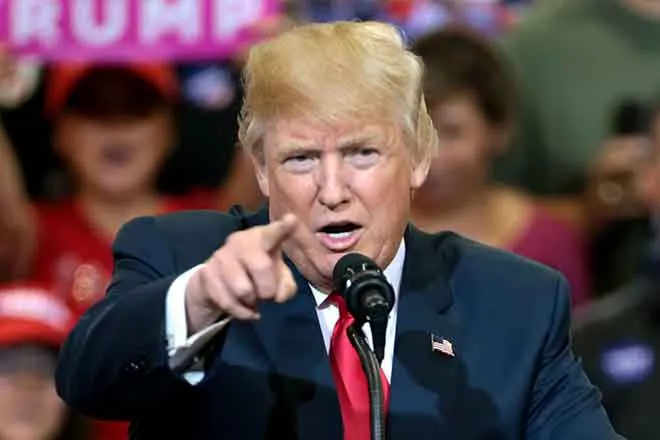
Bill sponsors Representative Manny Rutinel, a Commerce City Democrat, and Representative Elizabeth Velasco, a Glenwood Springs Democrat, want to insulate Colorado from any rollbacks to the law during the Trump administration. Data shows a significant drop in OSHA inspections during 2025, as well as lower enforcement cases and penalties. A proposed rule from last year would narrow the general duty clause in some industries.
“If the federal government is walking away from federal workers, then Colorado is going to step up and protect our neighbors,” Rutinel said on the House floor Monday before an initial vote.
The bill passed on a 42-32 vote on Tuesday.
The bill would also empower labor unions and individuals to sue over workplace health and safety concerns outside of the workplace compensation system. Financial penalties would fund a new Workplace Health and Safety Fund for outreach and enforcement.
“This bill says that if your workplace is unsafe, so unsafe that it is currently illegal … you are not entirely reliant on OSHA. You can go to court and a court can issue an order that the workplace has to be safe,” said Representative Javier Mabrey, a Denver Democrat.
Republicans argued that the state should not try to replace OSHA while it still exists, and that it should seek instead to create an Occupational Safety and Health Administration-approved state plan. About half of the states have that type of plan.
‘Bare bones’ safety plan
The House also approved House Bill 26-1272 on Tuesday on a 43-22 vote. That bill concerns extreme temperatures in industries like construction, agriculture and mining, where workers can be exposed to below freezing or dangerously hot weather.
“I don’t think there is an argument that we are experiencing hotter days and extreme cold weather events,” bill sponsor Representative Meg Froelich, who is running the bill with Velasco, said. “We’ve heard from workers year after year about the expectations placed on them and what it’s like to work in extreme temperatures. Basically, they are told to push on through.”
© iStock.com krung99
It was heavily amended to reduce its financial impact and is now a straight-forward data collection bill. The Colorado Department of Labor and Employment would need to start collecting data about temperature-related injuries at worksites starting next year. Eventually, the department will create a “bare bones” safety plan template that workplaces can adopt.
It is the second year lawmakers have considered an extreme temperature bill. Last year’s version was defeated.
“We went from dictating temperature thresholds and guidelines to be followed, to this legislation we have now before us. Really, we were responding to the stakeholders from different industries,” Velsaco said. “We went back to the drawing board and are in the data-gathering phase.”
Republicans said the bill is duplicative, because the federal government already collects this type of data. Companies also have an economic incentive, they said, to combat temperature-related injuries with ample water, misters and break areas in the shade.
“To spend this much money and this many (state employees) on reporting that is already available to us is unnecessary,” said Representative Carlos Barron, a Fort Lupton Republican.
Bathroom breaks for workers
House lawmakers also passed Senate Bill 26-260 on Tuesday, which would require large meatpackers to give their employees reasonable access to bathrooms. It would apply only to the JBS facility in Greeley, where workers ratified a new contract around pay and benefits after a three-week strike in March.
“We should not have to be in here regulating when and where employees should be able to take bathroom breaks,” said bill sponsor Representative Matthew Martinez, a Monte Vista Democrat. “But this isn’t just a few instances. We had workers testify that they were working until it hurt because their supervisors told them they couldn’t go to the bathroom.”
The bill also ensures that the cost of a person’s protective equipment isn’t deducted from their paycheck.
Another key labor bill this year passed the Senate last week and now awaits the governor’s likely veto. House Bill 26-1005 would eliminate Colorado’s second election requirement for some aspects of union negotiations, such as whether all workers need to pay for representation. The same bill passed last year and Governor Jared Polis vetoed it, as he promised he would if labor and business interests did not find a compromise. Polis, a term-limited Democrat, will almost certainly veto it again this year, but Democrats could bring it for the third time next year when a new governor is in office.