
Colorado legislators deny records request related to luxury Vail retreat with lobbyists

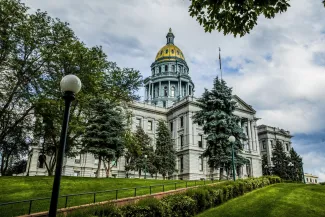
Colorado Capitol Building Denver © iStock - kuosumo
A proposed lawsuit claims leaders of a Colorado legislative caucus violated the Colorado Open Records Act when they denied a request for records related to a Vail retreat, which is already the subject of ethics complaints.
The Colorado Opportunity Caucus is a nonprofit organization composed of moderate Democrats in the Colorado Legislature. Members of the caucus in October attended a retreat in Vail with lobbyists, which the caucus has described as an “organization and educational retreat” for its members.
Complaints filed with the state’s Independent Ethics Commission allege legislators broke the state’s law prohibiting elected officials from receiving gifts. The complaints, submitted by pro-democracy organization Common Cause Colorado, allege the caucus accepted payment for luxury resort expenses from a pro-business dark money group, One Main Street.
The lawsuit claims the caucus and its leadership, chair Sen. Lindsey Daugherty of Arvada and vice chair Rep. Sean Camacho of Denver, violated CORA by denying a request for records showing a list of caucus members, a list of attendees to the Vail retreat, materials presented at the retreat and various records related to the costs of the retreat.
Daugherty and Camacho received written notice of the complaint Thursday morning and have 14 days to produce the records before the plaintiff files the lawsuit in Denver District Court, per CORA rules, according to the plaintiff’s attorney, Scott Moss.
© fotoguy22 - iStock - 1468912821
The plaintiff, Derrick Blanton, is a Denver resident described in the complaint as a longtime progressive activist. He sent CORA requests to Daugherty’s and Camacho’s legislative emails as well as their caucus emails, and forwarded those requests to the Office of Legislative Legal Services. All of the requests were denied. Daugherty and Camacho both said they do not have any records responsive to the request, according to the complaint.
According to a statement from Daugherty, the Opportunity Caucus members “respect and follow Colorado’s open records laws and the public’s right to transparency.” She said the caucus relied on guidance from the nonpartisan Office of Legislative Legal Services “to ensure we met our obligations.”
According to the complaint, Daugherty and Camacho are the appropriate records custodians for the request for information under CORA, as “it is not plausible that the Co-Chair of a Caucus fails to keep not only their own Caucus’s records of its own events and finances, but even simple lists of their own members or event attendees, basic records of spending and funding within the past year, or the policy materials whose value to Caucus members both Co-Chairs praised” in their responses to the ethics commission complaints.
Caucus leadership also denied the request on the grounds that the caucus is not a government body and the retreat was not government work, rather it was work in the legislators’ “private capacity,” according to the complaint.
The legislators’ responses to the ethics commission complaints contradict that claim, the proposed lawsuit says. The requested records are public records, it argues, because the Opportunity Caucus is a “de facto policy making body of the General Assembly and thus is part of the state government” — language pulled directly from the legislators’ responses.
The lawsuit would seek a ruling saying the denial of Blanton’s requests violates CORA and ordering the defendants to produce the records.