Colorado wildlife crossings have reduced vehicle collisions by 90 percent

Click play to listen to this article.
Colorado lawmakers are considering a bill that would raise funds for the construction of wildlife crossings and other safety measures that reduce wildlife-vehicle collisions near migration corridors. If passed, motorists can pay an optional $5 fee when they register their vehicle.
Suzanne O’Neill, executive director of the Colorado Wildlife Federation, said Colorado has the highest annual collision costs of any western state. Each year, the cost of lost wildlife, emergency response, injuries and vehicle repairs is more than $320 million.
"From 2010 to 2024, almost 55,000 crashes occurred between motorists and wildlife," she said. "Now these are the ones that were reported. CDOT estimates that up to two thirds of such crashes are not reported."
USFWS - public domain.jpg
O’Neill said wildlife crossings, which can be underpasses or overpasses, have reduced wildlife-vehicle collisions by 90% on average. They also allow animals to safely reach critical habitat during migration. The recently completed Interstate 25 Greenland Wildlife Overpass between Denver and Colorado Springs, the largest crossing over a major roadway in North America, connects 39,000 acres of habitat.
Senate Bill 26-141 would also help provide matching funds required to tap federal grant programs.
Mike Leahy, senior director of wildlife, hunting and fishing policy for the National Wildlife Federation, said Colorado is widely seen as a leader in reducing wildlife-vehicle collisions. But he said federal funding through the Wildlife Road Crossings Program Reauthorization Act of 2025, currently under consideration in both the U.S. House and Senate, is necessary to continue the work.
"The wildlife crossings program makes sure that money is available to reduce wildlife-vehicle collisions in these areas, save human lives, save wildlife, and also help wildlife move around the state," he said.
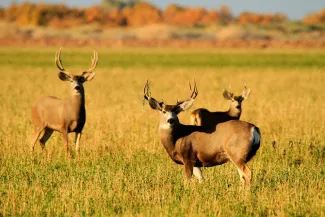
More than 80% of vehicle collisions are with deer, 11% with elk and about 1% each with bears, moose, pronghorn and other species. O’Neill pointed to a recent Conservation in the West poll showing that people across party lines recognize the importance of protecting both wildlife and motorists.
Around 87% of Colorado voters support constructing wildlife crossing structures across major state highways that intersect with known wildlife migration routes.