Commentary - How billionaire money could influence Colorado’s Democratic primary election for governor

Colorado’s Democratic primary for governor between Attorney General Phil Weiser and U.S. Senator Michael Bennet is heating up. TV ads are everywhere, and social media is abuzz with supporters extolling their favorite candidate’s strengths or the opponent’s weaknesses. Colorado has elected only one Republican governor in 50 years, so many pundits believe whoever wins the Democratic primary will likely win the November election.
Money is becoming a big factor in this campaign. Bennet has a distinct advantage thus far, primarily due to one group of funders: billionaires. More than half of Bennet’s super PAC donations are from billionaires, individuals and groups affiliated with organizations run by billionaires, and from a “dark money” group. Research shows that billionaires “are swaying elections all across America.”
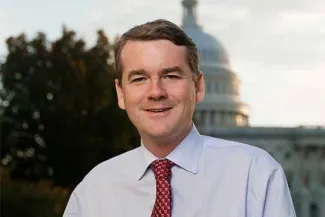
Colorado Senator Michael Bennet
As of the May 18 filing deadline, Bennet had over $11.5 million in total donations compared to Weiser’s $7 million. Over $7 million of Bennet’s money is from his super PAC, Rocky Mountain Way, which includes over $1 million from an independent expenditure dark money organization called Brighter Future for Colorado. Weiser has $1.1 million from his super PAC, Fighting for Colorado, and just over $6 million from individual donations.
Michael Bloomberg is the 18th richest man in the world with a net worth of over $109 billion, and he is the largest individual donor to Bennet’s super PAC, giving $2.5 million thus far. But he is not the only billionaire donor in Bennet’s camp. These billionaires also contributed to Bennet’s super PAC: Steve Mandel and his wife ($175,000,); Tench Coxe and his wife ($100,000); Edythe Broad ($3,000); Marc Heising ($75,000); Eric Mindich ($25,000); Deborah Simon ($25,000); and Robert Fanch ($25,938).
In addition to the billionaires’ money, over a dozen hedge fund managers and venture capitalists contributed between $10,000 and $100,000 each to Bennet’s super PAC. The ultra-wealthy use their donations to gain loyalty from candidates who will enact policies that align with their values and protect their wealth through tax breaks, financial incentives and limited regulations on their corporations. They also use nonprofit foundations to fund organizations they support philosophically.
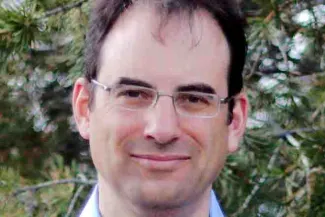
Phil Weiser
Tax filings published by ProPublica for the years 2022-24 show that billionaires Reed Hastings and John Arnold used their nonprofit, City Fund, to give money to Denver Families for Public Schools, which contributed $45,000 to Bennet. The former CEO of City Fund, Neerav Kingsland, donated $2,000. The Bloomberg Family Foundation donated millions to the Charter School Growth Fund. That nonprofit also funds the Colorado League of Charter Schools which, along with 50Can and Stand for Children, gave $470,000 to Bennet’s super PAC. Bloomberg’s dark money group, the American Opportunity Action, gave $45,000. The total investment from Bloomberg and other billionaire-funded nonprofits surpasses $3 million.
Bloomberg’s support for Bennet’s candidacy reflects a relationship and shared philosophy on education reform that stretches back nearly two decades. Before Bennet entered the U.S. Senate, he served as Denver’ school superintendent from 2005 to 2009, the same time that Bloomberg was serving as New York mayor, where he had control of the city’s schools. Like Bennet, Bloomberg promoted corporate education reforms, oversaw the expansion of charter schools, test-based accountability systems, and market-oriented policies.
Both Bennet and Bloomberg ran for president in 2020. Bloomberg spent over $37 million of his own money on his unsuccessful campaign. Bennet received money for his candidacy from over 32 billionaires who were hedging their bets on who would eventually win the party’s nomination. Several billionaires supporting Bennet for president included some of the richest people in Colorado: the Ergen family, Pat Stryker and Ken Tuchman.
While Bloomberg often wins when he donates money to candidates, there are exceptions. Last year, Bloomberg joined with 26 other billionaires to support former Governor Andrew Cuomo in the New York mayoral race, donating $13 million to his campaign. New Yorkers resoundingly said no to the billionaire money and elected Zohran Mamdani.
The money involved so far in this year’s gubernatorial Democratic primary pales in comparison to the $34 million spent in the last contested Colorado Democratic primary, in 2018. Many observers believe that Governor Jared Polis basically bought the governor’s seat by contributing more than $22 million of his own money to defeat three other candidates. Bloomberg was also involved in the 2018 gubernatorial race, donating $2 million to Mike Johnston who came in third to Polis. Five years later, Bloomberg helped Johnston win his 2023 race for Denver mayor when he and another billionaire, Reid Hoffman, donated nearly $2 million to Johnston’s election.
Ballots drop June 8 for the June 30 Democratic primary. Will the independent and Democratic voters buck the trend of billionaires swaying elections and elect Weiser, or will this billionaire investment pay off for Bennet?