Daily Audio Newscast - September 23, 2026

© AlexLMX - iStock-823000260
Six minutes of news from around the nation.
The ICE officer involved in an immigrant shooting in Austin was apparently not wearing his body camera, Nebraska farmer cautiously cheers 'Save Our Bacon Act' setback; beef imports could add to the pain felt by Minnesota's dairy farms.
TRANSCRIPT
The Public News Service Daily Newscast, September the 23rd, 2026.
I'm Mike Clifford.
The ICE officer who shot a Venice weatherman in Austin Sunday, leaving a bullet lodged in his back, was issued a body camera or was not wearing it during the shooting, two officials with the Department of Homeland Security told NBC News.
The officials said it was not clear why the officer was not wearing his body camera.
Another ICE officer who was in the same vehicle was worrying about a camera.
Officials said that camera captured partial footage of the incident, but does not include the moment of the shooting.
Meantime, after producers from 10 states traveled to Washington, D.C. last week to oppose the Save Our Bacon Act, a Nebraska farmer is praising lawmakers' decision to leave it out of the Senate Agriculture Committee's Farm Bill.
The proposal, largely aimed at California restrictions on pork produced using gestation crates, would limit states' ability to regulate how agricultural products sold within their borders are produced.
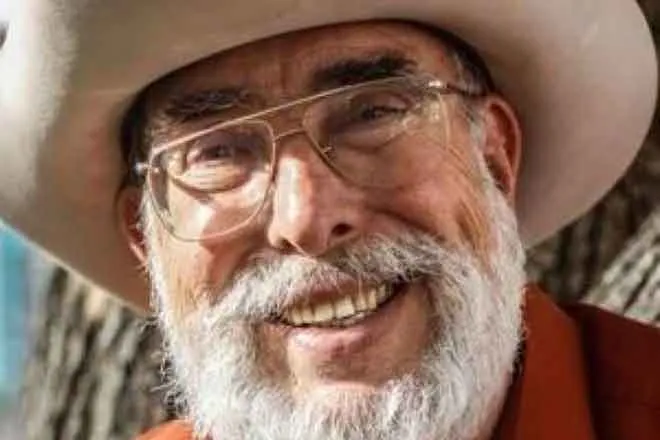
Farmer and rancher Kevin Fulton has raised livestock for almost 60 years and calls confining sows in the crates cruel and inhumane.
He welcomes the Senate's decision, but remains cautious about what happens next.
You know, that's a big plus.
I mean, it makes me feel really good.
You know, the big question is, is the farm bill even going to get passed or if it goes back and then another version will come out and then it gets included back in.
So I'm not ready to go out and start celebrating yet.
Supporters of the act, including the National Pork Producers Council, say differing state regulations create a costly patchwork for farmers and they want Congress to prevent conflicting state standards.
The Senate bill still needs full chamber approval before it can be reconciled with the House version, which includes the Sabre Bacon Act.
The current Farm Bill extension expires at the end of this month, but could be extended again.
Crystal Blair reporting.
The import of international beef doesn't just affect domestic ranchers.
A Minnesota dairy farmer says it hurts producers like him because his cows wind up in meat supplies once their milking life is over.
The Trump administration sent shockwaves through farming circles when it opened the path for an additional 300,000 metric tons of foreign-raised beef supplies at the start of this month.
The White House says these imports could help address higher retail prices, but U.S. ranchers counter that it undermines their efforts.
Sibley County farmer Daryl Mosel says when his dairy heifers age out, they're sold for slaughter.
He echoes frustrations about the federal move.
I think I would agree with the industry that I don't think the imports are really necessary or probably not even a good thing.
Ag associations say they understand cost issues facing consumers, but they add that a foreign injection of supplies is a short-term fix as ranchers still recover from droughts that impacted cattle herds.
I'm Mike Moen.
This is Public News Service.
A growing number of communities in Indiana are pulling the plug on automated license plate readers.
Our Joe Lowry reports Fort Wayne, Chesterton, and several Indiana Counties have recently moved and defunded or expired their flock safety program.
The company provides public institutions with surveillance tools powered by artificial intelligence.
Walker Lasberry is president of Isoff, Indiana, which advocates for tighter regulation of flock cameras.
People are starting to talk about the issue more.
It's being brought to more city councils.
The legislature has an appetite for regulation.
So it seems like everyone's starting to take notice of this issue.
And they're starting to bring the issue to their local elected representatives.
Police say the cameras can provide real-time vehicle information that speeds up investigations and helps officers find suspects and missing people.
But opponents worry about how information is collected, stored, and shared.
Recent opposition has crossed traditional political lines with groups ranging from the ACLU to Americans for Prosperity, raising concerns.
This story was produced with original reporting from Carson Gerber for FBI News.
Next up, fraud experts are hosting events in North Dakota this month to help veterans and military families spot scams.
Roughly 80 percent of veterans and military personnel are targeted by scammers and about 40 percent lose money.
That's according to AARP.
Juanita Jimenez Soto with the North Dakota office says fraudsters are after their hard-earned benefits.
She says the latest scam includes postcards or mailers that appear to be from Veterans Affairs or other government agencies.
Scammers are exploiting trust and the complexity of military and VA benefits and repeated contact through channels that look familiar and official to our veterans and military families.
AARP is hosting Lunch and Learn events on September 29th and 30th in Grand Forks in Minot.
Jimenez Soto says attendance is free, but registration is required.
I'm Judith Ruiz-Branch reporting.
Finally, rising rents and the lack of affordable housing units are putting more of Colorado's lowest paid workers at risk of entering the cycle of homelessness, according to key indicators released by the National Low Income Housing Coalition.
The annual out-of-reach report calculates each state's housing wage, the hourly pay workers need to rent a fair market rate apartment without spending more than 30% of their income on housing.
Kathy Alderman with the Colorado Coalition for the Homeless says that wage is now $36.44 an hour in the Centennial State.
What that means is that people still would have to work about two and a half full-time jobs at minimum wage in order to afford a modest two-bedroom home in Colorado.
Colorado's 2026 minimum wage of $15.16 is 82% higher than it was a decade ago, but it hasn't been able to keep up with rising housing costs.
I'm Eric Galatas.
This is Mike Clifford for Public News Service.
Member and listener supported.
Find our trust indicators at publicnewsservice.org.