EarthTalk - How are North American river otters faring these days?

©
Dear EarthTalk:
How are North American river otters faring these days?
L. C., via email
North American river otters, famous for their cute whiskered faces and playful behavior, make their home across North America in marine and freshwater rivers, lakes and marshes. While they live alone, they are still social creatures and use a variety of vocalizations to communicate.
From the 1500s onward, European settlers in North America trapped river otters, using their waterproof pelts in the fur trade. In the 1900s, their wetland habitats were drained to make room for farmland and urban projects, and the remaining water was often polluted by agricultural and industrial runoff. All three of these dangers led to the historic range of river otters being reduced by more than 75 percent.
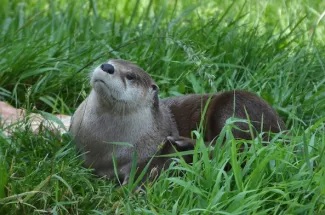
In the 1970s, state wildlife organizations became concerned for the river otter populations and began reintroduction efforts. Between 1976 and 2010, over 4,000 otters were captured and moved from areas of high abundance to low abundance across 23 states. The next important steps were improvements in habitat quality and thorough population management. Happily, research from 2016 reported that all states showed stable or increasing river otter populations. Surprisingly, they are still legally trapped in 40 states, with trapping/harvest surveys being a valuable—and the most common—source of population data.
River otters are important players in their ecosystems, for both other animals and humans. They eat a variety of prey, from fish to crustaceans, and they are valuable indicators of freshwater health. Scientists have even been using their scat samples to monitor parasites present in river habitats. Reflecting in 2018 on the reintroduction efforts and resilience of otters, ecologists John Erb, Nathan Roberts and Chris Dwyer shared that, “The success of populations on some landscapes has shown us that river otters can not only persist, but sometimes thrive in areas historically considered not pristine enough to support them.”
However, we must continue steps to maintain this success, especially as laws concerning environmental protection are always in flux. For example, the 2023 Supreme Court decision Sackett v. EPA reduced the scope of the Clean Water Act,limiting federal authority over wetlands.
If you want to help out the river otters, there are a variety of ways to do so! Of course, it is important to vote in local and national elections to protect environmental regulations. You should wash your car at a car wash when possible so that contaminated water doesn’t go straight into streams, and dispose of household chemicals and medications properly, not down the drain.
CONTACTS
- How Can We Help Otters? riverotterecology.org/how-can-we-help-otters/
- River Otters Are Back, ucscsciencenotes.com/feature/river-otters-back/;
EarthTalk® is produced by Roddy Scheer & Doug Moss for the 501(c)3 nonprofit EarthTalk. See more athttps://emagazine.com. To donate, visit https://earthtalk.org. Send questions to: question@earthtalk.org.