EarthTalk – How do bird feeders shape avian evolution? Ecological impact?

©
Dear EarthTalk:
How has the prevalence of bird feeders in the U.S. affected birds’ evolution? Is putting up a bird feeder good or bad for ecosystems and the planet?
Estelle Louis, Twin Falls, ID
In America, an estimated 50–60 million people maintain backyard bird feeders, a device often hung on yard trees or outdoor decks. Residents deploy these to intend to supply birds with the necessary foods. Although many hang up these feeders in hopes of helping wildlife through harsh seasons, research suggests that this well-intentioned habit may reshape bird behavior beyond the intended benefits.
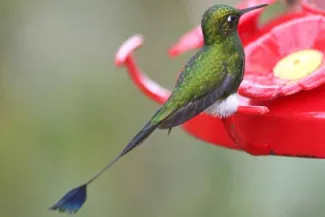
Hummingbird
Feeders are one of the most significant factors in modern bird evolution, contributing to new selective pressures found in urban and suburban environments. For example, the access point of many feeders has caused physical and genetic adaptations among many birds. Studies suggest that some urban bird populations have been found with altered beak shapes and bolder foraging behaviors, a shift researchers attribute to bird feeders. Though this trait may help them exploit human- provided food, it can also significantly reduce their survival in the wild.
Many feeders also favor certain species over others and can cause population instability. Dominant, more adaptable birds such as jays or house finches can gain a competitive advantage over human-provided resources, often at the expense of shyer or less aggressive birds. As a result, feeders can contribute to biodiversity loss and significantly marginalize quieter species, contributing to unbalanced ecosystems across bird populations.
Environmentally, feeders create artificial dense areas that introduce several well-documented risks. Domestic cats, raccoons, and predatory birds hang around these food sources in addition to the targeted birds, often as unwanted guests that can threaten vulnerable bird populations. In addition, ilnesses such as avian influenza, salmonella, and conjunctivitis can spread more easily in these crowded spots. Excess seeds and droppings beneath feeders can contribute to localized nutrient pollution. Researcher Andrew Abraham, from Aarhus University in Denmark, notes that when “the nutrients in bird feed are washed into rivers…they may also exacerbate issues of eutrophication.” (Eutrophication is an excessive growth of algae that is suffocating for all wildlife.)
That said, bird feeders should not be entirely abolished from backyards. Indeed, they can provide a huge survival boost for bird populations after natural disasters, helping wildlife through tough winter storms, droughts, or other severe conditions. Moreover, bird feeders can partake in citizen science, allowing scientists to track and monitor bird populations through local resident feeders.
The final verdict on bird feeder viability is complicated, but having attentive responsibility over feeders is one of the best ways to manage its benefits and consequences. Observers should clean them and provide proper food to avoid disease, while also ensuring that they only supplement natural sources and not replace it. If you would like to learn more about how to eco-consciously set up a bird feeder, consider contacting local wildlife centers or Audubon Society chapters near you.
CONTACTS
- Audubon North American Birdfeeder Guide, audubon.org/marketplace/audubon-north-american-birdfeeder-guide.
- To Feed or Not to Feed Wild Birds, fws.gov/story/feed-or-not-feed-wild-birds.
EarthTalk® is produced by Roddy Scheer & Doug Moss for the 501(c)3 nonprofit EarthTalk. See more at https://emagazine.com. To donate, visit https://earthtalk.org. Send questions to: question@earthtalk.org.