EarthTalk - How is the Great Barrier Reef off Australia faring?

©
Dear EarthTalk:
How is the Great Barrier Reef off Australia faring?
Mary Smith, via email
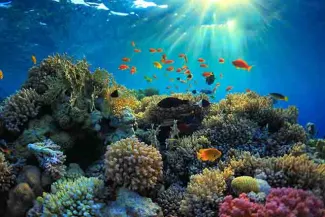
The Great Barrier Reef, one of the world’s most biodiverse marine ecosystems, is facing its most severe crisis. Stretching over 2,300 kilometers and home to thousands of marine species, the reef provides not only ecological richness but also over $6 billion annually to Australia's economy. However, in recent years, climate-driven stressors have pushed it to the brink. “It just kept warming…The heating was intense,” says marine biologist Maria Byrne of the University of Sydney, describing the 2024 heatwave. That event was one of the most catastrophic coral bleaching episodes ever. In 2024, Byrne and her team tracked 400 coral colonies. They found that 80 percent were bleached and 53 percent had died.
© iStock - IBorisoff
This heatwave led to the sixth mass bleaching for the reef since 1998. However, this was the first time severe bleaching had occurred consecutively, from 2023 to 2024, making it incredibly difficult for the ecosystem to recover. Aerial and in-water surveys confirmed widespread bleaching across the northern regions of the reef during the 2024-2025 summer. While some areas reported low to medium bleaching (One to-30 percent), the Far Northern region faced limited access, leaving conditions unclear.
The main factor behind this is rising sea temperatures, with ocean surfaces recorded at 1.2 degrees Celsius above average in February 2024. These higher temperatures caused corals to expel the symbiotic algae that give them color and nutrients, which leads to bleaching and, eventually, death. Flooding, freshwater runoff and outbreaks of crown-of-thorns starfish due to have worsened the bleaching.
This is not just an isolated event. The 2024-2025 season is part of a global bleaching crisis, with reefs in 54 countries impacted. The National Oceanic & Atmospheric Administration (NOAA) has officially declared this the fourth global bleaching event, the consequences of which are devastating. Beyond biodiversity loss, the collapse threatens the stability of Australia’s tourism and fishing industries.
Government strategies included investments in water quality programs and coral restoration projects. However, conservationists warn these measures are not enough. “The next term of government could be the last opportunity to give the reef a fighting chance,” says Richard Leck, the head of oceans at WWF Australia. Experts are calling for urgent climate action, like stronger climate policies, supporting reef conservation organizations, reducing carbon emissions, and raising awareness about coral bleaching. We need to start taking meaningful action against climate change and pollution.
CONTACTS
- A 2024 heat wave decimated corals in Australia’s Great Barrier Reef yaleclimateconnections.org/2025/05/a-2024-heat-wave-decimated-corals-in-australias-great-barrier-reef/.
EarthTalk® is produced by Roddy Scheer & Doug Moss for the 501(c)3 nonprofit EarthTalk. See more athttps://emagazine.com. To donate, visit https://earthtalk.org. Send questions to: question@earthtalk.org.