EarthTalk - Is it true that wildfires are changing due to various man-made and natural factors?

©
Dear EarthTalk:
Is it true that wildfires are changing due to various man-made and natural factors and what can we do to adapt our control and prevention efforts?
Nick Maloney, via email
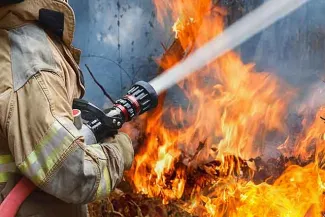
Wildfires were once seasonal and somewhat predictable. Now they have shifted, and are more destructive, harder to contain and less predictable. Wildfires have helped increase biodiversity and growth by clearing dead vegetation in ecosystems. But recent years, they’ve become more threatening to ecosystems and living beings—more intense, burning longer and affecting areas that previously rarely had wildfires.
© iStock - toa55
This pattern change in wildfires has been driven by a multitude many factors. Natural factors like wind patterns, climate variability and droughts have always influenced the development of wildfires. But man-made factors, like climate change, deforestation and urban sprawl, are worsening the spread of wildfires. The changes “that we have seen in many places in the world [are] caused by the interaction between human-caused climate change and the history of land management leading to more abundant and more connected fuels,” according to Amy Hessl, a geography professor and paleoclimatologist at West Virginia University. Furthermore, Corey Hogan, Canada’s Parliamentary Secretary to the Minister of Energy and Natural Resources, has asserted that “increasingly fires are an all-year event…”
Also, the change in wildfires has been massive. In Spain, some 382,000 hectares have burned this year alone. This number is the highest in records starting from 2006. The 2025 Palisades fires were the costliest natural disaster in the first half of the year. The consequences for human health have also grown. A study funded by the European Commission, and others asserts that the mortality rate from short-term wildfire smoke exposure has been underestimated by 93 percent.
Many traditional mitigation strategies, like land management through controlled burns, community preparedness and education, and fire suppression, have been used to control and prevent wildfires. As wildfires become more challenging to mitigate, technology like satellite monitoring and early detection systems has come into play. Fire strategies must be adapted based on future predictions, forest management must be improved, fire forecasting must consider climate predictions, policies have to be strengthened, and action should be coordinated.
Citizens can play a role in mitigating the risks of these changing wildfires. By educating ourselves on the nature of wildfires, we can enhance our preparedness. We must also support wildfire technology networks, as their advancement would be pivotal in our progress. Groups like the American Red Cross, the Natural Conservancy, and Direct Relief all aid in providing wildfire relief and awareness.
CONTACTS
- American Red Cross, https://www.redcross.org/
- The Nature Conservancy, https://preserve.nature.org
- Direct Relief, https://www.directrelief.org.
EarthTalk® is produced by Roddy Scheer & Doug Moss for the 501(c)3 nonprofit EarthTalk. See more athttps://emagazine.com. To donate, visit https://earthtalk.org. Send questions to: question@earthtalk.org.