EarthTalk - How are groundwater levels there holding up?

©
Dear EarthTalk:
Given the multi-year droughts facing the American West, how are groundwater levels there holding up?
Charles Talarico, via email
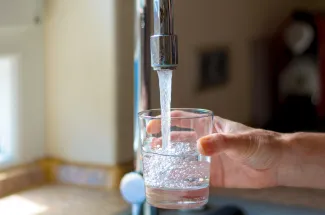
Groundwater levels are the level of the water table below underground aquifers and are crucial to water security. In dry states like California, 40 percent of water is from groundwater; during droughts, this rises to around 60 percent. Due to this dependence and the declining water levels of surface reservoirs, such as Lake Mead (currently at 19 percent capacity), groundwater in the American West is being overexploited, particularly in regions like the San Joaquin Valley in California’s Central Valley and the Ogallala Aquifer beneath the Great Plains in the Midwest.
© mheim3011 - iStock-544332118
Groundwater recharge is slow already, and drastically worsens during drought. Aquifers recharge even in non-drought years at the rate of just inches per day, so years of overuse and additional reliance will deplete them very quickly. In addition to the multi-year-long drought, several other factors contribute to the depletion of groundwater levels.
Agriculture needs water to irrigate; but drought has reduced irrigation to just 20 percent of normal levels in California, and farmers have had to overuse underground aquifers. And due to global warming, snowpack, which provides up to 80 percent of California's water, melts sooner and faster. Late January levels hover at 25 percent of the usual level, reducing the critical transfer to the underground aquifers.
The good news is that 2023 marked the end of a four-year drought in California, and underground aquifers in the San Joaquin Valley were recharged 7.6 million acre-feet, marking a 17 percent increase compared to 2017’s recharge levels. Governor Gavin Newsom acknowledged this in his 2022 Water Supply Strategy, stating, “increase average recharge by half a million acre-feet a year.” With increasing attention to groundwater levels by policymakers, it’s essential to acknowledge that an additional 3.5 million acre-feet of water could have been stored in the underground aquifers of the San Joaquin Valley if it had been captured through catchments or dams.
Climatic conditions between 2020 and 2022 were very arid, and almost no recharge of California's aquifers occurred during this period. Despite Newsom’s 2022 Water Supply Strategy aiming to foster sustainable and reliable water usage and the end of the multi-year drought in 2023, there remains a need to intensify efforts and research into American West groundwater levels for water security and to understand the impact of climate change. Readers can help address groundwater shortages by advocating for smarter water management policies, volunteering with local groups that educate the public on water usage, and engaging with reputable water education networks that advise on global water governance.
CONTACT
- Public Resources on Groundwater Levels: https://linkly.link/2A8Qr.
EarthTalk® is produced by Roddy Scheer & Doug Moss for the 501(c)3 nonprofit EarthTalk. See more athttps://emagazine.com. To donate, visit https://earthtalk.org. Send questions to: question@earthtalk.org.