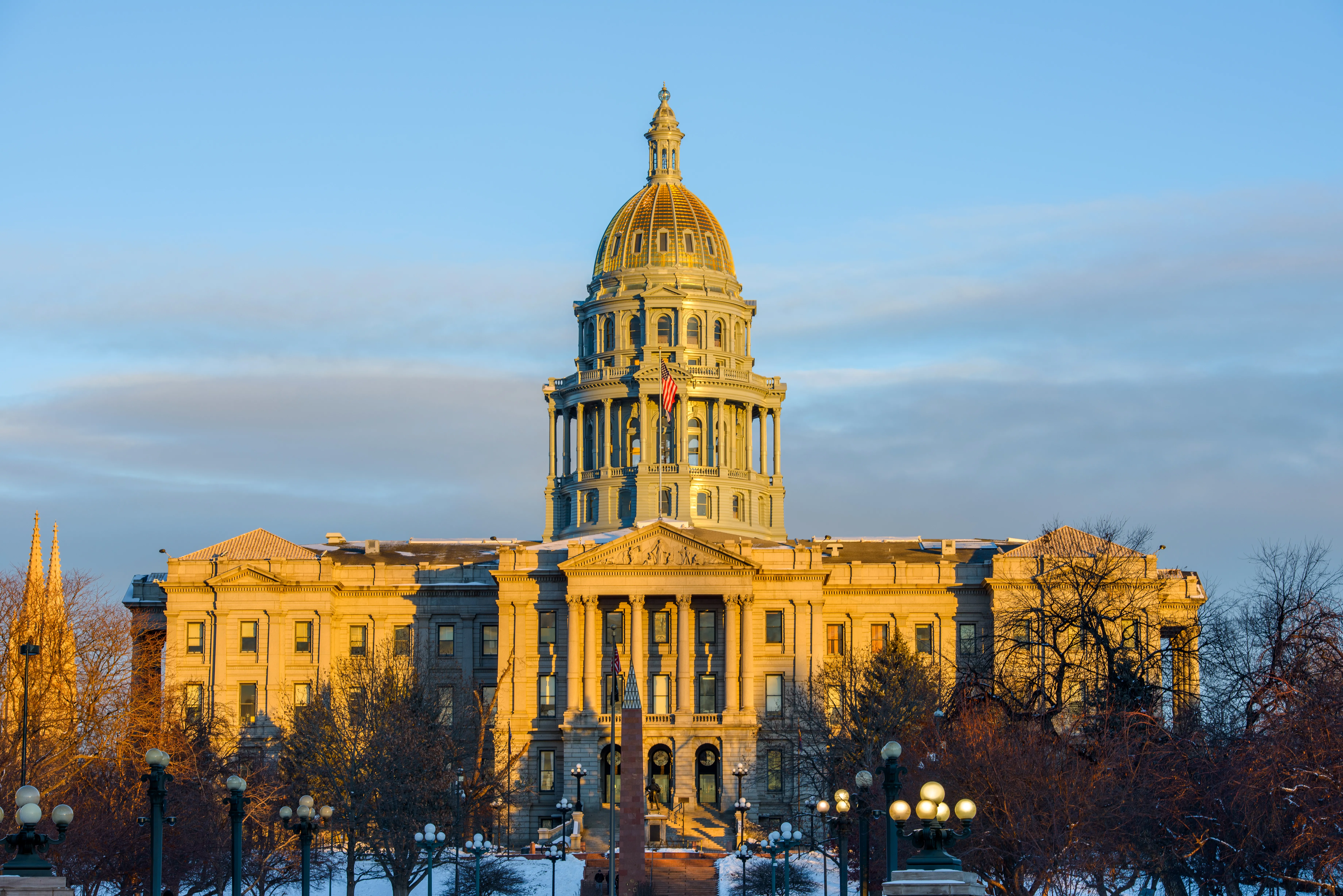
Election security and immigration key topics at candidate forum in Grand Junction

Two community members received standing ovations Saturday during the West Slope People’s Forum, at the Avalon Theatre in Grand Junction. One was for Mesa County District Attorney Dan Rubinstein, and another for an immigrant named Elvia, who requested that her last name not be used. They were among a dozen or so residents from Mesa, Montrose, Garfield and Jackson counties who asked questions of five Democratic candidates running for state office.

“We’re hosting this forum because one of these folks is very likely to be elected and representing us in office,” Emily Hornback, Western Colorado Alliance Executive Director, said. “And we want to make sure the voices and needs of western Colorado are clearly heard, so they’re governing for the whole state and not just Denver.”
The event was attended by 375 people from around western Colorado.
Colorado Western Alliance is “a local grassroots organization that brings people together to create healthy, just and resilient communities across western Colorado,” Hornback said. Organizers have been talking to people around the Western Slope who have been directly impacted by H.R. 1, the federal budget reconciliation act, passed last summer, she said.
The candidate forum included David Seligman and Michael Dougherty, both running for Colorado attorney general; state Senator Jessie Danielson and Jefferson County Clerk and Recorder Amanda Gonzalez, each vying to be the next Colorado secretary of state; and Colorado Attorney General Phil Weiser, who is term-limited and running for Colorado governor.
Secretary of State Jena Griswold, who’s running for attorney general, and governor candidate U.S. Senator Michael Bennet were absent due to scheduling conflicts, Hornback said.
Election security
Rubinstein asked candidates running for secretary of state what steps they would take, if elected, to promote election integrity and security in Colorado. Gonzalez responded that her office created a full-time community engagement position to help create trust in the electoral process, and get accurate information out into the community to dispel misinformation.
© JJ Gouin - iStock-2170878039
Danielson said she has called on Governor Jared Polis to not commute the sentence or transfer convicted felon and former Mesa County Clerk and Recorder Tina Peters to a federal prison — to prevent a “blueprint” for others who seek to corrupt the electoral process. Peters was sentenced to nine years in state prison for her role in tampering with election equipment in the county elections office she oversaw.
Seligman, a worker and consumer rights attorney who is executive director of the Denver-based progressive legal nonprofit Towards Justice, said it is important to hold people accountable for crimes, and that granting clemency for Peters would remove an essential tool for protecting our democracy.
Dougherty, who serves as Boulder County district attorney, praised Rubinstein, a Republican, for his bipartisan work with Weiser during the prosecution of Peters. Partisanship does not have a role in justice, Dougherty said.
Weiser on energy issues
Connie Overton, of Fruita, asked Weiser how the Western Slope can address rising utility costs for rural electric co-op member-owners, while also moving more toward renewable energy.
“Despite (U.S. Energy Secretary) Chris Wright’s efforts to the contrary, we are going to be closing coal power plants in Colorado,” Weiser said. “It should be our decision, not the federal government’s.”
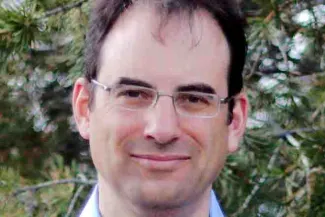
Phil Weiser
Coal is the dirtiest and most expensive form of energy, he said. The U.S. is going backward, in contrast to South Africa, a nation that gets 10% of its energy from solar, he said.
Leslie Robinson of Rifle, and chair of Grand Valley Citizens Alliance in Garfield County, said she’s concerned about aging oil and gas wells in her region. She fears taxpayers will be stuck with the costs of cleaning up thousands of abandoned sites. She asked how Weiser, if elected, would work with residents to protect public health.
Weiser said he’s not afraid of taking on big companies, including the powerful oil and gas industry. He said there needs to be a sense of urgency to plug orphan wells.
“My job is to work for the people,” Weiser said. “I am not taking corporate PAC money.”
‘I am scared’
Olathe High School junior Jayden Hernandez and Jose Chavez, Mesa County School Board president and community leader, talked about the effects of state funding cuts on their schools in Olathe and Grand Junction. Chavez mentioned school closings, larger class sizes, teacher burnout, and the difficulty of retaining quality staff in an area where the tax base is low. Hernandez talked about teacher cuts at his school, how multiple grades are combined in one English class, and how at his high school students are “losing access to a well-rounded education.”
Weiser said he is committed to youth mental health, teachers, and career and tech education. To be successful in addressing those issues the Taxpayer’s Bill of Rights must be changed, he said. TABOR puts a cap, based on inflation and population growth, on increases in state spending. He asked people to join him in the difficult work of persuading TABOR supporters to support changing the law to remove the fiscal restraints affecting Colorado schools.
© flickrcc - Alan Levine
Elvia, who lives in Clifton, gave a testimony in Spanish, which was translated into English, about her fears regarding the Trump administration’s immigration policies. She said she is fearful to go to work or social events. She’s concerned that Polis is giving in to federal pressure instead of defending vulnerable Coloradans, she added.
The first two rows inside the theatre sat empty to represent area immigrants too afraid to attend in person, due to ICE activity in western Colorado.
“Since the beginning of this administration I personally feel excluded from this nation I call home,” she said. “I have lost family these days. They have been taken from our lives, deported and separated from their children. My godson was deported from a gas station, leaving his family abandoned and with no security … I am scared, my family, my community is scared. But I’m here, part of this country as a resident and my voice matters and I’m going to use it so our candidates can hear us.”
She asked how the candidates would oppose the administration’s immigration enforcement policy.
Seligman said that his office gets calls about threats of violence against immigrants, and kids coming home to find their parents have been taken away. He stressed the importance of standing up to bullies and banning private prisons.
Dougherty said he gives “know your rights” presentations around Colorado, and that he will not stand for masked agents on his watch. He also advocated for a ban on private prisons. Since 2018, law enforcement in Boulder County has been prohibited from asking people about their immigration status, he said.

© Svanblar iStock-146069215
Danielson said she helped pass immigration reform to ensure ICE agents do not enter schools and churches. Gonzalez, who said Elvia’s story hit close to home, said she supports bills to increase oversight of immigration officials.
The Colorado attorney general’s office is defending birthright citizenship, Weiser said.
“I will stand strong defending immigrants in Colorado,” said Weiser.
Weiser’s grandmother was pregnant with his mother, who was born in a Nazi concentration camp, which was liberated by U.S. forces five days later, he said.
Kaye Hotsenpiller, CEO of River Valley Health in Montrose, said many of the health center’s patients have lost their Medicaid coverage and cannot afford other insurance, and are therefore avoiding preventive and other health care. She asked candidates how Western Slope residents will access affordable health care.
Weiser said the “Big Bad Bill” — H.R. 1 — is the No. 1 reason Democrats who support health care will win Congress this fall. H.R.1 takes away health care, raises the national debt, and gives tax breaks to those who do not need it, he said.
“I want universal, primary health care for every Coloradan,” he said.
Bennet is scheduled to speak in Grand Junction April 18, at Duel Immersion Academy.