Find fall colors at Colorado state parks this season

Colorado's fall foliage season is underway, and Colorado Parks and Wildlife is inviting outdoor enthusiasts to experience the changing colors at state parks while urging visitors to plan ahead and protect natural resources.
"We ask that folks rushing for gold plan ahead and have location backup plans because parks get crowded, and parking is limited at certain trailheads," said Todd Farrow, park manager at Golden Gate Canyon State Park. "Please only park in designated areas and remember that parking along roads is prohibited."
Colorado Parks and Wildlife
Park rangers can issue parking tickets or tow vehicles parked illegally or blocking traffic. Visitors are encouraged to go during the week or plan early-morning trips to avoid crowds. A daily or annual state park pass, including the Keep Colorado Wild Pass, is required for entry. Camping reservations are available, with options including tent sites, cabins, yurts, and ADA-accessible sites.
To plan a visit, use the State Park Finder Tool and interactive map at cpw.state.co.us/state-parks, or download the free COTREX app at trails.colorado.gov to find trailheads and trail maps with fall color routes.
"The COTREX app gives you the ability to find dozens of routes that our partner agencies recommend for the best fall colors near their trails," said State Trails Program Coordinator Joe O'Brien. "You can use the filter tool next to the search bar, then select 'fall colors' from the tags list to see those recommended trails."
Visitors should stay on marked trails to reduce injury risk and protect trailside plants and wildlife. Printed trail maps are available at park visitor centers.
Parking in undesignated areas can destroy vegetation, ignite wildfires, and block emergency vehicles. Visitors should not carve into trees, pull down branches, or move and stack rocks, which stabilize trails and prevent erosion.
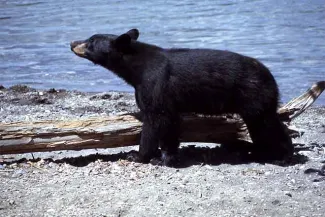
Black bear. Courtesy National Park Service
Colorado is home to approximately 17,000 to 20,000 black bears. Bears may enter campsites and trails where trash and human food are available. Visitors should store food in approved bear-resistant containers, out of sight in a locked vehicle, or suspended at least 10 feet above the ground and 10 feet from any part of a tree. Never spray bear spray on a tent, campsite, or belongings — it is effective only when sprayed directly at an approaching bear. If a black bear makes contact, do not play dead; fight back aggressively.
Elk and moose are currently in their annual rut and can become territorial and attack when threatened. Give all wildlife extra space, respect area closures, keep dogs leashed, and do not feed wildlife. Carry bear spray in bear country. Watch for wildlife on or along roadways. If you see wildlife that appears sick or injured, leave it alone and contact your local Colorado Parks and Wildlife office at cpw.state.co.us/aboutus/Pages/ContactUs.aspx.
"How we explore our outdoor spaces matters. Conservation starts small, but all of our proactive steps to leave a state park better than we found it add up in a meaningful way," said Farrow. "No matter where you plan to explore this fall, please respect our natural resources, park staff, volunteers and fellow recreationists."
For more bear safety information, visit bearwise.org. For more on outdoor recreation at Colorado state parks, visit cpw.state.co.us.