Idaho Surface Water Coalition says severely needed water supply ‘simply is not there’

With farmers entering an important part of the irrigation season, members of the Idaho Surface Water Coalition say they are reducing water deliveries and usage due to a historically low snowpack, a depleted aquifer and drought emergency.
The water that farmers and communities need “simply is not there,” the Idaho Surface Water Coalition said in an announcement Thursday that details how members of the coalition are reducing their own water by up to 33% compared to normal water allocations.
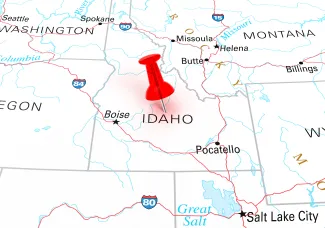
“Idaho is in a bad situation,” Idaho Surface Water Coalition Chairman Alan Hansten said in the announcement. “The snow never fell this past winter, so now we are dealing with one of the most challenging water years in generations, with the consequences already stacking up.”
“Our members are facing deep cuts to each of their water supplies, which in turn is leaving everyone who relies on our water working hard to stretch their supply,” Hansten added. “Farmers are already having to decide what fields to abandon to make it through the summer. The impacts of this very real drought already equate to lost crops and lost income and will be felt in our towns, our businesses, our grocery stores and around kitchen tables across Idaho and our nation.”
Irrigation districts, canal companies across southern Idaho are reducing water delivery
The Idaho Surface Water Coalition was formed in 2005 by a group of canal companies and irrigation districts. Collectively, the coalition’s members are responsible for delivering water from the Snake River to about 550,000 acres of farmland in Idaho, the coalition said.
The water coalition said the water shortfall is forcing the Twin Falls Canal Co. to reduce its water delivery by 33.3% this year, while the North Side Canal Co. and American Falls Reservoir District No. 2 are each reducing their water by 20% this year.
© mheim3011 - iStock-544332118
Additionally, the Minidoka Irrigation District is reducing its water delivery by 15% this year, while the Milner Irrigation District is reducing water by 12%.
As a result, in one instance, a farmer who receives water from Twin Falls Canal Co. is now chopping grain crops early to sell for use as cattle feed rather than let the crop fail later on due to water shortages, the Idaho Surface Water Coalition said.
“It’s important that our fellow Idahoans understand the constraints our canal companies, our irrigation districts, our farmers, our ranchers and all water users are facing,” Hansten said. “Every water user is being asked to do more with less, and they are responding with the same resilience that has always defined Idahoans. The path forward is uncertain, but we will continue to work together to do what is best for the state of Idaho.”
Coalition members said that while surface water users are feeling the most immediate impact of the water shortage, drought, low snowpack levels and a depleted Eastern Snake Plain Aquifer affect all water users.
Snowpack levels are important because when the snow melts in the spring, it flows down from the mountains to fill the rivers and reservoirs with water that farmers depend on, the coalition said.