Judge allows cameras to stay in the courtroom in Charlie Kirk murder case

News cameras can keep rolling in the courtroom in the murder case against the Utah man charged with killing conservative activist Charlie Kirk, a judge ruled Friday.
Fourth District Judge Tony Graf sided against attorneys for Tyler Robinson, who argued that photos, video and audio from the courtroom run too great a risk of tainting the jury pool and fostering bias against their client leading up to his trial. Graf spoke to the role of news coverage in informing the public.
“Livestreaming in particular allows as many people as are interested to observe the justice system at work and hold our branches of government accountable to the guarantees of due process,” Graf said in a virtual hearing Friday.
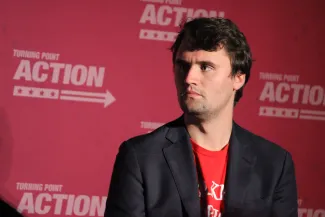
Charlie Kirk - © Matt Johnson CC BY 2.0
He noted Robinson’s attorneys cited cases of news outlets using courtroom footage as a springboard for commentary opining on evidence that may or may not exist and “generally vilifying the defendant.” But Graf said he’s required to consider specific requests from journalists seeking permission to record one hearing at a time, rather than the entirety of media or misinformation on the case.
The case has drawn intense national attention after Kirk, a conservative activist and close ally of President Donald Trump, was shot and killed at Utah Valley University on September 10. A 33-hour manhunt ended after Robinson turned himself in. Prosecutors intend to pursue the death penalty for Robinson if he’s convicted.
Robinson, 23, has not yet entered pleas to charges of aggravated murder and six other counts including witness tampering and obstruction of justice. He appeared off-camera Friday from the Utah County Jail during the video hearing.
Kirk’s widow Erika Kirk, prosecutors on the case, and a coalition of local and national media organizations argued against shutting out news cameras. The Utah County Attorney’s Office said in court filings that allowing the public to see and hear what’s happening in court via news coverage would help set the record straight on conspiracy theories and misinformation circulating about the case.
Kirk, a founder of the conservative student organization Turning Point USA, was killed while answering a question just minutes into his speaking event in a courtyard at UVU. The sound of a single shot sent his audience running for cover and triggered a manhunt for the suspected shooter that lasted almost a day and a half.
The assassination at the time was yet another violent attack on a political figure in a little over a year. His death followed the 2024 attempt on President Donald Trump’s life and the Minnesota shootings that killed a former state lawmaker and her husband and wounded another politician and his wife. More incidents of political violence came later, including the April 25 incident involving a gunman accused of targeting the president at the White House Correspondents Dinner.
On Friday, the judge noted he’s imposed certain limits on the news media, ordering that photographers must record video from the back of the courtroom. The placement limits their ability to capture attorneys’ conversations and documents displayed on their computer screens, Graf said. Graf also closed an October hearing in the case to the press and public, but later released the transcript and audio.
The judge pushed back the date of a multi-day preliminary hearing from later this month to July, granting a motion from Robinson’s attorneys for more time. Graf is set to weigh evidence at the preliminary hearing to determine if there’s enough for the case to proceed to trial.