Low Alaska wildfire season punctuated by serious Interior blaze

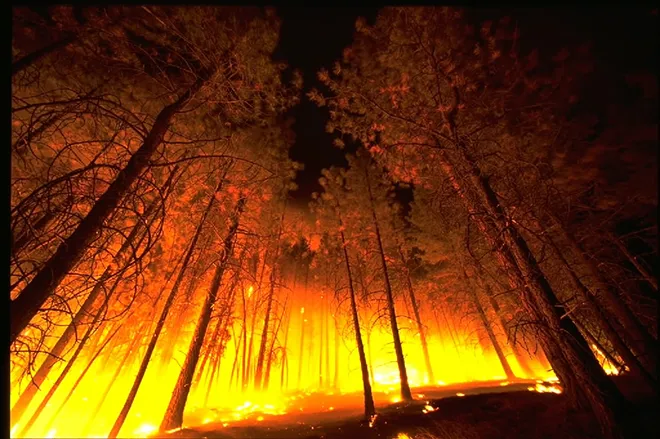
A quiet year for Alaska wildfires is closing out in dramatic fashion with a late-season blaze that has burned homes and prompted evacuations in an Interior Alaska community.
As of Thursday, only about 83,400 acres had burned in Alaska wildfires this year, far short of the approximately 1 million acres that has become typical for recent years.
But the Mukluk Fire, first reported on August 17 and ignited by a downed power line and estimated at about 5,000 acres as of Thursday, has caused particular problems.
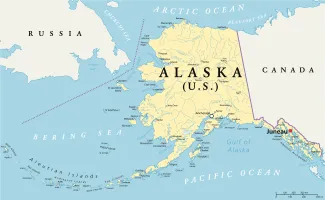
It broke out in the Alaska Highway community of Tok, home to about 1,600 people. At least 20 structures have been lost, said Jessi Morse, an Alaska Division of Forestry public information officer.
Several residents have had to evacuate, and the American Red Cross of Alaska set up a shelter this week at the local school.
Alaska’s fire season usually peaks in June or early July, paralleling the time of maximum lightning strikes and summer daylight.
That makes it “very unusual” for a new fire to break out in mid-August, Morse said.
The Mukluk Fire’s acreage estimate is likely to change as fire managers gather more accurate information, she added.
Over the past half century, wildfire frequency, acreage and intensity have increased in Alaska, though there are wide variations year to year.
This year’s low acreage total was the product of several factors, said Rick Thoman, a scientist with the Alaska Center for Climate Assessment and Preparedness at the University of Alaska Fairbanks.
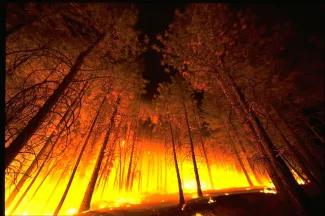
An abnormally cold spring limited the spread of fires, even as summer lightning strikes were about normal in number, he said. Reports from smokejumpers assigned to new blazes indicated that in Interior and Western Alaska, at least, the vegetation on the ground had limited burn potential, even in midsummer.
“They’d be working to put them out and they’re encountering frozen ground, you know, six inches below the ground. And this is in June,” Thoman said. “We had lightning, but the ground wasn’t really ready to burn yet.”
Another factor was the lack of sustained hot weather this summer, he said. There were hot days, but not several of them in a row, he said.
Another contributor was likely “happenstance,” part of the wide variation from year to year, he said.
The most recent ultra-low year for Alaska wildfires was 2008, when only 105,600 acres burned, according to state records. Before that, the lowest year in recent decades was 1995, with only 43,900 acres, according to the records. In prior decades, there were several years with similarly low fire acreage, or even much lower, though past records may lack the accuracy provided by satellite observations.
Despite the low total this year, the late emergence of the Mukluk Fire fits a long-term pattern of expanding fire seasons, Thoman said.
The Tok area, in eastern Interior Alaska about 90 miles from the Canadian border, might be particularly vulnerable to late-season fires.
“Tok tends to be drier. So when the rest of the state is getting wet and rainy, sometimes Tok is left out of that,” Morse said.
Last year, a different fire near Tok continued to burn late in the season, she noted. Last year’s 7 Mile Lookout Fire, which burned about 4,000 acres in a spot southwest of the town, was ignited by lightning in June and prompted a response through early August.