National park signs in Wyoming must be restored by July 4

National park displays deemed inappropriate by the federal government must be restored by July 4 under a federal court ruling issued earlier this month.
A coalition of conservationists sued after nearly 60 items were deemed “improper partisan ideology” by the Trump administration and taken down. They included signage in Grand Teton National Park about Gustavus Cheyney Doane, a key member of an early Yellowstone expedition.
Bill Wade, executive director of the Association of National Park Rangers, one of the plaintiffs in the case, said park employees consider education a major part of their job.
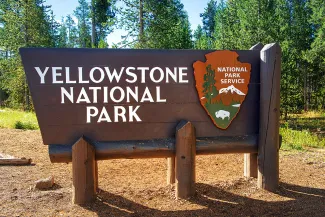
© Ingo Dörenberg - iStock-1138192128
“One of their primary responsibilities is to serve the visitor, and that includes giving them accurate information — even about things that, sometimes, we're not very proud of,” Wade explained.
The signage in Grand Teton, which must be restored before the nation’s 250th birthday, includes details about Doane’s participation in a massacre of Native Americans. The Trump administration must also give the court a weekly update on the restoration process. The National Park Service and Interior Department have filed an appeal.
The court’s order stated the government’s efforts to “rewrite the nation’s history” set a “dangerous precedent of censorship and sanitization.”
More than 400 signs and interpretive exhibits were flagged for removal, including those describing slavery, women’s suffrage and how climate change is affecting surrounding ecosystems.
Wade stressed national parks serve as living classrooms, and few have escaped the effects of increasingly violent storms or drought.
“Employees in the National Park System are very worried about the fact that we can't tell the visitors about it, and in some cases, even have enough information to be able to make management decisions that might end up mitigating those impacts,” Wade noted.
Wade added the court’s ruling is a validation of national park employees, showing the public is on their side.
A 2026 Pew Research Center survey found 66% of U.S. adults believe it is extremely or very important to discuss the country’s historical successes and strengths, as well as its failures and flaws.