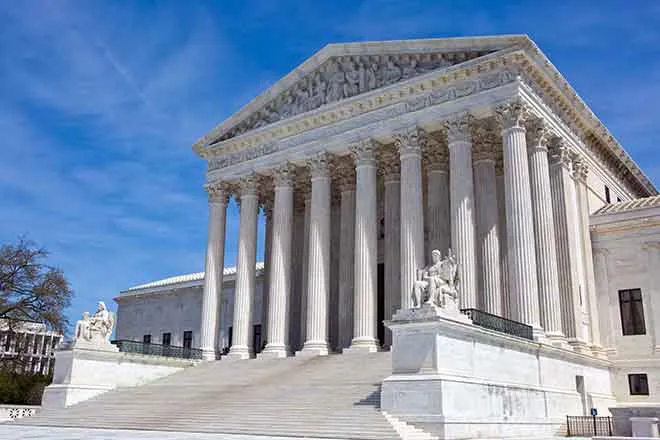
Nebraska Supreme Court denies injunction on state voter data but will hear case in March

© JJ Gouin - iStock-2074087177
The Nebraska Supreme Court accelerated an appeal of a lawsuit that had sought to stop the state from handing over potentially sensitive parts of its voter data to the U.S. Department of Justice.
But even under the court’s expedited timeline, the appeal hearing will be held in March, more than a month after Nebraska Secretary of State Bob Evnen plans to hand over the data to the federal government on Thursday.
And the high court chose not to prevent him from doing so. The Supreme Court denied a push Wednesday to reconsider the injunction request from voting advocacy group Common Cause. A Lancaster County District Court judge had rejected the push for a pause late last week.
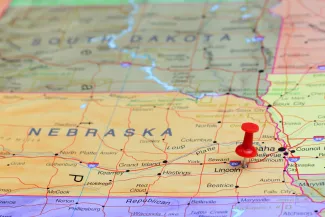
Wednesday’s order, signed by Chief Justice Jeffrey Funke of Nebraska City, said such injunctions while appeals play out should be granted “sparingly.” Justices Stephanie Stacy of Lincoln and Derek Vaughn of Omaha agreed with expediting the case, but the order shows they would have granted the injunction.
The Nebraska Supreme Court set the hearing for March 31.
Evnen reiterated that he plans to hand over the voter data to the DOJ on Thursday. In a statement, he said he would make sure the data isn’t misused.
“Nebraska is in compliance with those laws,” Evnen said. “I am glad that the Department of Justice is reviewing other states to be sure that they also are in compliance.”
Common Cause Nebraska, in a statement, said it found some hope in the Supreme Court’s decision to hear the case.
“The Nebraska Supreme Court is sending a strong message: Don’t release voters’ sensitive data without the Court ruling on the facts in this case,” said Gavin Geis, the group’s executive director. “The Secretary of State needs to listen.”
Common Cause attorney Daniel Gutman said, “Once the data is released, that bell cannot be unrung,” in a brief to the appeals courtthis week. The state argued to the Court of Appeals that the DOJ request was reasonable.
A spokeswoman for Nebraska Attorney General Mike Hilgers declined to comment.
Federal officials have asked states for names, dates of birth, driver’s license numbers and the last four digits of voters’ Social Security numbers, saying the feds want the information to help states ensure accurate voter registration rolls, based on reporting in other states. In Nebraska, the state maintains more limited information.
In Lancaster County District Court, Common Cause argued that Nebraska law affords federal officials no special rights to access residents’ private information in parts of the voter file. The state argued that federal agencies still play a valuable role in elections, which are overseen by states.
So far, the Justice Department has requested voter data from 44 states and Washington, D.C., with plans to seek the information from all 50 states. A few GOP-led states have declined or not responded, citing privacy concerns. A majority of Democratic-run states have declined to turn over the information.
Critics have questioned the safety of letting any presidential administration consolidate state voter data in one place. The federal government has sued more than 20 states and the District of Columbia for not complying.
Evnen, in a follow-up statement Wednesday, reaffirmed that the data would be handed over this week — with no mention of the state Supreme Court hearing.
“We will be sending the information to the DOJ … as I announced in December,” Evnen said.