
Colorado bill would expand the kinds of food home chefs can sell

There’s one ingredient that home baker Heather Wilder has in her sights: buttercream.
The buttery, sugary frosting would level up the organic pastries she sells online and at local farmers’ markets, and it would allow her to start offering cakes, cupcakes and unique flavors for cinnamon rolls.
Buttercream, however, needs refrigeration and therefore isn’t allowed under Colorado’s Cottage Foods Act.
“It would open up so much more revenue for the small business,” she said of the ability to use refrigerated ingredients like buttercream, as the shelf-stable frostings available don’t meet her non-GMO and natural ingredient standards. The Aurora mother envisions offering more pastries and eventually earning enough money to stop her part-time job as a dog groomer and focus on homeschooling her children.
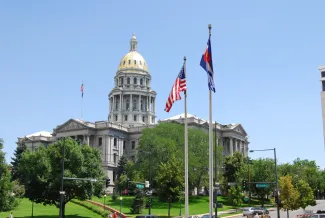
Colorado state lawmakers are considering a bill at the Legislature this year that would expand the cottage foods law to allow limited sales of foods that need refrigeration, including products that contain meat. It is the second year in a row that Representative Ryan Gonzalez, a Greeley Republican, has brought such a bill. This time, it has a deeper bench of organizations giving input and bipartisan support. House Majority Leader Monica Duran, a Wheat Ride Democrat, is a sponsor.
“Given the affordability issue in Colorado, people are struggling to find another source of income,” Gonzalez said. “These are people who are homemakers and make things at home, using the same kitchen they cook for their families in.”
Gonzalez’s bill is dubbed “The Tamale Act” and would explicitly allow the sale of foods like tamales, burritos and tortas, and refrigerated items like sandwiches and salads.
The cottage food law in Colorado allows people who make food at home to sell directly to consumers in their community, legalizing and placing standards around a longstanding practice. Enacted in 2012, the law covers products like dry spices and teas, honey, jellies, baked goods like muffins, tortillas and coffee beans — items that are not “potentially hazardous” and require refrigeration for safety, according to the Colorado Department of Public Health and Environment. There is a $10,000 annual revenue cap, and producers cannot sell to retail or grocery stores.
Last year, Gonzalez’s bill was voted down in its first committee hearing, partially due to concern over food safety and risks of foodborne illnesses like E. coli, salmonella and listeria, which are more common in foods with meat or that require refrigeration.
“It all ties back to public health and foodborne illness, and so how do we mitigate that?” Gonzalez said. He worked between legislative sessions to try and answer that question.
© iStock - Ozgur Coskun
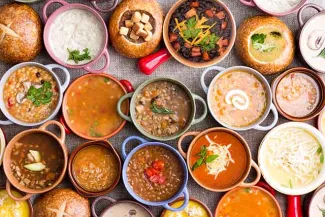
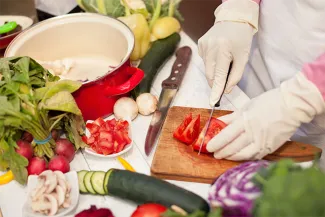
This year’s bill, House Bill 26-1033, includes a food safety course requirement that covers food handling and time and temperature control best practices. It also has language about how the producer handles the food after it is cooked. They would need to maintain the food at an appropriate temperature during transportation and couldn’t transport it more than once or for longer than two hours.
The bill also explicitly allows a public health agency to investigate and fine producers who mislabel food or cause an outbreak of foodborne illness.
“The guardrails in the bill are important, but I think what’s even more important is that we’re saying to these families who are trying to get extra income, especially in our rural parts of Colorado, that this is a way they can do it,” Duran said. “We’re always saying that we want to give entrepreneurship a lift up and support. That should be at all levels.”
The bill also removes the annual revenue cap, though Gonzalez said that provision might be negotiated back in. Cottage food entrepreneurs, he said, are not meant to replace or compete with restaurants, but they should be able to grow and earn meaningful money, or even use their cottage food business as a “stepping stone” to open a brick and mortar location or transition to a commercial kitchen.
“We don’t want to set these people up for failure,” he said. “We want them to actually test their product, gain capital and move into these other institutions.”
Supporters say that such an expansion of the state’s cottage food law enables people to have a profitable small business that broadens food options in local communities.
© iStock.com CherriesJD
“Let’s talk about places like La Junta and places without a lot going on,” said Angel Merlos, the strategic director at Colorado’s chapter of the LIBRE Initiative, a right-leaning group that promotes free-market ideas within the Hispanic community. “People become creative. A neighbor gets known for making incredible burritos, or whatever the cuisine is. They should be able to sell that.”
Gonzalez highlighted similar examples, such as a person who heads to a construction site around lunchtime with tamales for sale.
“I’ve never met someone who has gotten sick from a tamale,” he said. “When you have a good product, loyalty and a good customer base, that shows entrepreneur spirit.”
But public health officials are concerned with cottage food producers venturing into mass production in home kitchens, which lack the inspection requirements and safety infrastructure in professional kitchens, such as designated hand washing stations and large capacity refrigeration.
“Almost all of the foodborne illnesses that I’ve investigated, it was about mass food, or people cooking for a large gathering,” said Tom Gonzales, the public health director in Larimer County and previous president of the Colorado Association of Local Public Health Officials.
CALPHO’s opposition to the bill stems from the revenue cap removal and possibility for production to grow at an unlimited scale. Home kitchens are almost never designed to hold large amounts of hot and cold foods at the same time, Gonzales said, which increases the risk of illness.
“Nobody intentionally does this, but by allowing this I’ll need to prepare for more foodborne illnesses,” he said. “We’d be opening up something very risky. That’s where we’re trying to bring science and empathy and social justice together.”
The Colorado Restaurant Association wants to see amendments to the bill.
“We are working with the bill sponsors to make sure the Cottage Foods Act is an entry point for entrepreneurial cooks who want to establish and grow a business with strong food-safety standards, while also incentivizing them to join the licensed and regulated food industry,” Nick Hoover, the association’s director of government affairs, said in a statement.
The bill has not yet been scheduled for its first committee hearing.