Public comment period ending ahead of clean water rule change

© mheim3011 - iStock-544332118
Click play to listen to this article.
Environmental advocates say it's been a rough two years for clean water, and they're urging concerned New Mexicans and others to comment on a proposed Trump administration rule change.
Waters of the United States, or WOTUS, is a term within the Clean Water Act that defines which waters fall under federal regulatory authority. That determines whether a stream, wetland or other water body needs federal permits for activities such as discharging pollutants.
© Greggory DiSalvo - iStock-2197607067
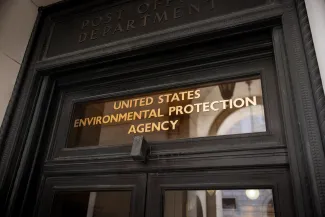
The Environmental Protection Agency says its proposed rule change would align with the 2023 U.S. Supreme Court decision in Sackett vs the EPA. Stacey Wood is the research director at the Union of Concerned Scientists.
"The proposed changes to the Clean Water Act will remove existing federal protections from many of these wetlands," said Wood. "It will allow corporate agriculture, development and other industries to destroy these critical flood defenses and leave communities to pay the price."
Latino and Black communities face higher risks of water pollution and flooding because of systemic inequities. Despite concerns by environmental advocates, many ranchers and farm groups, including the National Cattlemen's Beef Association, support the EPA's proposed rule change.
Until this year, New Mexico was one of several states without wetland protections beyond those granted by the federal government. That led to passage of a law in this year's legislative session establishing a state-led, surface water-quality permitting program.
© artzenter - iStock-509493427
Wood said in 2024, the nonprofit released a report examining the flood-mitigation value of wetlands across eight upper Midwest states. It found that 30 million acres of wetlands there are surrounded by 230 million acres of agricultural land used to grow corn and soybeans in large volumes.
She noted that level of intensity can damage soil and allow fertilizer and pesticides used to grow crops to drain into waterways.
"Wetlands that may look isolated to the naked eye, sometimes are in fact, absolutely connected to nearby rivers, lakes and streams," said Wood. "And, what happens to that wetland can impact the water quality in those nearby waters."
The U.S. has lost roughly half of its wetlands since the 1790s, with loss rates increasing by 50 percent in the past 16 years, according to the U.S. Fish and Wildlife Service.
In addition to supporting fisheries, wetlands underpin tourism and recreation including hunting and birding and help with flood control and climate regulation.
The EPA's 45-day comment period ends on January 5.