South Dakota ranchers question effects of Trump beef imports

© Smederevac - iStock-1470677566
South Dakota ranchers are pushing back against the Trump administration's decision to import beef to try to lower prices.
The president has authorized reduced tariffs on more than 660 million pounds of imported lean beef trimmings.
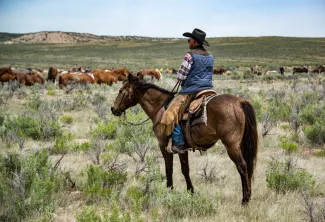
Tanya Svec, owner and operator of Svec Farm in Estelline with her husband, raises and sells grass-fed beef directly to consumers in eastern South Dakota. She said when Trump announced the imports in August, her farm saw an uptick in sales.
"We work with a particular niche where people are looking to connect with a farmer that they trust to meet a certain standard that they're looking for," Svec explained. "In some ways, it makes sense that this would drive up our demand because people are more unsure of what's out there, what's available to them as consumers in the store."
Her experience aside, Svec thinks the beef imports will not help American farmers. She supports mandatory country-of-origin labeling, which has seen a renewed push since Trump's executive action on August 26. Country-of-origin labeling is voluntary in the United States. The U.S. Department of Agriculture used to require it for beef and pork but Congress repealed it in 2015 because of a complex mix of trade violations and tariff threats.
Trump said he made the move to help lower beef prices in the U.S. According to an American Farm Bureau Federation analysis, the imports have not meaningfully lowered the cost of beef since imports began on September 1.
The U.S. Senate version of the Farm Bill includes a provision reinstating labeling requirements and it has passed the Senate Agriculture Committee. Svec supports it because she believes Americans deserve to make an informed choice on what they buy.
"On every apple that we eat, on every T-shirt that we wear, it says where our products are coming from and it just makes sense that we would be able to see right on the packaging where our meat is coming from," Svec emphasized.
The Meat Institute, which represents meat packers and processors, and the National Cattlemen's Beef Association both oppose mandatory country-of-origin labeling, saying compliance costs would raise beef and pork prices.
The Senate is expected to vote on the Farm Bill after the November election. The U.S. House version, which passed the chamber in April, does not include mandatory country-of-origin labeling.