South Dakota regulators approve wind farm that will be the largest in the state

South Dakota regulators approved a permit Thursday for a $750 million, 333-megawatt wind farm spread across approximately 110 square miles of private land.
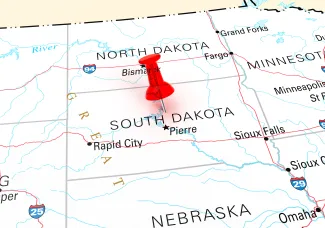
The site selected by Philip Wind Partners, a subsidiary of Chicago-based Invenergy, is north of Philip and about 85 miles east of Rapid City. Plans call for up to 87 turbines and 5.5 miles of electrical transmission line, creating enough capacity to power hundreds of thousands of homes.
According to the application, the project will create about 200 construction jobs and 12 long-term jobs. Over the next 30 years, the company anticipates paying about $85 million to landowners, $50 million in property taxes, and $10 million in other state and local sales taxes.
The South Dakota Public Utilities Commission voted to accept a settlement agreement between the commission’s legal staff and the project that outlines requirements the company must follow during construction and operation.
“The applicant has proven they are entitled to this permit under the criteria established in state law,” said Commissioner Chris Nelson in a statement. “When constructed, this wind facility will be the largest in the state, reinforcing our state’s electricity generation capacity.”
The company filed its application with the commission on Aug. 15, triggering a nine-month review period. It is expected to start construction in June. A commission public meeting notice says the company plans to reach commercial operation in December 2027.
According to tracking by the website Choose Energy, South Dakota ranks ninth nationally in wind energy production. About 58 percent of electrical generation in the state is from wind, which is a higher percentage than all other states except Iowa and Kansas.