Tennessee Black farmers turn down $12 billion bridge payments

Click play to listen to this article.
Some Black farmers said they won't participate in President Donald Trump’s new $12 billion federal farm aid program, citing concerns about racial bias.
The Black Farmers and Agriculturalists Association in Memphis represents more than 20,000 heirs of Black landowners and ranchers across the country.
Thomas Burrell, president of the association, said the aid excludes those who grow tobacco and sugar cane, crops many Black farmers rely on. He added his group is preparing a lawsuit, arguing the payments violate equal protection and due process rights.
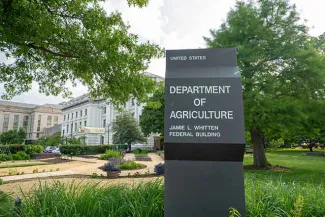
© iStock - Melissa Kopka
"It is geared toward the larger scale, what we call 'high roller' row-crop farmers, to the exclusion – which, by the way, would be most of your white farmers – which is to the exclusion of your specialty crop or small-crop Black farmers," Burrell contended.
Burrell accused the Trump administration of arbitrarily distributing funds to the same farmers whose policies historically pushed Black farmers out of business. Burrell is requesting an in-person meeting with President Trump, and noted the Association has also coordinated with the office of Senator Marsha Blackburn, R-Tenn., to arrange a meeting. The Trump administration plans to announce crop-specific payment rates by month's end, with funds released by late February.
Bishop David Allan Hall Sr., a former soybean farmer who once served with USDA’s Farm Service Administration, said the aid package stems from bad policy. He acknowledged farmers do need the money but feels it is still essentially a handout.
"Particularly the small farmers and the midrange farmers, they need it because, either through blind obedience or just having no voice, misfortune through the tariffs was visited upon them," Hall asserted. "It's only right that they would be compensated."
Hall pointed out Black farmers have deep generational roots in agriculture but decades of discrimination pushed many off their land, which was often taken or sold. White farmers have historically had pathways to recover but Black farmers have not received comparable support.
The Trump administration said new assistance is coming through what was known as the "One Big Beautiful Bill Act" and recent trade agreements.