US senators demand end to Iran war funding in bill averting shutdown

The possibility of a government shutdown next month increased somewhat Thursday as a group of U.S. senators said the stopgap spending bill must cut off funding for the Iran war.
The last funding lapse ended when Trump signed a bill in November 2025, after a record 43-day government shutdown that closed federal offices.
Democratic Senators Michael Bennet of Colorado, Tammy Duckworth of Illinois and Chris Van Hollen of Maryland, as well as Vermont independent Senator Bernie Sanders, wrote in a joint statement that a short-term funding bill “must include language that restricts the Trump Administration from using appropriated funds to continue his war against Iran.” Legislation must be enacted by December 11 to avert a shutdown.

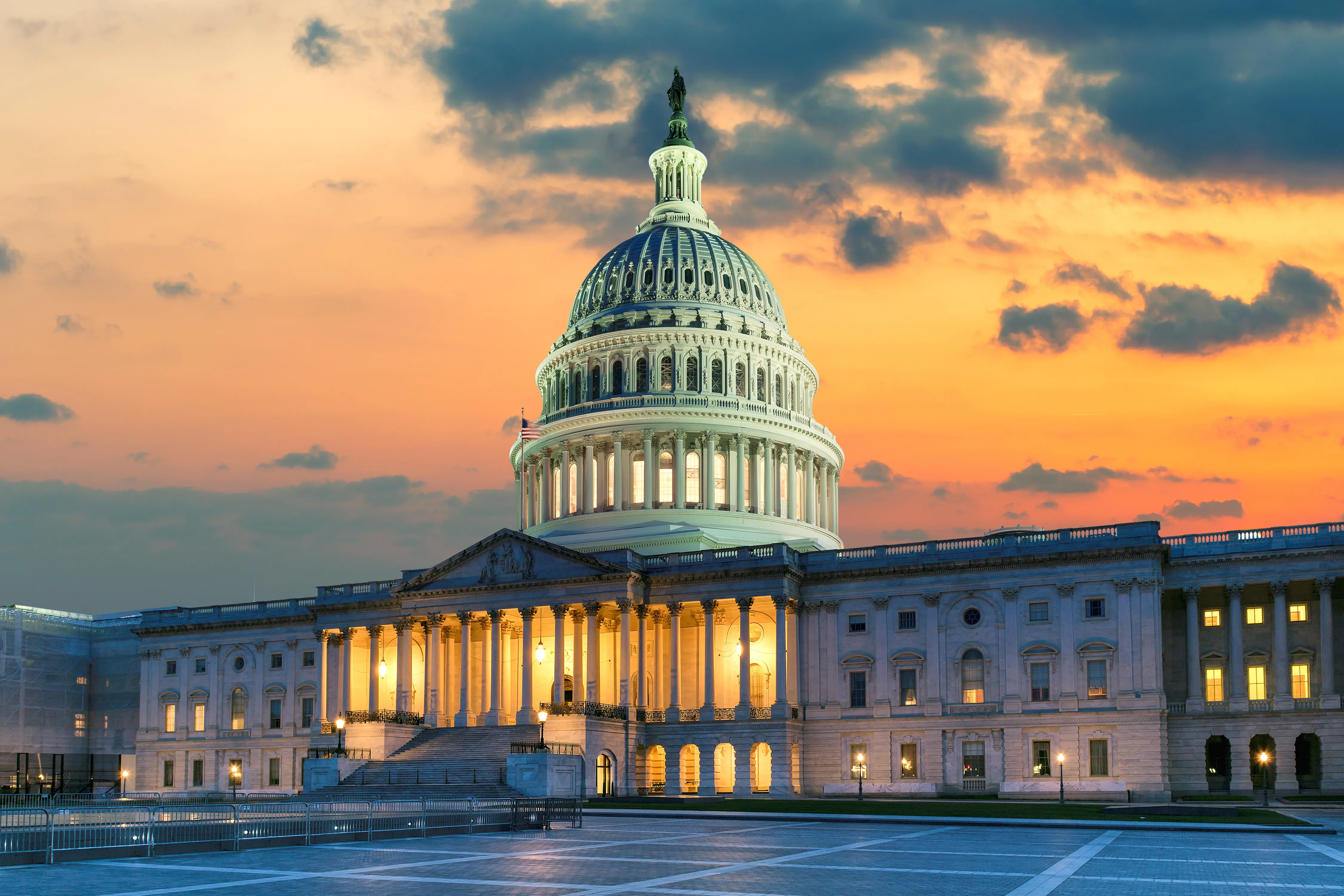
© iStock - icholakov
“The American people do not want more war in the Middle East — but that is what President Trump has given them. Congress cannot allow Trump to continue his conflict — we must force him to end it,” they wrote. “Not doing so will only prolong the American people’s pain, and opens the door to further escalation as he has threatened.”
Washington state Senator Patty Murray, the top Democrat on the Appropriations Committee, said Tuesday that leaders on the panel were debating how long the stopgap spending bill should last and whether to add any restrictions to how the Trump administration can spend the funding.
“We’re exploring all options at this point,” she said.
Murray said during the brief hallway interview in the Capitol that Democrats did not intend to approve the tens of billions of dollars in additional funding that the Trump administration requested this summer for the Iran war.
Any short-term funding bill will need support from Democrats to move through the Senate, where at least 60 votes are needed to advance major legislation. While Republicans hold a majority of 53 seats for the rest of this year, it’s not enough to pass bills without bipartisan support.

© Ruma Aktar - iStock-1482798483
But, President Donald Trump’s signature will also be needed unless there are veto-proof margins in each chamber, an unlikely prospect with Republicans in charge of the House and Senate.
That makes avoiding another government shutdown when funding expires a complicated balancing act.
Bennet, Duckworth, Sanders and Van Hollen wrote in their joint statement that the midterm election results showed voters want Congress to end the “illegal and disastrous war with Iran.”
“This conflict has driven up the cost of gas, groceries, and fertilizer,” they wrote. “More than 20 American service members have been killed and hundreds more wounded, while achieving none of President Trump’s stated goals and harming civilians across the region.”
House Democratic Leader Hakeem Jeffries, asked about the possibility of adding language to an appropriations bill to end the war, said he didn’t want to get ahead of bipartisan negotiations.
He said that Connecticut Democratic Representative Rosa DeLauro, ranking member on the House Appropriations Committee, was “working through all of our Democratic priorities to see what’s possible in advance of December 11.”
“I don’t want to get out ahead of Congresswoman DeLauro but House Democrats have uniformly opposed providing any additional money to Donald Trump’s war machine, to Pete Hegseth’s war machine over in the Middle East,” Jeffries said. “Taxpayer dollars should be spent to make life more affordable for everyday Americans, not to drop bombs overseas in an endless war that Donald Trump and Republicans promised they would not get the country into, but turned around and did the exact opposite.”