Workers’ comp didn’t cover a New Mexico firefighter’s cancer — a new bill would change that

Albuquerque Fire Rescue Lieutenant Paramedic Mark Jaquez had been on duty with the department for nine years when, in 2017, he received an unexpected diagnosis: colorectal cancer that required surgery.
His medical team removed 18 polyps and discovered that the growth had narrowly avoided a critical junction. If it had spread just a fraction of an inch further, he recalled, he would have needed a colostomy bag for the rest of his life.
Jaquez, a U.S. Air Force veteran, had spent his entire adult life fighting fires, so the cancer’s origin was no mystery to him. He knew that virtually everything around him — from the oil slicks on the tarmac to the clothes on his back — contained synthetic chemicals that could emit harmful carcinogens when ignited.

A young colleague diagnosed with testicular cancer around the same time easily obtained workers’ compensation for the duration of his treatment, Jaquez recalled, so he went to his union representative to begin the process himself. Before long, though, his union came back with difficult news from the city: Under New Mexico law, firefighters with colorectal cancer cannot receive workers’ compensation unless they’ve been employed for 10 years.
Jaquez, now 54, was in his mid-40s at the time of his diagnosis. Currently, state law does not provide a uniform benchmark for whether a firefighter’s cancer diagnosis is covered under workers’ compensation — bladder cancer is covered after 12 years of service; breast cancer is covered after five years of service if it’s diagnosed before the age of 40 and the firefighter does not have a genetic predisposition for breast cancer; testicular cancer after five years of service if it’s also diagnosed before the age of 40 and if the firefighter has not used anabolic steroids or human growth hormone.
Firefighters, in particular, face a “significantly elevated risk” of developing colorectal, prostate, testicular, bladder, thyroid and pleural cancers, according to a 2019 study in the International Journal of Cancer.
“I don’t know how they justify the different types of cancer getting workman’s comp,” Jaquez said. “What’s the difference? Cancer’s cancer.”
A bill before the state Legislature would reform the law that denied him coverage. If approved, House Bill 128 would extend workers’ compensation coverage to a number of cancers for the first time, including lung, ovarian and cervical cancers. It would reduce the years-of-service requirements that kept Jaquez from receiving the benefit while he was ill.
The bill would classify the illnesses as “caused by” employment as a firefighter. Its protections would apply to full-time, non-volunteer firefighters across the state.
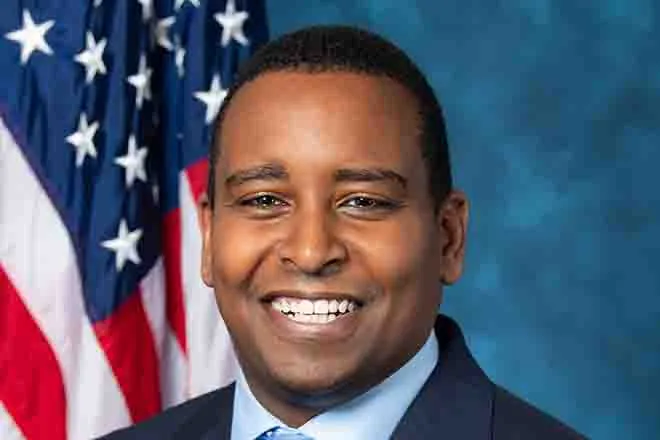
“When a firefighter develops an occupational cancer, it’s a terrifying moment for them, their family, and their crew. They deserve the right support,” Majority Floor Leader Rep. Reena Szczepanski (D-Santa Fe), a bill co-sponsor, wrote in a statement to Source NM. “As we’ve been working on this bill, we’ve heard horrible stories of firefighters having to fight for assistance through workers’ compensation at the same time that they’re battling cancer. That’s because our current law is out-of-date with the today’s science on toxins and their resulting cancers.” HB128, Szczepanski wrote, “reflects the reality that firefighters are regularly exposed to carcinogens while working to keep us safe, and it strengthens our commitment to care for them in those worst-case scenarios.”
© jdwfoto - iStock-1487999298
The legislation mirrors the federal Honoring Our Fallen Heroes Act of 2025, and sailed through the New Mexico House of Representatives on Feb. 10 with a 61-1 vote. Rep. Randall Pettigrew (R-Lovington) cast the lone “no” vote.
It now heads to the Senate.
“I don’t know how they justify the different types of cancer getting workman’s comp,” Jaquez said. “What’s the difference? Cancer’s cancer.”
Firefighters say the bill would bring common-sense reforms to an arbitrary practice. Why should a firefighter with 10 years of service qualify for coverage while a first responder with nine years doesn’t, they ask. Similarly, why does the existing list neglect to cover lung cancer for firefighters who are exposed to outsized amounts of smoke, Albuquerque Fire Rescue Lieutenant Mike Sedillo asked.
Sedillo has worked for the department for nearly 27 years and, in 2021, the local union named him firefighter of the year. More than a year ago, he recalled, he developed “a small cough.” He undergoes routine cancer screenings at work and never found a reason to be concerned. At his wife’s insistence, though, he mentioned the cough to his doctors.
“I’m in pretty good shape, I was running, still working out with the guys. I’ve always had to work a little harder than I should have,” Sedillo, 56, said. “But in my mind, I was just getting older.”
Medical imaging revealed scarring on the lower lobe of his left lung, he said, and his doctor agreed to keep an eye on it. Six months later, it presented signs of infection. Another scan later, his providers questioned if the lung had collapsed. They ordered a biopsy.
Two days later, in December of 2025, he and his wife woke up early to surprise their granddaughter at school on her 10th birthday. They planned to drive to McDonald’s the minute the restaurant switched from serving breakfast to lunch, he recalled, and then bring it to her during her school’s lunch hour.
At McDonald’s, Sedillo told his wife he’d wait in the car while she went inside and picked up the food. Alone, he glanced down at his phone, which displayed a notification from his health care provider’s portal: the biopsy results were in.

“That’s how I found out I had lung cancer,” he recalled. “I didn’t think it was going to be cancer. By the time she got back to the car, that’s when I told her. And she was like, ‘What? No, no, no.’”
Like Jaquez, he called the union president to get the ball rolling on workers’ compensation. Also like Jaquez, he initially hit a brick wall.
“The first thing he said is, ‘Mike, it doesn’t cover lung cancer,’” Sedillo said. “That blew my mind…we’re exposed all the time.”
Inexplicably, he said, the city eventually approved his claim even though current law doesn’t cover lung cancer. He said he doesn’t know who or what to thank, other than “the good Lord” and hopes the proposed bill becomes law so his colleagues across the state do not have to rely on divine providence.
The proposed law says cancers like Sedillo’s are “presumed” to be caused by their work. From his point of view, he doesn’t know what else it could possibly be attributed to. He fought the historic Cerro Grande Fire, which in 2000 ripped across 43,000 acres and destroyed more than 200 homes in Los Alamos. He keeps a mental catalogue of every toxic and carcinogenic substance he could have encountered over the years when he put out fires at plane crashes, the bosque and recycling plants.
“Who knows what I encountered there,” he said. He called it “a no-brainer” that airborne toxins would eventually infiltrate his respiratory system and manifest as stage 3 lung cancer. “That’s the one thing that should be covered.”
Jaquez, the lieutenant paramedic who was denied workers’ compensation, said coverage would have made an immense difference for him and his family. With workers’ compensation, he wouldn’t need to dip into his limited time off while he underwent painful regimens of chemotherapy and radiation exposure. He would often come home from those visits, he recalled, and pass out on the couch while his wife tended to their three children, and snuck away to their bedroom where she could cry out of their sight.
Jaquez underwent 27 radiation treatments, he said, and several months of chemo. Food lost its taste. He was so cold that he had to wear gloves outdoors in the Albuquerque summer, when temperatures can hit triple digits. The bottoms of his feet turned black. His sturdy frame went from 236 pounds down to 159 pounds.
He now undergoes a colonoscopy every five years and, with a relieved smile, said that his most recent one came back negative.