The Yonder Report: News from rural America - July 31, 2026

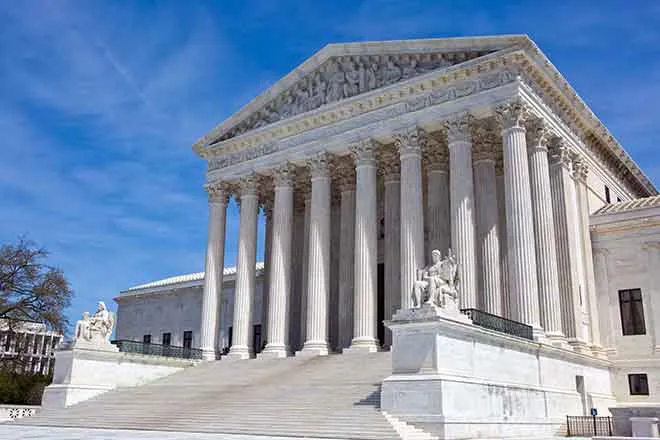
© Dean_Fikar - iStock-503150251
News from rural America.
This week on Yonder Radio, we have a story from Daily Yonder data editor Sarah Melotte about changes to the Voting Rights Act and gerrymandering in rural areas. Then we head to Wisconsin, where Jim Winship and his son are making a film about aging in place in rural areas. Our partners at ICT bring us a story about broadband coming to the Pine Ridge Reservation in South Dakota. We also bring you the final episode of a five-part series in partnership with the Rural Faith Initiative about LGBTQ+ affirming churches Then we head to eastern Kentucky where community members are creating a mosaic mural to commemorate the 2022 flood that devastated the town of Whitesburg. Our musician of the week is 80 Proof Alice, and they discuss their music along with an upcoming bluegrass music festival they run in Kansas.
TRANSCRIPT
Hi, I'm Jared Ewe, the host of Yonder Radio.
Each week, we bring you rural conversations with National Reach.
This week, no difference, as Sarah Mallott, the Daily Yonder Data Editor, shows up big time with information on the Voting Rights Act and the changes to that, as well as gerrymandering in rural areas, what is happening.
Then we head to Wisconsin, where Jim Winship and his son Parker are making a film about aging in place in rural areas.
And our partners at ICT bring us a story about broadband coming to the Pine Ridge Reservation in South Dakota.
And the final episode of the five-part series in partnership with the Rural Faith Initiative, we have that about LGBTQ plus affirming churches.
And then we head to Eastern Kentucky where community members are creating a mosaic mural to commemorate the 2022 flood that devastated the town of Whitesburg, Kentucky.
And our musician of the week, well, that's 80 Proof Allison.
They're amazing.
Tune in for all of that this week on Yonder Radio.
Thank you.
Yonder Radio, rural conversations with National Reach.
Hello, my name is Jared Iwi.
And if you choose, we get to be together for a little bit.
Coming up, Sarah Mallott is coming in to provide you the latest on the Voting Rights Act and gerrymandering and what that is and what's going on with that.
Also, Jim Winship prefers the term oldster for aging Americans.
He does a documentary about that.
And we're going to hear from 80 Proof Alice, an incredible band that's putting on a music festival in Kansas.
All that on the way.
But right now, Jan Patolsky, we have news from the news editor of the Daily Yonder.
What is going on in America's top rural headlines?
Hey, Jared.
We kick this week off with grist and a story about how President Donald Trump just recently signed two executive orders shrinking Grand Staircase Escalante and Bears Ears National Monuments by roughly 90 percent. each that was all allegedly to open up those public lands for more uses.
What's interesting about the story is that both representatives from Utah as well as President Trump claim that Utahns are in support of the idea.
However, some independent surveys have shown that in fact, across party affiliation, folks in Utah are staunchly opposed to that idea.
And the survey also found that nationwide and across the party affiliation, 87% of Republicans and 92% of independents and 96% of Democrats support conservation and preservation of national monuments.
What is happening with Alaska Native communities in high country news?
As Alaska is gearing up for another energy boom due to the fact that, again, this current administration is opening vast tracts of land for natural resource extraction.
Some smaller communities are getting ready to host or become neighbors with large workforce camps.
Those man camps historically have brought with them not only economic development and jobs, but unfortunately crime.
Among that, some gruesome stories of human trafficking.
One small community called Dot Lake Village, is getting ready for just such man camp being constructed not far away from them.
And it has become a home for the first native-led sexual assault response team.
It will provide on-site medical care, connect survivors to services, as well as train community members how to recognize and how to respond to human trafficking.
And then from civil elites, a judge rules Trump administration must stop terminating USDA grants.
What does this mean?
Yes.
In a recent decision, a federal judge ordered the administration to stop terminating grants from USDA based on the argument that the recipient of a grant is no longer aligned with the administration's priorities.
And that has large implications for anywhere from people doing agricultural research, building food systems, and even farmers.
The case was brought by 23 states and the District of Columbia.
The ruling does not restore grant funding to those whose grants have already been terminated.
I don't know where the phrase don't take things for granted came from, but I feel like we're there.
Well, from the Daily Yonder, the Daily Yonder News editor, Jan Patolsky with Rural Headlines.
Thank you so much.
Thank you, Jared.
That was Jan Patolsky, news editor for the Daily Yonder.
And now to resuscitate your thinker, it's Sarah Mallott, data editor for the Daily Yonder.
Sarah's love for maps and data led her to dig into some of the changes to the Voting Rights Act and gerrymandering in rural areas.
And she's here to tell us all about it.
Two articles at dailyyonder.com from Sarah Mallott.
The first is the front line for voting rights is the rural South.
The second is the geography of Salamander maps.
All is not as it seems.
First, let's get to the foundation here.
How is the rural South the front line for the Voting Rights Act?
The impetus for the Voting Rights Act of 1965 started in rural Selma, Alabama, among Black activists organizing for increasing voter registration.
In the few years preceding the Voting Rights Act, only about 14% of eligible Black Alabamians were actually registered to vote.
And that was a trend that you saw throughout the South at the time. because of violence and oppression that Black Americans faced when they tried to get to the polls.
In the marches and demonstrations that followed these injustices, the U.S. faced pressure both from at home and abroad to pass federal voting rights reform.
And the culmination of that was the Voting Rights Act.
People were literally and metaphorically trampled to get to this point.
But I wonder, does the Voting Rights Act even exist anymore?
The legal and voting rights experts I talked to said that this piece of legislation has been substantially weakened.
Although, yes, it technically still does exist in name.
It just becomes really hard to prove liability now under new Supreme Court cases.
So the two big court cases, we have Louisiana v.
Calais and Shelby v.
Holder.
What are the main consequences of those decisions?
Let's start with Louisiana v.
Calais.
What does that mean in the recent judgments?
in the Calais decision which was the most recent decision in April of 2026 the Supreme Court ruled on a Louisiana congressional map that self-proclaimed non-African-American voters said discriminated against them based on race because the old map had added a second majority black congressional district and the Supreme Court said in this case basically that in order to prove that a map is illegally discriminating against minority voters, that the preponderance of evidence had to point to intentional discrimination instead of discrimination in effect.
And that becomes much harder to prove that legislators are oppressing the vote of certain groups, because now you have to have a proof of intent and not just that proof that it is in effect, regardless of someone's intent discriminating.
Shelby v.
Holder, what has happened there?
Shelby v.
Holder weakened Section 5 of the Voting Rights Act, which is also called the preclearance provision.
It was designed so that jurisdictions with histories of racist voting discrimination can't make voting policy changes without federal approval.
And since 2013, the gap between black and white voter turnout has actually increased in jurisdictions that were previously beholden to this cause.
In the 13 years since that was passed, we've seen fallout.
We've seen an increase in the gap between black and white voters and increased voter oppression.
So John Cusick, you talked to him, the assistant counsel at the NAACP Legal Defense Fund, and he talks about death by a thousand cuts.
Are you able to pinpoint some of these gouges that will affect rural and rural minority voters?
Yes.
Some of these death by a thousand cuts examples include things like increase in voter ID laws in some of these states that were previously beholden to the preclearance provision and restrictions on mail-in voting, which rural people rely on disproportionately compared to urban and suburban voters. and any increase in difficulty in requirements set forth to make it possible to vote are going to disproportionately hurt rural people of color.
And then one of those cuts that goes way back, and this is where we get to the second article, the geography of salamander maps all is not as it seems.
And I'm just going to pretend, Sarah, that your computer glow is a warm campfire, and we are gathered around to hear the history of this beast, the gerrymander.
Yes, in March of 1812, American engraver and political cartoonist Elcanna Tisdale created a political cartoon of Massachusetts' Essex South District, which was a state senate map, a district in a state senate map, which then Governor Elbridge Gerry had recently signed into law.
And this was a really oddly shaped district that stretched from Salisbury in northeast Massachusetts and basically in an upside down L shape down to Chelsea, a city just north of Boston.
But the editorial in the Boston Gazette, where the cartoon was published, said that this Essex South District looked like a salamander.
And hence the name Jerry Mander, named after then Governor Elbridge Jerry.
And so that was the birth of the infamous gerrymander.
You say in this article, I'll be complicating the traditional narrative about gerrymandering and map making.
How are you doing this?
Well, I think the way that we as lay people sort of decide whether a map is fair or not is that we look at the shape of its districts.
And if a district seems like it's not very compact or it's oddly shaped or it's kind of a snaky shape, we think that immediately that it means that it was drawn unfairly. but that's not necessarily often the case.
And sometimes even maps that pass what I've been calling the eyeball test or what other experts also call like the eyeball test for districts, maps can pass that test with like uniformly shaped districts, but they can still be gerrymandered.
So it just is a little bit more complicated than we might originally think.
You can't just like look at a map and tell immediately whether it's gerrymandered.
One of the biggest examples of this was the Louisiana's 6th district, which was the district at the heart of the Calais decision, which was drawn as a majority black district.
It's kind of an oddly shaped, snaky district running north-south.
And it was part of the reason that the plaintiffs in the case, this self-proclaimed group of non-African American voters, said that the district wasn't fair to them.
But as I detailed in this article, the reason that it's shaped this way is because it follows the Red River Valley in Louisiana.
And Louisiana historians filed an amicus brief as a part of this case where they outlined how the population within this district meets other standards of fair districting because it contains a distinct community.
And the history of this region includes heavy cotton production that relied on enslaved labor.
And so the black Americans who live along this river valley share a common history and ancestry and they have common voting interests today.
So that was the argument put forth by the Louisiana historian saying that, yes, although this is not a compact district, it is still drawn fairly.
Final thought here.
It's already an election year, and a lot of these cases seem undecided.
Distribution seems uncertain.
Is there even more chaos in store than normal election years?
It seems like the chaos is already starting.
The race to redraw maps is already underway.
Mostly this is occurring in red states in the South.
Some states have rushed to redistrict ahead of the 2026 midterm elections, while others held special legislative sessions to talk about redistricting ahead of the 2028 presidential elections.
She's calm, she's cool, she's collected.
And this may have been edited out of the final story, but she wrestled her cat in the middle of it.
And she's still here to share the news.
Thank you so much, Sarah Millat.
Thank you, Jared.
That was Sarah Millat, data editor for the Daily Yonder.
You can find more of her data reporting in her bi-weekly newsletter, The Rural Index.
Sign up for the newsletter on dailyyonder.com.
And now our featured musician of the week, 80 Proof Alice, a bluegrass band from Hayes, Kansas.
Amy Regal, the bass player for the band, joins us on the show today to talk about being inspired by 90s rock music and marrying her high school sweetheart turned banjo champion.
She's also the founder of Lovegrass, a music festival held in early August at Wilson State Park in Kansas.
We talk about all the things Lovegrass and 80 Proof Alice.
Well, we have with us today Amy Regal, and I'm glad we connected on the gram, as the cool kids say, because Lovegrass, this is coming up.
This is yours, right?
Yeah.
The vibe I get is Woodstock, but more banjo.
Lots of banjo. but this is your baby talk about this because it's it's big it is so this is our ninth year of our music festival what started out as just kind of a small gathering of friends in the bluegrass world it's very common to get together with people and just like pick and jam in circles and things like that and it started in 2017 as kind of just a get-together gathering we made it public we said hey come out to the lake we're going to do this thing and now we have a budget of 90 000 a year And we have 11 bands this year, several national touring acts who are award winners.
So it just kind of it just kind of happened.
And here we are.
And I got to say, some of the best times I've ever had started out with the sentence, come out to the lake, we're going to do a thing.
For sure.
So if you're at all listeners are at all familiar with Kansas, a lot of people, you know, it's flyer of a state.
We don't have much beauty.
And especially it's too funny that a lot of our attendees who come out to Lake Wilson, which is where our event is at, had never been there before. and they, you know, get off I-70.
You drive a short like six to nine miles up to the state park and you are just like introduced to this beautiful landscape with these rock formations and cliffs and crystal clear waters.
It's the clearest lake in Kansas.
So it sets a really great scene for an event like that.
And I grew up going to that lake and it was just like kind of a nice match.
Like, hey, let's bring some music out here.
What is the date of the event?
August 6th through 8th.
It is a Thursday evening through a Saturday evening. our festival is donation based we don't ask that people pay for tickets it's a suggested donation as if you go on our website you know we say hey you could you could pay 50 bucks per ticket but you can pay whatever you want and let's say your band 80 proof Alice is on the bench what are the ones you're most excited to see um so our Friday night headliner is a individual named Johnny Mullinax he is a Tulsa native and I've known him since he was probably 15 years old he's put Tulsa on the map for bluegrass rock I don't really know how to describe what kind of music he's playing um you'll just have to check it out for yourself but it is it's wild it's a party he is incredibly talented and his band is just full of slayers so uh and then East Nashgrass is our headliner on Saturday night they've been touring all over the nation they just got nominated for three IBMA awards we are thrilled to have them and then one of the things that we do with our festival as well as we provide workshops.
So Maddie Denton, she won, she's a fiddle player for East Nash grass and she won the IMA fiddle player of the year last year.
And so she's going to be putting on a fiddle workshop.
So we're really excited for that and to host them.
Your band 80 proof Alice is a great listen.
Did you marry Jason because he was the best banjo player in Kansas or was that before?
He didn't even play the banjo when I met him.
We actually went to high school together.
So we've been together a long time.
That was a long time ago.
We both lived in Lawrence, Kansas for 12 years.
And he got involved in bluegrass when we lived there and picked up the banjo and started playing it.
He had a band and then we moved back out to Western Kansas after we had a couple of kids.
We relocated to Hayes.
I picked up a guitar at that point and we started playing music together.
We started playing and then the name Aidy Proof Alice kind of came out of Walnut Valley Festival.
We camped with a dear retired nurse named Alice.
She was kind of the matriarch of our camp and she got into the moonshine one night and we kept calling her Aidy Proof Alice and the next day someone asked us to play a show when we got back home and they're like, do you have a band name?
And we're like, yeah, it's Aidy Proof Alice.
And so that has stuck for probably the last 15, 20 years.
Fast forward to youngest son who was 14 was a kindergartner and his teacher was new.
And she's like, my husband plays guitar.
You guys should meet.
And so we connected and Tyson became part of our lives.
And shortly thereafter, I think we've been playing with him for maybe four or five years now and have now 80 Prophelis is now a trio.
And I switched to playing the upright bass at that point because Tyson's an incredible guitar player.
Tell us about the kind of music people would hear from 80 Proof Alice.
So our style of music brings kind of a different type of, I hate the word fusion, but I mean, it's kind of true.
That's what we do.
Bluegrass is kind of a style, not a type of music.
So you can really put a bluegrass style to any song.
All of us have that 90s influence because we were all raised as kids in the 90s.
And so we love like punk rock and like even, you know, 90s country and stuff like that.
And Tyson does most of the songwriting.
I do some as well.
But that influence is kind of throughout our music, feeling kind of more of that kind of rock vibe with the bluegrass instrumentals.
So say it's kind of like a progressive slash bluegrass slash rock feel.
But we have fun.
It's high energy.
And you never know what you're going to hear with our group. the wildly talented the critics rave and the lovegrass music festival well it's been going on since 2017 at wilson state park august 6th through the 8th and uh i mean i'm looking at pictures and it's just beautiful you're on the lake the sun is setting people got all their chairs unfolded the band's on stage i could feel my soul being lifted amy just dig deep for a second emote about this event?
Oh man.
It's just a, it's a whole experience.
We, we, we kind of have coined it the Lovegrass experience, family oriented, um, you know, just coming and getting your soul refueled for the whole weekend.
You know, there's people coming together.
Music brings people together.
People put all their other worries aside for just a few short days and come together and enjoy something just so beautiful.
Well, thank you so much, Amy, festival founder, musician, and will be one of the stars at Lovegrass Music Festival, August 6th through the 8th.
Yeah, thanks for having me.
I'm glad that we can make this happen.
That was Amy Regal, bass player for 80 Proof Alice and founder of the Lovegrass Music Festival coming up August 6th through the 8th at Wilson State Park in Central Kansas.
It looks incredible.
You can find more about 80 Proof Alice on their website, 80ProofAlice.com, and that's the number, 80.
Learn more about Lovegrass and buy tickets at LovegrassMusicFestival.com.
It's time for our first trivia clue of the episode.
This week, we're doing history trivia, and we're in expert mode today, people.
So do not feel at all deterred or down if you don't get it.
The answer to this week's trivia question is a network of fighters that was formed beginning in 1941.
All right, on the way, we're going to rural Wisconsin to talk about growing older.
And since it seems to be happening to all of us, this is pertinent to everyone here.
We're going to have that and more trivia clues coming up on Yonder Radio.
Thank you. guitar solo guitar solo Yonder Radio, rural conversations with National Reach.
Hello, I hope you're doing well.
Jim Winship is a retired social worker and social work professor who began making films about five years ago with his son Parker.
Their previous film was about food pantries in rural Wisconsin during the pandemic.
Their newest film is Growing Older in Rural Wisconsin.
This is a film about people who have chosen where they want to grow old and, having made that choice, their struggle to make it work.
We met some people for whom it didn't work, but we also met many for whom meeting the challenges of aging in place is itself part of the meaning and the joy they find in their lives.
Most of us love it up here and we want to be here and you find a way somehow.
Tell us more about growing older in rural Wisconsin.
Started doing this for two reasons.
One, because one of the participants you see in the Food Pantry documentary, Marty Lee from Washera County, who's in her late 60s, and a wonderful person.
Marty says, as we were finishing up the Food Pantry documentary, she says, you know, I want to stay here.
I think they make fancy words like aging in place.
Well, I've been aging in place for 40 years.
I guess I can age a few more.
I was very involved with World Social Work Organization.
And so it's that combination of wanting to look at aging.
And I'm also, you know, I'm an oldster, which is the term I like best.
It does sound pretty cool.
Yeah, it does.
And so in a way, the growing older is my story as well.
We came up with the idea, pitched it to Wisconsin Humanities Council, and they gave us some money to get started.
And so started up in Washera County in central Wisconsin, which is where Marty Lee was from.
And Marty introduced us to some people.
And then we went up to Bayfield County, Wisconsin, very top, tip top of the state.
Bayfield and Washburn County, a little farther down.
Yeah.
And the documentary changed in process.
So what we realized as we talked to people was real people at a stage of their life that society often thinks of as you're losing your faculties, you're losing your strength.
Life is really slowing down, vulnerable, but you find people who are really in this later chapters of their life living it, helping other people, doing creative work, enjoying themselves, and that the rural context is a real part of that. it's intertwined, you know, for those who choose to live in rural America, you know, which means, you know, that you don't have some of the amenities that you would have otherwise, but that how people find meaning and joy and just the ability to, you know, keep on keeping on.
And it defines them, it powers them.
I mean, you talked to an octogenarian who's also a myth whilst running his ranch with his wife.
This dispels the myth of a fragile elder.
We have alpha elders now.
Yeah, yeah.
I think he's 77.
He's not octogenarian yet.
Yeah, and Roger just, that's a farm family.
He grew up next to that farm, was fortunate enough in that the farm owners wanted him to have it and was able to buy it on lion contract when he was in his 20s.
That farm has also just become home for not only their children and grandchildren, but also for all of their extended families.
And so it's a powerful small story.
And I think there are a lot of powerful small stories in the documentary.
I guess I'm 77 years old, and I've lived in this community every one of them years.
It's part of me.
I'm part of it.
Some of the clips you got, for example, Lou, who has Parkinson's and early stages of dementia, who's cared for by Marty Lee.
She says through all this, every day is a good day around here.
And I felt the weight of you and your son having to translate that to the world.
I mean, that's such a big, important message.
When you come across statements, and we had that with Marty and Lou, you get things that people say in their gold.
Yes, you want to get them out into the world.
Yes, you want to make sure that they're in context.
But you just really feel privileged to have been in the room where it happened.
And so we're trying to do their stories justice.
Five months ago, Marty moved in with her good friend Lou to be her full-time caregiver.
She does have Parkinson's, which she's had since 2002, and Lewy Body Dementia, which she's had for the last four or five years.
She stayed at home because of the grace of God and good family that are not related.
She didn't start with having a good day this morning, but on a good day, I get a check.
Every day is a good day around here.
The importance is to keep people involved in their own environment as much as possible. while she was able to talk about what she wanted, which we did a lot, she wanted to be in this room.
This is the best life I can give her.
I don't know, but I think you made the best statement of the day.
Every day is a good day.
I think you can't argue with that, can you?
Well, we don't want to argue too much.
I mean, we build sports figure statues of our heroes, but Marty Lee needs a statue, maybe several.
Yeah.
To me, this is an honor to take care of someone.
Do I feel like sometimes I've missed something?
Oh, for about two seconds.
And then I'm glad I'm sitting here.
Because if not, she would not have the care that she needs.
Professor Jim Winship and his son Parker Winship, they've already made one documentary, What We're Hungry For, How Food Pantries Fed Rural Wisconsin During the Pandemic.
And now working on the project, Growing Older in Rural Wisconsin.
And it's been great talking to you.
Jared, it's been a pleasure.
That was Jim Winship, one of the filmmakers behind Growing Older in Rural Wisconsin.
They want to show the film in rural areas and coordinate with local aging advocacy groups.
So if you are any of those, get in touch with Jim.
Jim and his son Parker are still raising money for post-production costs, and you can support the film at growingolder.info.
Next up, we have another song from 80 Proof Alice.
This is Lay Me Down.
It ain't much what we got, but it ain't nothing.
Trying to figure out what you need.
You lay me down, I lay you down.
That's why I'm always trying to make back home to you.
Well, all them summer nights, they drive a man insane.
For a moon rising and I wake up ashamed.
Yep.
Yeah, the truth is always on the tip of your tongue The one on the end of your bed, it did up to sleep He laid me down and I left town I'm on my knees begging for a please to do it again All them summer nights that drive a man insane From an horizon and I wake up ashamed That was Lay Me Down. by 80 Proof Alice.
Each week we bring you music artists of all sorts from rural communities around the country.
Do you know of someone we should feature?
Send us an email at info at yonder radio dot com.
Our next story comes to us from our partners at ICT.
Here's Daniel Herrera Carbajal with a story about broadband coming to the Pine Ridge Reservation in South Dakota.
High-speed internet is coming to the Oglala Sioux Tribe.
Oglala Lakota Telecommunications recently announced a more than $50 million investment that will provide broadband internet to more than 99% of the currently unserved areas on the Pine Ridge Reservation.
Petra Wilson, chairwoman of OLT, says these projects will bring self-sufficiency to the Pine Ridge Reservation.
I live most of my young life on the reservation, So, you know, I liken it to back when I was young, we had to still use TV antennas to get television.
We still had landlines to get phones.
And I would say not a lot has changed.
So, you know, it's going to bring modern times.
It's going to bring the ability to become more self-sufficient.
And it's going to bring in most important sovereignty to our communities and how we access Internet.
Broadband internet is high-speed internet that is always on connection and offers significantly faster data transmission than traditional dial-up.
The investment will fund two projects aimed at providing broadband to remote areas of the Pine Ridge Reservation.
According to OLT, the new projects will service more than 4,000 people as well as schools and healthcare facilities.
Amanda Hermans is a research associate in the Housing and Communities Division at the Urban Institute.
She says broadband internet is vital for modern-day community functioning.
We all know that broadband is really critical for the lives that we lead these days.
It's really critical for quality of life.
It enables so many other things from education to health care to job opportunities, economic development.
If you live in a big city, you more than likely use broadband internet every day without even realizing it.
Gabe Samuels, a research analyst at the Urban Institute, says that many communities in Indian country face infrastructural challenges to getting broadband access.
There's plenty of reasons for that disparity. know, a lot of it dates back to when the federal government relocated tribes.
A lot of that was in rural remote areas, which, you know, there's a number of physical kind of geographical barriers that make it harder to access the internet.
The new broadband projects will service areas classified as, quote, foreign remote, the highest level of remoteness recognized under federal broadband programs.
While many tribal communities still do not have broadband, data shows the gap of internet access between Native American and Alaska Native households and the rest of the country has begun to shrink.
In 2015, there was a 15% gap.
In 2024, the gap is now 3.6%.
Data shows the gap began to close in 2020.
Samuel says the COVID-19 pandemic highlighted the necessity for broadband access for remote work and school.
COVID highlighted the digital divide in a lot of ways.
I think the first thing that comes to mind immediately is remote school and folks who were in classes having to stay home and be in a Zoom room with their teachers and their classmates.
If you don't have internet or even high-speed internet to be on those calls, you're missing out on valuable education, really, no matter what level that is.
You know, also highlighted, you know, as the remote work economy grew, as more opportunities to work from home or to even like connect to selling if people are making things, want to sell something on Etsy or another website, like being able to have internet to set up those networks is really important.
We found that there has been a ton of progress made in the last few years in getting some of this critical infrastructure in the ground, getting communities connected.
But there are still a lot of challenges and a lot to do.
For ICT, Daniel Herrera Carbohol.
Thanks to our partners at ICT for sharing that story from their weekly newscast.
You can listen to and read more of their stories from native communities across the country at ICTnews.org.
It's time for our second trivia clue.
This group operated behind enemy lines across a vast expanse of territory of World War II's eastern front from Moldova to Finland.
That's your second clue.
And remember, this is expert level.
All right.
If you're just treading water right now, cerebrally, it's OK.
You're not alone.
We're going to have the answer coming up. and the latest from the Rural Faith Initiative about LGBTQ plus affirming churches.
That's on the way on Yonder Radio.
Yonder Radio Rural Conversations with National Reach Hello, my name is Jared Ewe And yeah, coming up we're going to have more clues for the expert level trivia But now, we've brought you conversations from our partners at the Rural Faith Initiative For the past five weeks about LGBTQ plus affirming churches And this week, it's time for one last episode If you missed the rest of the series, you can find the full series on Rural Remix Wherever you get your podcasts Here's Whitney Kimball Coe talking to Reverend Claire Brown.
Welcome back to another segment of our Rural Faith series, where we're exploring research and stories from LGBTQ plus affirming churches in the rural South.
This research and these stories have been collected by the Reverend Claire Brown, an Episcopal priest in rural Tennessee.
So, Claire, you began your research looking for rural southern churches that are affirming to LGBTQ people in their theology and community way of life.
But as you learned about these people and places, you found that this commitment was rarely an isolated issue.
Tell us about how diversity and celebration of gender and sexuality fit into the bigger picture for some of these churches.
In the congregations I spoke to, there's ways that this concern, this area of ministry and growth and commitment fits into many other intersecting values. places that have already grown the muscle and capacity for practicing welcome were more ready to, and churches who came to this place of welcome have continued their journey to find other outlets to express it.
So, for example, over the last few years, the First Baptist Church in Moorhead, Kentucky, has really come into its own as an affirming congregation.
In the last few years, they've hired an out gay associate pastor, And they've become a consistent, although only, church presence at the local Pride Festival.
Now, for your listeners who clocked that first Baptist with some surprise, this congregation is part of the Cooperative Baptist Fellowship.
It's a much more open and diverse and progressive branch than the infamously closed off Southern Baptist Convention.
But anyway, this church has been building on a foundation that in some ways got its start from the beginning.
It first came as a frontier 1800s revivalist wave that sought to bring peace during a family Appalachian feud.
Sounds a little bit like the Hatfields and McCoys.
Yes, it's exactly like that, but it was the Martins and the Tollivers.
And so they have a really early church identity as being a people whose mission is reconciliation.
But even more recently, this commitment, this community identity for First Baptist was solidified under the leadership of a pretty amazing pastor, Don Mantooth.
He led the church toward intersecting advocacy for people on the margins.
This started early in his pastoral leadership there in the 80s.
He did the first interracial wedding in the community.
Then a few years later, he baptized a local man who was one of the first local folks to be diagnosed. and then die from complications of HIV AIDS in the early 90s.
And these were some concrete episodes in the church's more recent past that show how that community and its leaders kept following a vision of inclusive love to the next right place.
Now, again, more recently, they've had these expressions of LGBT inclusion, but they've also grown their hospitality toward local college students.
And they've done some really amazing recent collaborations with musicians.
They've hosted concerts that are definitely outside the box of church music.
They're not only welcoming people from historically marginalized communities, but they're opening a sense of broader welcome to new ideas, new expressions of art, of faith, and the questions of the young adults all around them.
So is this the United Methodist Church that has recently become affirming?
Yes.
So, Aniata, United Methodist Church in North Alabama.
This church was actually the remnant, the people who were part of a larger UMC that decided to disaffiliate.
That process was very painful for the people who wanted to stay part of the now open Methodist denomination.
Those members felt that the process wasn't navigated or discerned in good faith and without any concern for members of the congregation who were LGBT and maybe closeted.
And that was especially clear for Pastor Skylar Jones.
He's now the head pastor at Oneonta UMC.
He'd been serving as the associate and youth minister at this other church.
And he was often finding himself as the pastor, the spiritual companion, for members of the church that were wrestling with doubt and questions, whether it was of their personal identity or their belief in God.
Yes, this was mostly teenagers.
And some of those youth group members were LGBT.
They weren't out to the broader church.
They were maybe not even out to their immediate families.
And so with this disaffiliation process, using some of that homophobic Christian rhetoric that sets up an opposition of family values, protection of youth on one hand and the queer community on the other, he knew that this was really false and harmful.
LGBT people aren't some group outside the church.
We're the church in all ages.
So how did this impact the emerging Oneida UMC church?
Yes.
Well, from the get-go, that church leadership knew that they were going to be labeled the gay church.
There'd just been so much drama locally around the church's disaffiliation.
But they wanted to make sure that they were also always unapologetically a church for questions and a church for families.
Over the last few years, they've gone from just a group of people in a living room to a worshiping community and now an official UMC congregation.
So it sounds like for this congregation and for other congregations like them, welcome is just the idea of welcome is always about connection and it's always evolving and it's always building something bigger.
That's exactly right.
Whether it's in the way that they're talking about God, the buildings people are creating, programs, their membership composition, the leadership.
For all these churches, God's love stretches out like this ongoing horizon.
At the church I serve, we've got these big signs over the door that say all are welcome.
And over the last few years, our leadership have been asking each other, who else?
Who else?
So anytime we say people are welcome, we're always entering God's project throughout history and asking ourselves to grow and change. this series has been brought to you by the rural faith initiative a project of the center for rural strategies we know churches and faith communities are essential to rural people and places and the rural faith initiative exists to provide facilitation accompaniment media training and other tools to faith leaders and those who work alongside them all in support of building stronger, kinder, and more just communities.
If you enjoyed this conversation, please sign up for regular updates about programs and activities from the Rural Faith Initiative.
You can find us online at ruralstrategies.org backslash ruralfaithinitiative and on Instagram.
Now our last story today comes to you from Living Traditions, a project telling stories of Appalachian folk traditions.
This month marks the four-year anniversary of the 2022 flood that devastated parts of southeast Kentucky.
In Lettrick County, the memory of the flood still cuts deep.
It was one of the four hardest-hit counties where residents experienced widespread damage and loss of life.
To commemorate the flood, community members are creating a public mosaic.
The project is proving to be an opportunity for storytelling, memory keeping, and even healing.
Teresa Collins has the story from Whitesburg, Kentucky.
From a concrete retaining wall amidst piles of broken pottering glass, Lacey Hale sifts through a plastic bag full of jewelry.
A woman donated this.
It was, I mean, a box full of buttons and pendants and little gems and stones and doodads of all sorts.
Hale selects several pieces from the bag.
She holds each one up to a turtle-shaped outline that's been painted on the wall.
She's deciding which jewelry parts will work to make the turtle and this mosaic come to life.
It's like putting a puzzle together all the time.
You've got to find the exact piece that's broken the right way to fit next to another piece, you know, and then think about the color scheme of the pieces.
Hale's an artist from Whitesburg.
She's spearheading the creation of this public mosaic that's by an old post office downtown.
The mosaic is sponsored by the Cowan Community Action Group in Leclerc County.
It's part of their annual Growing Home event, which honors the anniversary of the flood of 2022.
They wanted it to commemorate the flood, but also honor the people here, the grit, the strength.
The mosaic is also a celebration of eastern Kentucky streams, along with the flora and fauna that call them home.
So there's Joe Pyeweed, and Black Eyed Susans, and Ghost Pipe, and Morels.
And then there's a kingfisher, a heron, there's frogs, dragonflies, a little bit of all kinds of things that make this area really lovely.
Hale is no stranger to making public art.
She's painted around 20 murals in the region, but this was her first time working in mosaic, so she taught us up the basics, relying on YouTube.
As I was doing research, I realized, oh, you can use rocks, you can use jewelry, you can use broken ceramics.
This research sparked an idea.
It reminded her of a mug that belonged to her father.
When he passed away in 2008, Hale was given the mug.
And I got that mug, and I used that mug, and then I broke that mug.
So I couldn't bring myself to part with the mug.
So she decided to put it in the mosaic.
And so from that, it kind of grew into, wouldn't it be cool to ask people in the community to bring their own broken treasures?
Hale put the word out on social media, and soon all kinds of people were bringing items to add to the mosaic.
People have donated old jewelry, broken pottery that belonged to loved ones, and river glass found after flooding.
Not only have people shared physical items, they've shared their stories with Hale, too.
It's been a way for me, too, to learn about people in the community that I might not have been able to meet before.
One person Hale's connected with through the project is Lee Burke.
Burke lives in McRoberts, alongside a creek.
The night of the flood, he was staying next door with his mom.
During the night, Burke heard his mom call out.
And she said, "Lee, you better check that creek."
And I said, "It's a creek, it ain't going nowhere."
And I just liked that.
It went about five minutes and it still rained.
She said, "I'm telling you, you better check that creek."
So I got up and looked, and when I looked out that window, it was already a raging river.
As Burke stood with his mom at the back door, he saw his dad's outbuilding float down the raging creek.
It was a big almost two-story really was a huge rough lumber building.
It had the 100 crates in it and all the pot bottles.
Burke's dad was an avid collector of all things RC Cola.
There used to be an RC bottling plant several miles down the road.
When Burke's dad was a kid, a cold bowl of RC was a big treat.
Over the years he collected around 100 wooden crates and thousands of glass bottles.
That lumber building's where he stored it all.
And he passed away in 2012 and I just kept it all.
And I would just open the door sometime, kind of look in at it and just shut it back and I just never could do nothing with it.
Burke watched as all those keepsakes were swept downriver with the building.
In the days after the floodwaters had subsided, Burke and his brother were driving to the next town over.
Something in a debris pile caught Burke's eye.
And I said, just stop.
And he said, why?
I said, I know that stads are secret.
So we got out, we went across the creek We dug through all that stuff, and sure enough, it was a red RC crate, and it was still intact.
And so began the hunt for any remaining RC crates and bottles.
They started finding them near bridges and debris piles.
And then a lot of people started hearing about me looking for them, so they started finding them.
And they would message, say, hey, I've got you this RC crate.
Or sometimes I would come home, and they'd just be sitting on the porch.
Out of more than 2,000 bottles in his dad's building, Burke only recovered two.
One was fully intact.
The other was broken in half, but still had the RC logo.
When he saw Hale's post about the mosaic, he decided to donate the broken bottle.
She was able to actually somehow cut the RC with the glass perfectly and put it into the mosaic.
It makes me kind of want to cry now.
I mean, it was just so touching that a piece from his father, You know, he would trust us to use and break and put in this big wall.
We were like, we need to put it in a very prominent place.
And so the RC Cola bottle, my intern Julian was like, we should put it in the Blue Heron's neck.
And so that's what we did.
Burke also donated a mug of his mother's, who passed away in 2024.
For him, having his parents' objects in this public artwork is a way of honoring their lives.
They're both gone and you know and I'm just like it's just a little bit of keeping them alive.
Back of the mosaic, Hale's putting the finishing touches on the turtle.
She sifts through a pile of orange pottery shards searching for the right color.
Painting with glass is a little different so you have to like think a little more deliberately about the color changes and the highlights and the shadows.
Hale finds a piece that's the right color but it's too big.
She breaks the shard into smaller pieces with a hammer.
Next, she uses a putty knife to scrape a blob of white adhesive onto the back of a piece.
Then she places it on the wall, shaping the turtle's head.
It's just an honor that they trust me with the pieces that they bring, and I hope I do them all justice.
The mosaic is like an archive of the community, says Hale.
It's a reflection of what they found important and beautiful.
For Yonder Radio, I'm Teresa Collins in Letcher County, Kentucky.
That story was produced by Living Traditions, a project of the Center for Rural Strategies.
And well, that's us.
And we're also based in Whitesburg, Kentucky.
Well, it's time for our final trivia clue.
This group waged guerrilla warfare against the Nazis, disrupting supply lines, gathering intelligence, and challenging German control of occupied territories.
Did you guess it?
Our expert trivia.
The answer is...
The Soviet Partisans.
See, here's the situation.
Nazi Germany had invaded the Soviet Union in June of 1941, escalating World War II and opening the Eastern Front of the War.
In response, guerrilla forces known as the Soviet Partisans formed in rural communities behind the front lines.
Partisan forces were initially made up of escaped prisoners of war, Red Army soldiers caught behind the lines, and local members of the Communist Party.
As the war continued, they were joined by farmers and laborers, including thousands of women.
The partisan networks were centrally directed by Joseph Stalin and the Red Army and played a critical role in the Nazis' eventual defeat.
This has been Yonder Radio, and we are so happy to have had you this week.
We've got a fresh episode every week, and we greatly appreciate you being here.
Thank you for listening to Yonder Radio, a production of the Center for Rural Strategies, publisher of the Daily Yonder.
I'm your host, Jared Ewey.
Thanks to Don Castle and the Tennessee Sheiks, Steph Gunno and the Lone Tones, Quincy Ponfair, Leo Pozel, and Tim Merima for the great music.
Our editor and producer is Susanna Brown.
This episode was also produced by Ania Patron Slepian, with additional support from Alana Newman and Julia Tilton.
Our executive producer is Joel Cohen.
The executive in charge of production is Adam Georgie.
Yonder Radio, Rural Conversations with National Reach. guitar solo