City, tribal government agreement invalid, Oklahoma court rules

The Oklahoma Supreme Court ruled invalid an agreement between the City of Tulsa and the Muscogee (Creek) Nation.
In a 8-1 ruling issued Wednesday, the state’s high court said Tulsa’s agreement with the Muscogee (Creek) Nation to not prosecute municipal violations against tribal citizens was invalid because the city failed to secure approval from the legislative Joint Committee on State-Tribal Relations and Governor Kevin Stitt.
Stitt had challenged the agreement, asking the Oklahoma Supreme Court to toss it out.
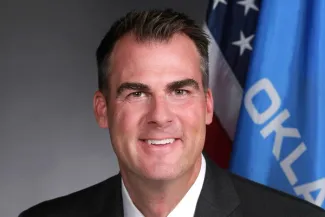
Oklahoma Governor Kevin Stitt - public domain
“This agreement would have mandated that Tulsa’s laws were to be enforced based on race,” Stitt said. “You can’t pick and choose who to apply the law to, especially based on race.”
Under the agreement, the city said it would not prosecute municipal violations against tribal citizens, but would still enforce those laws. Prosecutions were to take place in tribal courts.
The agreement was entered as part of a resolution to a federal court case.
“The amount of effort and financial resources from the state expended by the Governor, in order to block cooperation agreements that make our communities safer, is baffling and shameful,” said Jason Salsman, a spokesperson for the Muscogee (Creek) Nation. “We thank Mayor (Monroe) Nichols and the City of Tulsa for the great work we’ve already achieved, lowering crime rates since we signed this historic agreement, and all that we will continue to do for our shared future.”
The tribe is considering its next steps, he said.
In 2020, the U.S. Supreme Court issued the landmark McGirt decision, holding that several reservations had never been dissolved, including the Muscogee (Creek) Nation. It found that the state lacked criminal jurisdiction over Indians committing crimes governed by the federal Major Crimes Act in Indian Country.
The tribe's agreement with Tulsa built on the 2020 McGirt decision that restored tribal jurisdiction over much of Oklahoma, though questions about state authority have continued to complicate such arrangements.
A spokesperson for Nichols did not return a message seeking comment as of publication.