Daily Audio Newscast Afternoon Update - May 19, 2026

© INDU BACHKHETI - iStock-1336427297
News from around the nation.
Kentucky has a closely watched primary today - as a test of Trump’s control of GOP voters; New Mexico begins building back its burned forests; Michigan Medicine nurses rally for workplace protections; Community rallies behind three charged in Spokane ICE protest.
Transcript
The Public News Service Tuesday afternoon update.
I'm Mike Clifford.
Kentucky being called the latest stop on President Donald Trump's revenge tour.
Republican voters in Northern Kentucky will choose between U.S. Representative Thomas Massey and Trump-endorsed challenger Ed Gowron in today's House primary.
The AP notes the primary race turned white hot in the final stretch.
Massey brought in other Republicans, including Representative Lauren Boebert, In an attempt to show voters they could support both him and Trump, at the same time Trump ratcheted up social media attacks on Massey, calling him an obstructionist and a fool.
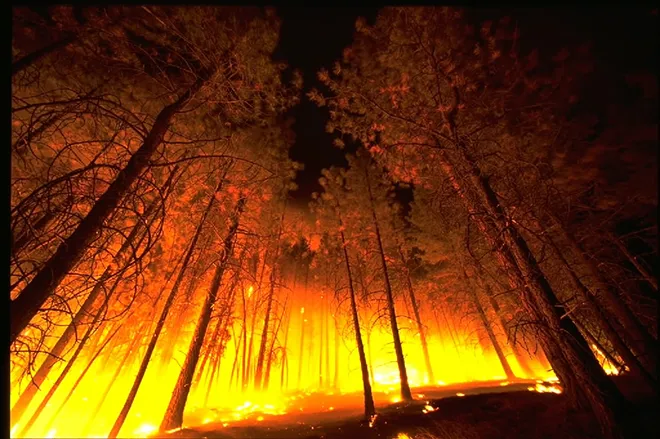
Next, since the year 2000, more than 7 million acres of forest and wildlands have been burned in New Mexico, illustrating the need for a recently announced center where tree seedlings will be grown.
The New Mexico Reforestation Center is expected to significantly improve revegetation efforts by boosting the collection of seeds and storage capacity, along with nursery production and planting.
Director Jen Octor says Colorado and Idaho have provided some additional seedlings, but new facilities in New Mexico will help keep up with the need for more.
The current state capacity of growing seedlings to reforest acreage that needs it is about 300,000 trees per year, but acres that need to be reforested manually is 390 million.
New Mexico's largest wildfire, the Hermits Peak-Calf Canyon fire in 2022, will require around 18 million seedlings.
I'm Roz Brown.
And support in Spokane is growing for three protesters on trial this week for demonstrating against Immigration and Customs Enforcement's detention of two asylum seekers during a scheduled immigration check-in.
Hundreds joined the impromptu protest last June in Spokane, leading to 30 arrests.
While most of the charges were dropped, three protesters have chosen to fight their federal charges of conspiracy to impede or injure a federal officer.
Reverend Emily Kinker with Evangelical Lutheran Church in America says protesters were exercising their First Amendment rights and were nonviolent, and she calls for an acquittal.
It seems like these charges coming from the federal level are really about crushing dissent and a desire to silence those who might oppose this administration and its policies, particularly those that are aimed at our refugee and immigrant neighbors.
Prosecutors will now need to prove the defendants had planned to use force, intimidation or threats to block federal officers from doing their jobs.
I'm Isobel Charle.
And hundreds of University of Michigan nurses and community supporters protested in Ann Arbor over the weekend as contract talks remains at a standstill.
Michigan Professional Nurse Council President Kara Ayotte says they're concerned about how proposed staffing changes could affect both nurses and patients.
As we increase nursing workload and adding more patients to your patient assignment, it becomes harder to provide that high-quality complex care that Michigan Medicine is known for.
In a statement, University of Michigan Health says it remains committed to productive negotiations and reaching an agreement.
This is Public News Service.
In North Dakota, administrators say slashing federal funding for tribal colleges and universities would cause negative ripple effects for the state's economy.
For the second year in a row, the proposed federal budget aims to entirely eliminate dedicated funding for TCUs.
Leander McDonald, president of United Tribes Technical College, stresses that TCUs rely entirely on federal funding to operate because of the government's trust and treaty responsibilities to tribal nations.
He says the proposed budget fails to align with the Trump administration's priorities to support rural America and expand access to higher education.
Every federal dollar invested in TCUs returns $1.60 in tax revenue, which demonstrates the efficiency, and impact of this investment.
While at the same time, helping us as tribal colleges and universities provide higher education opportunities to those in isolated rural areas.
McDonald says his school serves both native and non-native residents and about 70 percent are first-generation college students.
The administration argues the cuts are needed to downsize the federal government, eliminate waste, and offset proposed increases in defense spending.
I'm Judith Ruiz Branch reporting.
Next, Iowa sustainable energy advocates and environmental officials warn that cuts to the federal sustainable rivers project managed by the U.S. Army Corps of Engineers will threaten aquatic species while hampering its historical economic benefits.
Jim Howe, a senior policy advisor with The Nature Conservancy, says the SRP has had economic, recreational, and environmental health benefits for nearly 25 years by improving and increasing healthy wetlands.
Wetlands provide habitat for fish and ducks and shorebirds.
We're getting better boating opportunities, better fishing opportunities, better duck hunting, better bird watching.
The administration has paused spending on the SRP and other Army Corps of Engineers conservation programs to instead focus on more traditional energy infrastructure.
I'm Mark Moran.
Finally, supporters of a bill to help youth and adults experiencing homelessness access a free Massachusetts state ID card hope their years of advocacy could soon pay off.
The state Senate has passed a measure that would waive required fees and allow applicants to list a homeless service provider or state agency as their place of residence.
Julia Garvey with the Massachusetts Coalition for the Homeless says without ID, people can't get a bank account, pick up prescriptions, or apply for a job.
So if folks can't afford that $25 to get an ID, then the chances of them being able to exit homelessness go down because they're missing that crucial document that they need.
She says service agencies get requests for help to pay the fee each day from people across the Commonwealth, and some funds are available.
I'm Katherine Carley.
This is Mike Clifford for Public News Service.
Member and listener supported.
Find our trust indicators at publicnewsservice.org.