Data center developer looks west, backs power upgrades near Fargo

Data center developer Applied Digital is investing $75 million in power system upgrades in eastern North Dakota as it looks to expand into the western part of the state.
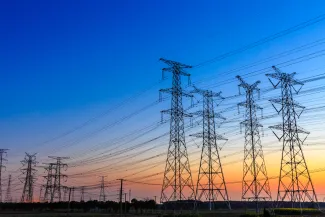
Applied Digital will cover the cost of an electrical substation and high-voltage powerline that it needs for the data center it is building near Interstate 29 between Fargo and Harwood.
Minnkota Power Cooperative will own and operate the new facilities. A Minnkota spokesperson said Applied Digital’s covering the upgrades benefits the grid and other customers in the region.
© zhaojiankang - iStock-802436842
“That infrastructure provides tremendous benefit to the southern Red River Valley,” Ben Fladhammer said in an interview.
A Public Service Commission public hearing on the power project is set for April 2 in Fargo. Applied Digital declined to comment on the project and hearing.
Meanwhile, the company has held an informational meeting in Center in Oliver County northwest of Bismarck about an expansion there.
A day after that meeting, the Oliver County Commission voted to put a 180-day moratorium on data centers as it develops rules about where such developments can go. Some residents called for a longer moratorium, up to three years.
Data centers have been blamed for noise pollution, exorbitant water use and driving up utility bills with their massive power use, making some residents nervous about having such a development for a neighbor.
Mike Berg farms in Oliver and Mercer counties, with his home in Mercer, where Basin Electric Power Cooperative and wind energy company NextEra have their own plans for a data center.
Mercer County earlier this month passed a one-year moratorium on data centers.
Berg favors the moratoriums to “provide time for proper planning and guardrails for industry and safeguards for residents.”
A public meeting on Basin Electric’s River Run Energy Center is set for 5-8 p.m. March 30 in the Stanton Civic Center.
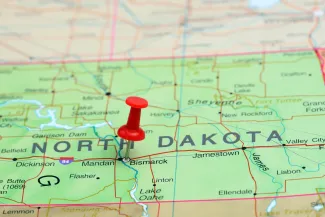
Applied Digital’s first projects in North Dakota were air-cooled facilities for cryptocurrency mining at Ellendale and Jamestown. Its new larger data centers for artificial intelligence at Ellendale and Harwood will use a water-cooling system — similar to a car’s radiator — to keep banks of computers from overheating. By being a closed-loop system with a coolant fluid brought in by truck, its data centers use very little water, company officials told people at meetings in Harwood last year.
The $3 billion Harwood facility will house computers providing artificial intelligence, but needs a huge amount of electric power — about 280 megawatts — to do it.
Oliver County is in the heart of North Dakota coal country and is home to coal-fired power plants as well as power-generating wind farms.
“Applied Digital continues to monitor opportunities throughout North Dakota, including in the Oliver County area, where the right conditions exist for long-term investment,” Applied Digital said in a statement after the moratorium vote.
Minnkota’s Fladhammer said Applied Digital’s presence near Fargo means customers won’t have to pay for as many upgrades to the power grid, upgrades he said the area will need even without a large load like a data center. Without the Applied Digital investment, those costs “would have to be covered by homes, farms, schools and businesses.”
Minnkota’s permit application calls for a substation west of Interstate 29 north of Fargo and a 345-kilowatt powerline going north about a mile and crossing the interstate to the data center.
The project, officially called the Agassiz Transmission Line and Substation, will be on property already owned by Minnkota.

© Khanchit Khirisutchalual - iStock-1515913422
Minnkota will provide electric power to Cass County Electric Cooperative, which sells the power to the data center. Paul Matthys, president and CEO for the co-op, said the data center would about double the peak demand for power from the co-op.
Cass County Electric is expecting another large load customer, the Abercrombie Dairy operated by Minnesota-based Riverview in Richland County. The 12,500-cow dairy is expected to need between 2 and 2.5 megawatts — which is dwarfed by the 280 megawatts the data center will need.
Matthys said Applied Digital would be paying a rate similar to other large customers. He said the data center will have diesel generators to supply power if a storm or spike in power demand forces the co-op to divert power elsewhere.
“They know that if we ask them to curtail their load that they’re going to have to do so,” Matthys said. He described the data center as “first off and last on” if there is a disruption.
Matthys said the data center will not drive up rates for existing customers. He said Cass County Electric is one of 11 co-ops that buys from Minnkota and needs new customers to help pay for upgrades to aging infrastructure. That infrastructure includes coal plants in western North Dakota that provide most of the power for Minnkota.
But existing customers should not be expected to pay for upgrades needed for a large customer like Applied Digital, he said.
“We have right now, the ability to serve that data center without disrupting our members, without disrupting the entire system or the grid,” Matthys said.
Critics of data centers have pointed to rising electrical rates in other areas. President Donald Trump earlier this month announced the Ratepayer Protection Pledge, with the goal of ensuring affordable electricity and grid reliability.
It says tech giants such as Amazon, Google and Meta will “build, bring, or buy new generation resources and cover the cost of all power delivery infrastructure upgrades required for their data centers.”
North Dakota Public Service Commissioner Sheri Haugen-Hoffart referenced the White House pledge at a meeting earlier this month. The agency regulates transmission line siting and electrical rates for private companies such as Xcel, Montana-Dakota Utilities and Otter Tail Power.
“I know that we’ll be watching this closely as it is rolled out,” she said of the Trump administration initiative.
The Public Service Commission does not have authority over where data centers can be built or the electrical rates for customers of co-ops such Cass County Electric.
Applied Digital’s Ellendale site is undergoing an expansion into an AI data center, called Polaris Forge I. The Harwood site is known as Polaris Forge II.
Among Applied Digital’s largest announced customers are CoreWeave, an AI computing company based in New Jersey, and Oracle based in Texas.
The Harwood project met some resistance from Harwood and Fargo-area residents when it was announced in August 2025.
The Dakota Resource Council, a North Dakota-based environmental advocacy group, said it held a meeting on the data center in Harwood in February with about 100 attendees.
“DRC is not opposed to data centers, but the organization believes the projects should be transparent, fairly structured, and designed to benefit the rural communities that host them,” the group’s executive director, Scott Skokos, said in an email.
“DRC’s primary concern is that cooperative member-owners — farmers, ranchers, and rural residents — should not end up paying higher electric rates or assuming financial risk to support extremely large corporate electricity users,” he said.
If approved by the PSC, work on the substation and powerline could begin in April and be complete by September.
Applied Digital contractors worked through the winter on the data center. It is expected to be in full commercial operation in early 2027. It is expected to employ about 200 people.