EarthTalk - How are bat species doing these days?

©
Dear EarthTalk:
How are bat species doing these days?
Gregg Visconti, Butte, MT
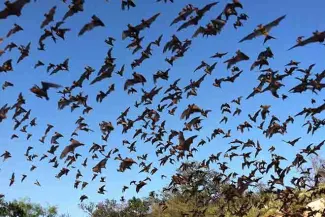
If you enjoy money, tequila and saving the planet, you should also be asking this question. Concerningly, the most recent answer from the International Union for Conservation of Nature is that 85 of the world’s 1,500 or so bat species are endangered, and 23 critically so. Furthermore, over half of all bat species are facing severe population declines according to the North American Bat Conservation Alliance’s 2023 report.
USFWS - Ann Froschauer - Public Domain
The U.S. Geological Survey (USGS) estimates that bats contribute over $3.7 billion annually to the U.S. economy. In fact, the actual number is likely much higher. “[$3.7 billion] does not take into account the volume of insects eaten by bats in forest ecosystems and the degree to which that benefits industries like lumber,” says USGS. In addition to insect consumption, fruit-eating and nectar-feeding bats are important pollinators, and the only known pollinators of the agave plant (from which tequila is made). Moreover, while many species contribute to the regeneration of rainforests after clear cutting, the seeds dropped by fruit bats after nightly foraging can account for up to 95 percent of the first new growth.
Rising temperatures, habitat destruction and pathogens pose a significant risk to bats. Urban sprawl has contributed to growing habitat destruction during reproduction and hibernation seasons, leading bats to waste critical energy resources. LaRoy Brandt, a Professor of Biology at Lincoln Memorial University in Tennessee, notes that “...as the climate changes, warmer winters could [also] disturb their hibernation.”
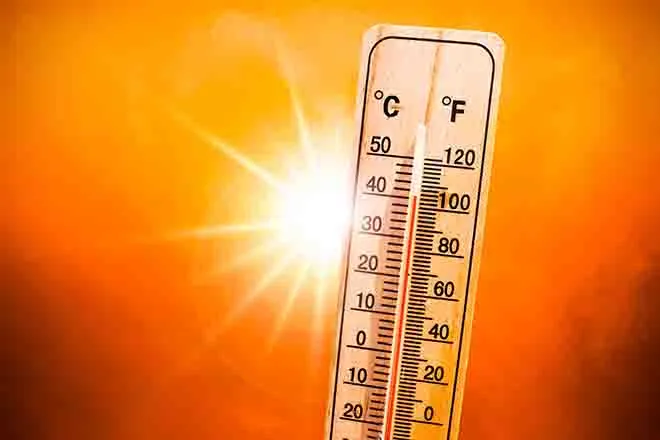
Sudden heat waves associated with climate change can also lead to severe heat stress in bats, particularly when temperatures rise above 105℉. Water easily evaporates through their skin’s large surface area, putting bats at risk of fatal dehydration. Wind turbines, which can potentially combat climate change, have also proven to be a threat. Numerous studies including a 2018 report by the American Wind Wildlife Institute have linked wind turbines to between 90,000 and 400,000 bat deaths.
In addition to anthropogenic risk factors, bats are affected by pests and pathogens like pseudogymnoascus destructans (or white-nose syndrome), which has claimed the lives of more than five million bats since 2006 by causing rapid loss of body fat and eventual starvation.
However, hope is not lost. USGS has developed several strategies to address many risk factors, including acoustic bat detectors and wind turbine databases. Readers can play an important role by participating in the North American Bat Monitoring Program, turning off unnecessary lights at night, and promoting natural habitats where possible.
CONTACT
- North American Bat Monitoring Program, nabatmonitoring.org/; Yale Climate Center, yaleclimateconnections.org/2025/02/natures-pest-control-workers-are-in-peril/.
EarthTalk® is produced by Roddy Scheer & Doug Moss for the 501(c)3 nonprofit EarthTalk. See more athttps://emagazine.com. To donate, visit https://earthtalk.org. Send questions to: question@earthtalk.org.