Stitt move creating Oklahoma ballot measure is illegal, critics say

Governor Kevin Stitt acted outside his authority when he ordered a state question pertaining to a constitutional convention be placed on a future ballot, a former Oklahoma attorney general said Wednesday.
Stitt on Tuesday issued an executive proclamation ordering a special statewide election on April 6, 2027 to consider State Question 848. Stitt’s state question asks voters to determine if they want legislators to hold a constitutional convention that would give them the power to “to propose alterations, revisions, or amendments” or even propose a new constitution.
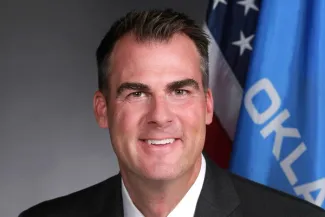
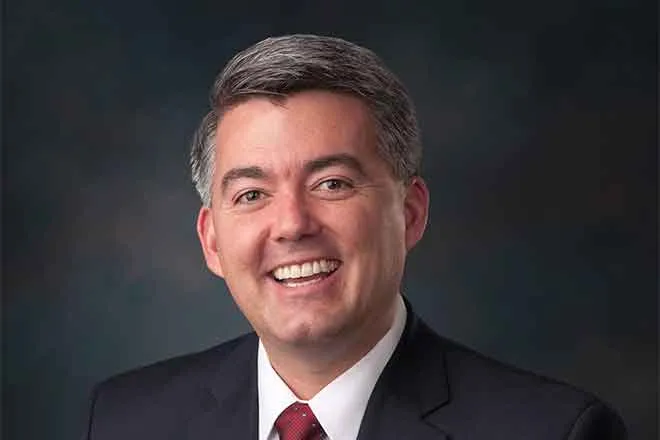
Oklahoma Governor Kevin Stitt - public domain
But former Oklahoma Attorney General Drew Edmondson said state law does not give the governor the power to place items on the ballot. That authority rests with either the Legislature or the people.
“There should not be anything on the ballot as a result of this order,” said Edmondson, who made a failed bid for governor as a Democrat against Stitt.
Stitt, in a press release, said his ballot measure enforces a state law which requires voters to have the opportunity every 20 years to request a constitutional convention.
“The Oklahoma Constitution is clear,” Stitt said. “At least every 20 years, Oklahomans have the right to decide whether it’s time to call a constitutional convention. It’s been 56 years since the question was sent to the people. This action puts the question to the people and ensures Oklahomans finally get the opportunity their Constitution guarantees.”
Stitt is correct in saying he is required to enforce state laws, but that doesn’t mean he gets to put something on the ballot, said Representative Andy Fugate, D-Del City.
“He’s acting unilaterally, outside, frankly, of his authority,” Fugate said.
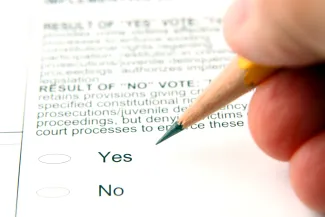
© Svanblar iStock-146069215
Stirt’s recourse is to seek a court order to force lawmakers to put the issue to a vote, Fugate said.
“It’s just the latest example of this governor demonstrating just how little he’s learned in his eight years about the separation of powers that is the basis of American government,” Fugate said.
Last session, a proposed state question about holding a constitutional convention passed the House, but House Joint Resolution 1089 failed to secure approval in the Senate.
Supporters proposed creating a commission that included the governor, Oklahoma’s chief Supreme Court justice, the leaders of the House and the Senate and two members appointed by each legislative chamber. The plan faced criticism that it excluded tribal leaders, Oklahomans not represented by Republicans and did not adequately provide for representation for those outside of government.
Senator Shane Jett, R-Shawnee, said Wednesday that a constitutional convention is long overdue.
Jett said the Constitution has a lot of outdated items and needs to reflect today’s values, including banning abortion.
“Protecting Oklahomans from murder absolutely should be step one,” Jett said.
Senate President Pro Tem Lonnie Paxton, R-Tuttle, said his team will review the order and determine the next steps. He said that the upper chamber has always been willing to seriously discuss the issue.
“It’s disappointing the governor would issue an executive order of this magnitude without first having a conversation with legislative leadership,” he said.
Numerous other legislative efforts to call a constitutional convention over the years have failed.
Edmondson said if lawmakers obtain the power to hold one a, they could make major alterations to the state Constitution. Those could include removing the protections of the voter-approved Tobacco Settlement Endowment Trust, which is enshrined in the Oklahoma Constitution.
TSET, which manages billions in public dollars, takes the funds from a settlement with tobacco companies and invests them. The interest is used for programs, such as tobacco cessation, cancer prevention, physical fitness and healthy lifestyles.
For years lawmakers have attempted to control TSET funds and failed because TSET is in the Constitution, said Edmondson, who is considered the architect of the program.
In addition, the Constitution prohibits lawmakers from passing bills that have multiple subjects. That provision exists so that
lawmakers, who might like one item in a bill but not another, won’t be put in a precarious position of voting for something they don’t like to get something they support in exchange.
The Oklahoma Supreme Court has tossed out numerous bills because they contained more than one subject and were deemed unconstitutional.
“Just to be protective of what we have, I would say that this is a bad idea,” Edmondson said.
Stitt is finishing his final year in office. A new governor could nullify his decision to put the matter to a vote of the people if it doesn’t wind up in litigation.
Stitt and lawmakers over the years have clashed in court over which entity has the power to do what.