Commentary: Why the lesser prairie chickens need Kansans’ support, and why we need each other

In recent springs, I’ve woken up long before dawn and walked out onto the Konza Native Tallgrass Prairie. I did this to watch unique birds, the greater prairie chickens, on their leks. In the low light, I’ve seen the males start to stomp and boom, defending territory that their kind have danced on for centuries. It is a reminder that these birds are more than just wildlife; they are part of our cultural and ecological heritage.
I have not yet seen the dance of the lesser prairie chicken, a smaller species that relies on the arid short-grass regions of the southern Great Plains. More than 70 percent of the estimated lesser prairie chicken population resides in Kansas, and the species’ population has been declining.
I hope to witness their displays soon, but with recent events, that hope feels fragile.
On Aug. 12, a federal court in Texas removed Endangered Species Act protections for the lesser prairie chicken. As Jackie Augustine of Audubon of Kansas wrote in Kansas Reflector last year, this decision is a major blow to the species, which has fought an uphill battle against habitat loss and fragmentation for decades. The protections that were stripped away existed for a reason. Without them, the bird edges ever closer to extinction.
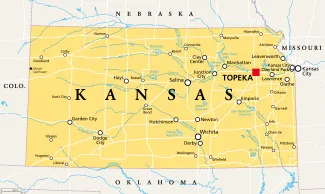
© PeterHermesFurian - iStock-1352430281
This is not the first time protections have been rolled back. Every time it happens, the burden falls not only on the species but also on landowners and conservationists trying to plan for the future. A shifting, uncertain regulatory landscape undermines long-term solutions. It tells people who want to help — like ranchers managing grasslands or young conservationists like myself — that their efforts might not matter.
I’ll admit, there are times when it feels lonely to care so deeply about conservation.
At Kansas State University, where I help lead the KSU Birding Club, we organized a letter-writing campaign to our senators and representatives urging them to support prairie chicken protections by voting “no” on H.R. 587, which was sponsored by Republican Representative Tracey Mann, and S. 171, which was sponsored by Republican Senator Roger Marshall.
We sent more than 40 letters. We never received a single response. Experiences like that can make anyone, especially young people, feel as if our voices are too quiet to matter.
Since then, I have met with other student leaders from across the country who are fighting for birds in their own communities. They reminded me that conservation is not something we do alone. It’s a collective effort, one that requires persistence, collaboration, and hope.
Together, we can push back against the forces that threaten species like the lesser prairie chicken. The court decision in Texas may have erased their current protections, but it cannot erase the truth: These birds are significant, both biologically and culturally. Losing them would mean losing an irreplaceable part of our prairie heritage.
Kansas can add their voices to the conversation in several ways..
- They can write to legislators and other elected officials to share their experiences, even if responses don’t always come.
- They can support landowners who keep grasslands intact, participate in conservation, or volunteer to restore prairie habitat.
- They can ioin a bird club (Find a Local Audubon Chapter), attend a prairie chicken festival (Kansas Lek Treks), or bring someone new into the world of birding.
We need all these efforts. We need ranchers and biologists, students and retirees, birders and policymakers. Saving the lesser prairie chicken isn’t just about a single bird, it’s about keeping the prairie alive for generations to come.
When I finally get the chance to sit in a blind and watch lesser prairie chickens dance, I want to know that I’m not witnessing the end of a story, but a chapter in a story of resilience and recovery. That is something we can only achieve together.
Jacob Riggs is a current electrical engineering senior at Kansas State University and president and founder of the bird club.



![PICT LP stargazing - Adobe Stock - [grandfailure]](/sites/default/files/styles/max_650x650/public/field/image/2018-11-18_pict_lp_stargazing_-_adobe_stock_-_grandfailure.png.webp?itok=HxccLZiu)