EarthTalk – What can we do to reduce wasted materials in clothing?

©
Dear EarthTalk:
How is it that more materials go to waste in producing clothes than ends up in the clothes themselves? What can we do to turn this around?
Bill T., via email
Over the past few decades, the fashion industry’s production, consumption and discard of clothes has constantly deteriorated the planet’s health. In fact, the industry accounts for over 10 percent of global greenhouse gas emissions each year. With the rise of the fast fashion sector, more and more low-quality clothes are designed and produced to meet constantly changing trends. These clothes are intended to be discarded after use, not recycled or reused. In addition, the production of virtually all textiles uses significant amounts of water, chemicals and energy, further adding to the industry’s eco-impact.
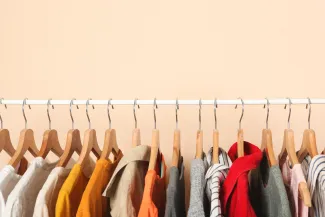
© White Bear Studio - iStock-1279619982
Textile waste encompasses all discarded natural or synthetic materials, especially during the lifecycle of clothes. The materials can take up to many decades to fully decompose, which causes landfill saturation, pollution emissions and contamination. Typically, it is divided into pre-consumer and post-consumer. Pre-consumer textile waste is the material discarded before the items reach consumers. Some examples include fabric scraps, rejects and unsold stock. On the other hand, post-consumer textile waste includes used and discarded materials by consumers. These items are often challenging to deal with due to dyes, blended materials, attached hardware and other decorations.
Though the majority of textile waste occurs after a garment is sold, there is still a lot of material lost in the production process: “Approximately 44 percent of the material is lost as early as the production stages,” said Rakib Ahmed, a researcher at SINTEF Industry. Some of the most significant causes include rejected designs, defective items and unsold surpluses. Most of this waste is incinerated, not recycled or reused.
Starting with the beginning of the clothing cycle, the process of converting raw material into yarn or another usable form through spinning and ginning results in textile waste, as there are discarded scraps. Subsequent steps of dyeing, printing designs and weaving also create textile waste as mistakes and mishaps that cannot be undone. Next, the clothes are often shaped, producing additional discarded materials that are often rendered unusable due to their small size.
To combat this issue, producers should focus on increasing the recycling of materials while reducing pre-consumer textile waste. By adopting a circular fashion model, producers can reduce the amount of textile that is discarded, especially in yarn production and processing raw materials. As a result, the greenhouse gas emissions of the fashion industry could decrease by around 10 percent.
As consumers, we can support sustainable companies like Patagonia, Madewell and The North Face that are conscious of their textile waste both pre- and post-consumer. At the same time, advocating for political change can bring about large-scale attention on shifting the standard in the fashion industry for textile waste during production. Individuals can reuse materials from old clothes to reduce their post-consumer waste. or donate them, which promotes a circular fashion model.
CONTACTS
- Nearly half of every T-shirt goes to waste before you even buy it, norwegianscitechnews.com/2026/05/nearly-half-of-every-t-shirt-goes-to-waste-before-you-even-buy-it.
- SINTEF Industry, sintef.no/en/sintef-industry.
EarthTalk® is produced by Roddy Scheer & Doug Moss for the 501(c)3 nonprofit EarthTalk. See more at https://emagazine.com. To donate, visit https://earthtalk.org. Send questions to: question@earthtalk.org.