Two NIH scientists in Montana charged with ‘smuggling’ virus

Two scientists with a federal infectious disease research institute in Hamilton are accused of smuggling samples of monkeypox, or “Mpox,” into the United States and lying to law enforcement.
Vincent Munster, chief of the Virus Ecology unit in the Laboratory of Virology at the Rocky Mountain Laboratory in Hamilton, and his research fellow Claude Kwe face maximum sentences of five years in prison for allegedly failing to properly document samples of the infectious disease brought to the U.S., and for lying to U.S. Customs and Border Patrol about possessing biological samples.
According to the criminal complaint, filed in the federal Eastern District of Michigan, Munster, a citizen of the Netherlands, and Kwe, a Cameroonian citizen, arrived in the Detroit Metropolitan Airport on January 25, returning from the Republic of Congo, where there is an ongoing outbreak of Mpox.
The pair of scientists had been in the Republic of Congo for nine days to study the strain of Mpox currently causing an outbreak and that is considered a “moderate concern” for outbreak in the U.S.
The strain they were studying is part of the monkeypox outbreak that prompted federal coordination efforts in 2022.
Federal agents selected Kwe for a secondary inspection and “observed nervous behavior” and that he was traveling with a large plastic case “atypical of business travel” that he placed near Munster, so both scientists were detained for further inspection.
Munster allegedly told officers that the case contained diagnostics and testing equipment, and that all documentation was on his laptop.
“I do this all the time,” Munster said, according to court documents.
Customs and Border Patrol officers asked the researchers if they had brought any samples or materials gathered from their research, and were told the contents were only “diagnostics.”

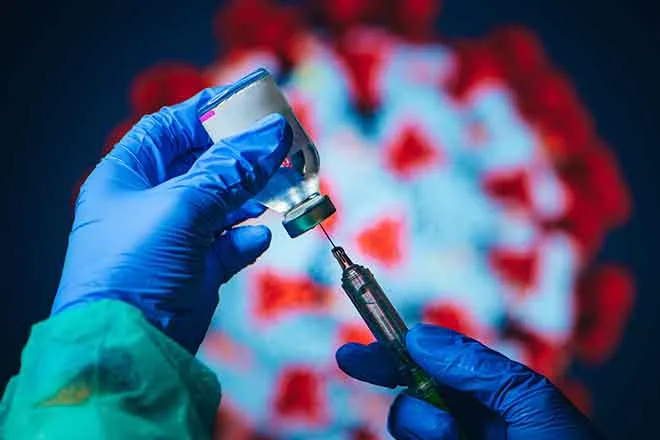
© iStock - metamorworks
Munster provided documentation for the diagnostics, which court documents say consisted of “a list of approximately 40 to 50 items and was written in French.”
But federal agents ultimately confiscated 113 vials stored in a styrofoam cooler, which Muster repeatedly described as being diagnostic tools.
On January 26 the FBI began an investigation, and subsequently showed that the case contained biological materials, according to charging documents, which would have needed “specific approval and documentation to travel with via commercial flight.”
Testing at an FBI laboratory of 20 samples showed 17 had deactivated monkeypox virus DNA, one had contained chickenpox DNA, and two had human DNA, while “a set of samples tested did not propagate and thus are assessed to be inactivated,” according to court documents.
The samples were considered “inactivated” and “non-infectious.”
The federal charges are that Munster and Kwe conspired to import the viruses contrary to law by not declaring the biological agents, and gave materially false statements to federal officials by claiming the samples were diagnostics.
A specific charge states that Mpox Clade 1, of which 13 samples were confirmed, has extensive transport regulations including required U.S. Department of Agriculture permits. Samples must be legibly marked as “scientific research specimens.”
“The arrest of these individuals on serious federal charges sends a clear and unmistakable message that no one—including HHS employees who have an obligation to safeguard our federal programs—is above the law,” Special Agent in Charge Marcus L. Sykes of the U.S. Department of Health and Human Services Office of Inspector General said in a statement. “Any deliberate effort to conceal and smuggle biological materials into the United States without proper authorization is a breach of the public’s trust and could have placed the public at risk.”
Both scientists made an initial court appearance on June 3 in Missoula District Court before Judge Kathleen DeSoto. The defendants were released on conditions to appear in Michigan for a hearing on June 24, and required to surrender their passports.
The National Institute of Health in a statement said the matter is still under investigation, NIH is cooperating with law enforcement, and that agency protocols were activated upon learning of the incident.
“These actions included securing relevant laboratory spaces, restricting access to affected areas, and conducting a comprehensive audit and inventory assessment to verify that all materials were appropriately accounted for, documented, and maintained in accordance with all relevant biosafety policies, requirements, and procedures. NIH also took appropriate personnel actions and took all relevant steps to confirm that there was no risk at any time to the staff or public in or around the RML facility,” according to the NIH statement.
Rocky Mountain Laboratory is housed within the National Institute of Health’s Institute of Allergy and Infectious Diseases and employs around 450 people on its Hamilton campus.
The research facility is a Biosafety Level 4 facility — one of 15 in the U.S. — which implements the highest level of biosafety precautions for research into known and potential human pathogens, such as Ebola and coronaviruses, which led to conspiracy theories following the COVID-19 pandemic outbreak.
According to the NIH, the Laboratory of Virology where Munster and Kwe work focuses on “vector/reservoir transmission, viral ecology, pathogenesis, pathophysiology, and host immune response of these viral pathogens. A significant goal is to develop diagnostics, vaccines, and therapeutics against these agents.”
Rocky Mountain Laboratory has drawn controversy in the past due to its role in studying pathogens including coronaviruses, and in 2023, former U.S. Representative Matt Rosendale tried to strip research funding from the facility, and sought to cut Munster’s salary to $1.
Munster has published more than 400 peer-reviewed publications related to his research, including 12 co-authored with Kwe related to Mpox, according to the chagrin documents.
According to reporting by Science, Munster’s lab has published articles on using inactivated Mpox viruses as controls in diagnostic tests.
Montana U.S. Senator Tim Sheehy called for a federal investigation into RML in May, following a whistleblower complaint that became public alleging misconduct at the lab.
In a May 26 letter to Department of Health and Human Services Inspector General T. March Bell, Sheehy cited the whistle blower complaint, which detailed the detention at the Detroit airport by Munster and Kwe, “both foreign-educated scientists.”
“These events raise serious questions about the safety and security procedures at RML, including NIH’s hiring and personnel management practices for scientists handling dangerous pathogens,” Sheehy’s letter stated. “It is critical that scientists, especially those with foreign connections, are thoroughly vetted given the potentially catastrophic impacts of their work on our nation’s health and security.”
In a post on social media, Sheehy said “We don’t want Montana to be the next Wuhan.”
Following the arrest and charging of the two scientists in early June, Sheehy praised the actions by the Department of Justice to “hold them accountable.”