US House opens the door to votes against tariffs

© wildpixel - iStock-2189862167
A handful of House Republicans tanked a procedural vote Tuesday night that would have kept intact a ban on congressional action against President Donald Trump’s emergency tariffs.
Republican Representatives Don Bacon of Nebraska, Thomas Massie of Kentucky and Kevin Kiley of California joined all Democrats in a 214-217 vote blocking language to continue a prohibition on any House votes challenging the unprecedented import taxes Trump triggered under the International Economic Emergency Powers Act, or IEEPA. Representative Gregory Murphy, R-N.C., did not vote.
“I don’t like putting the important work of the House on pause, but Congress needs to be able to debate on tariffs. Tariffs have been a ‘net negative’ for the economy and are a significant tax that American consumers, manufacturers, and farmers are paying,” Bacon said in a post on X following the vote.
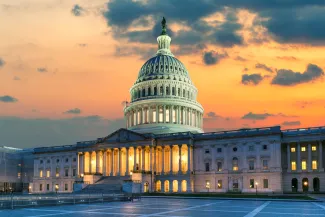
“Article I of the Constitution places authority over taxes and tariffs with Congress for a reason, but for too long, we have handed that authority to the executive branch. It’s time for Congress to reclaim that responsibility. I also oppose using the rules votes to legislate. I want the debate and the right to vote on tariffs,” Bacon continued, referring to the “rules” vote, a procedural vote often taken prior to advancing legislation.
The provision, tucked in a vote to advance three unrelated bills, would have continued the ban until July 31.
Trump declared national emergencies on numerous occasions in 2025. The resolution, enacted in September, effectively prohibited any congressional counteraction to Trump’s emergency tariffs imposed on Feb. 1, April 2, July 30 and Aug. 6.
The president targeted imports from a host of trading partners on those dates, including establishing steep tariffs on Canada, Mexico, China, Brazil and India.
Trump’s novel use of IEEPA to immediately trigger tariffs on global imports is currently under review at the U.S. Supreme Court after a group of small businesses sued the president. The justices heard oral arguments in early November, and an opinion has been expected for months.